
For DTC brands in 2026, influencer marketing isn’t a “nice to have” – it’s the primary engine behind product launches, seasonal pushes, and evergreen brand awareness. Upfluence served many eCommerce teams well as a starting point, but as your creator roster grows and the pressure to prove ROAS intensifies, the cracks start to show. Rigid annual contracts, a clunky workflow, and a discovery engine that often feels like it’s optimized for volume over fit – all of it adds up.
The good news is that the market has matured significantly. Today, platforms built specifically for DTC execution – with native Shopify integrations, automated gifting, affiliate tracking, and AI-powered outreach – make it possible to run a high-volume creator program without a dedicated team of five. If you’re a growth lead or founder who’s been paying Upfluence’s enterprise rates and wondering if there’s a better way, this guide is for you.
Here are the top 10 Upfluence alternatives for DTC brands in 2026:
- Influencer Hero
- GRIN
- Aspire
- Storyclash
- HypeAuditor
- Traackr
- Modash
- SocialLadder
- Later
- Heepsy
Why DTC Brands Are Moving Away From Upfluence in 2026
When you’re running a lean DTC operation, every dollar in your tech stack needs to earn its keep. Here’s why many eCommerce teams are re-evaluating Upfluence:
- Expensive Annual Lock-In: Upfluence requires a 12-month commitment starting at $24,000+ for just two seats. For a DTC brand doing $2-5M in revenue, that’s a significant line item – especially when your influencer strategy might pivot mid-year based on what’s actually converting.
- Shopify Integration Gaps: While Upfluence does integrate with Shopify, many DTC teams report that the product seeding and affiliate workflows aren’t as seamless as they’d like. When you’re shipping hundreds of gifted products a month, every manual step costs you time.
- Discovery Doesn’t Match DTC Needs: A 12M+ database sounds impressive, but DTC brands need creators who convert, not just creators who post. Teams often find themselves spending hours filtering through results to find creators whose audiences actually buy products online.
- Automation That Falls Short: As your creator program scales from 50 to 500+ partners, you need automated drip campaigns, auto-generated discount codes, and rules-based workflows. Upfluence’s automation capabilities haven’t kept pace with newer platforms built for this exact use case.
Best Upfluence Alternatives for DTC Brands in 2026
1. Influencer Hero
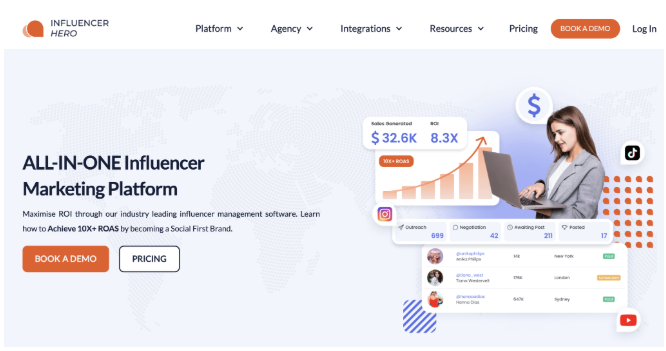
Influencer Hero is an all-in-one influencer marketing platform purpose-built for eCommerce execution. It combines creator discovery, AI-powered outreach, a visual CRM, product gifting, affiliate tracking, UGC collection, and payments into a single system. For DTC brands running high-volume creator programs on Shopify, it’s designed to replace the patchwork of tools most teams cobble together.
Best for: DTC and eCommerce brands that need to scale influencer programs fast without adding headcount. Especially strong for Shopify-based brands running product seeding, affiliate, and UGC campaigns simultaneously.
Pricing:
- Standard: $649/month (1 seat, up to 1,000 creators, 1,000 outreach/mo)
- Pro: $1,049/month (3 seats, up to 5,000 creators, 5,000 outreach/mo)
- Business: $2,490/month (8 seats, up to 10,000 creators, 10,000 outreach/mo)
- Custom & Agency plans available with unlimited outreach
Standout features:
- Campaign-Centric CRM With Automation Engine: Visual campaign boards show exactly where every creator is in the pipeline. Set up rules-based triggers – when a creator signs a contract, the system auto-generates their Shopify discount code, ships their product, and moves them to the next stage. It’s like having an extra team member running logistics in the background.
- AI-Powered Outreach at Scale: Automated drip campaigns with AI-personalized first lines based on each creator’s recent posts. The platform averages a 43% response rate – roughly 2-3x what most DTC teams see with manual outreach.
- 450M+ Creator Database Across 8 Platforms: Covers Instagram, TikTok, YouTube, Pinterest, Snapchat, Twitch, and X. Audience quality detection and lookalike recommendations ensure you’re finding creators whose followers actually buy products – not just scroll past them.
- Native Shopify Integration & Product Gifting: Ship products directly from your CRM, create zero-dollar orders from inventory, and sync tracking links automatically. For DTC brands doing 100+ seeding shipments a month, this alone saves hours of manual work.
- Real-Time ROI & Affiliate Tracking: Track sales, clicks, conversions, and revenue per creator in real time through native Shopify and GoAffPro integrations. Creator storefronts deliver up to 8x higher ROI through recurring posts.
- UGC Library & Content Collection: Automatically captures influencer content from Instagram, TikTok, and YouTube – including Stories and Reels – and tags top-performing assets for reuse in paid ads.
Influencer Hero is built for teams running always-on creator programs, which means it may feel feature-rich for very small brands running only a handful of campaigns per year. Teams that prefer a minimal setup may need a short adjustment period to get comfortable with its workflow-driven approach.
2. GRIN
GRIN is an enterprise-grade influencer marketing platform built specifically for eCommerce and DTC brands. It handles the full lifecycle – from discovery and outreach to product shipping, content collection, and affiliate payouts – with a particular emphasis on unlimited creator partnerships and deep Shopify integration.
Best for: Mid-market and enterprise DTC brands running large-scale seeding and ambassador programs. Ideal if you need unlimited creator slots and don’t mind committing to a longer contract.
Pricing:
- Custom; typical entry tier starts around $2,500/month
- 12-month minimum commitment
- Annual cost typically $25,000+/year
Standout features:
- Unlimited Creator Partnerships: No caps on the number of creators in your network – critical for DTC brands running large-scale seeding campaigns with hundreds of micro-influencers.
- Intelligent Assistant (Gia): An AI agent that helps discover, manage, and collaborate with creators more efficiently.
- Native Shopify + PayPal Integrations: Product shipping and commission payouts handled directly through connected eCommerce accounts.
- Creator Portals & Content Rights: Influencers get private dashboards for briefs and content submission. Media usage rights are baked into the booking process, making UGC repurposing straightforward.
- Searchable UGC Library: Every post, Story, and Reel is saved and searchable. Real-time dashboards let you and creators track performance and commissions.
The high entry price and mandatory 12-month contracts mean GRIN isn’t accessible for lean DTC teams or brands still experimenting with influencer marketing. Some users also report that the search interface can feel rigid and the platform occasionally sluggish. For teams that want a similar all-in-one CRM depth without the enterprise commitment, Influencer Hero offers comparable functionality at a more accessible price point.
3. Aspire
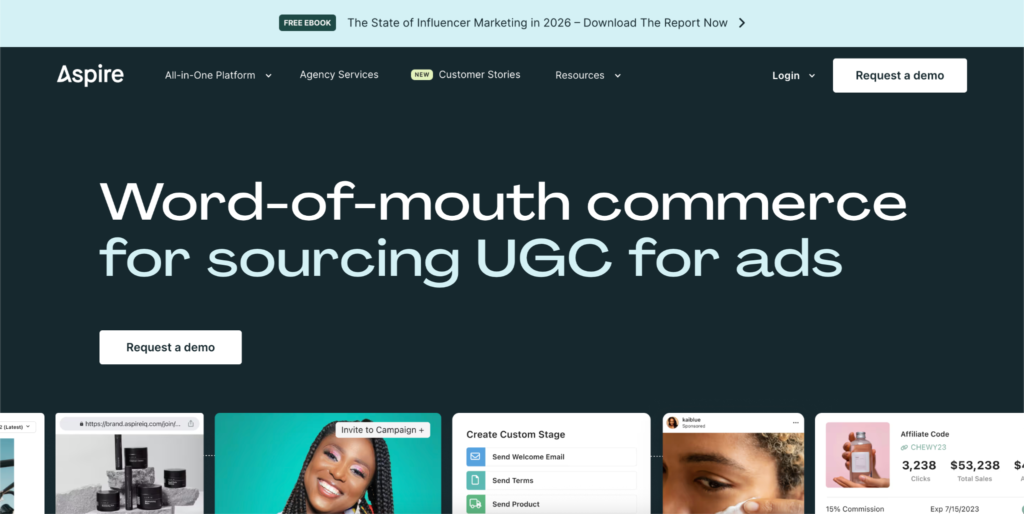
Aspire is a workflow-driven influencer marketing platform that stands out for its inbound creator marketplace and first-party social data integrations. It’s designed for brands that want creators to come to them, rather than relying entirely on outbound prospecting.
Best for: DTC brands with strong brand recognition that can attract inbound creator applications. Well-suited for teams that value structured workflows, first-party data accuracy, and dedicated support.
Pricing:
- Custom; mid-tier packages quoted around $2,300/month
Standout features:
- Inbound Creator Marketplace: Over 1M creators actively applying to campaigns – reducing your outbound workload significantly.
- First-Party Social Data: Direct API integrations with Meta, TikTok, and Pinterest provide more reliable audience and performance data.
- End-to-End Workflow Automation: Manages the full pipeline from discovery through contracts, content approvals, and performance tracking.
- Shopify Fulfillment Integration: Creators select products directly from your catalog for seeding – no manual order creation needed.
- Dedicated Client Support: Includes hands-on onboarding and ongoing strategic guidance.
Custom pricing limits upfront transparency, and the inbound marketplace model works best for brands that already have enough name recognition to attract creator applications. DTC brands that are still building awareness and rely heavily on outbound outreach may find Aspire’s discovery less aggressive than platforms with AI-powered outreach automation.
4. Storyclash
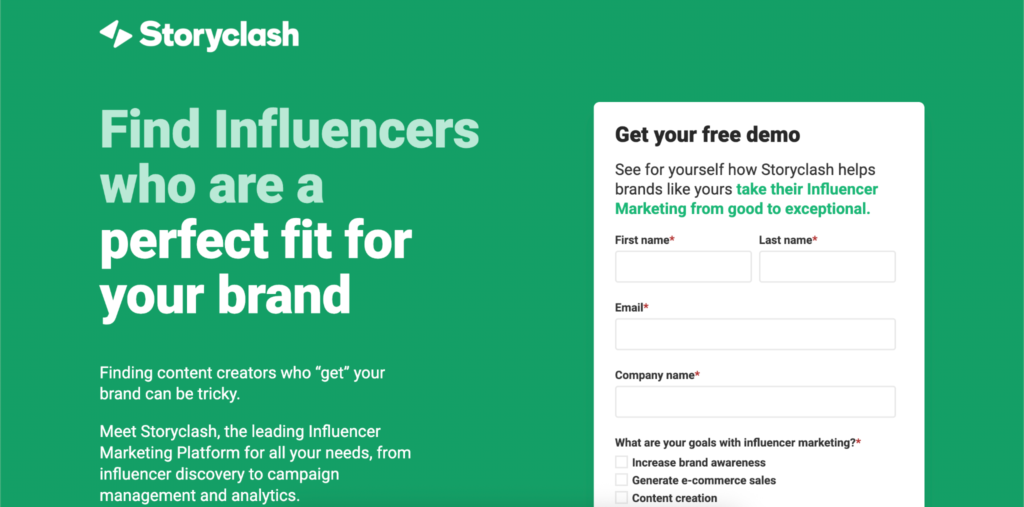
Storyclash is a content-first influencer marketing platform with particularly strong competitive benchmarking capabilities. It uses AI and image recognition to help DTC brands find creators based on what they actually post, not just their bio keywords.
Best for: DTC brands that want deep competitive intelligence on which creators their competitors are using, combined with AI-driven discovery that goes beyond basic keyword search.
Pricing:
- Business plan starts at $870/month
- Enterprise pricing available for larger organizations
Standout features:
- AI-Driven Discovery With Image Recognition: Find creators using visual analysis, AI prompts, and lookalike features – not just hashtag searches.
- 183M Creator Database: Covers Instagram, TikTok, and YouTube with historical data including expired Stories.
- Competitive Benchmarking: See which creators your competitors are hiring and how those campaigns are performing. Save competitor lists to fuel your own recruitment.
- Shopify ROI Tracking: Track ROAS, CAC, and AOV directly through Shopify integration – the metrics DTC brands actually care about.
- Centralized Campaign Hub: Internal collaboration tools, shared creator lists, and centralized messaging keep your team aligned.
Storyclash doesn’t currently include built-in contract generation or content licensing workflows. If your DTC brand does heavy UGC repurposing or whitelisting, you’ll need to handle rights management manually or through a separate tool.
5. HypeAuditor
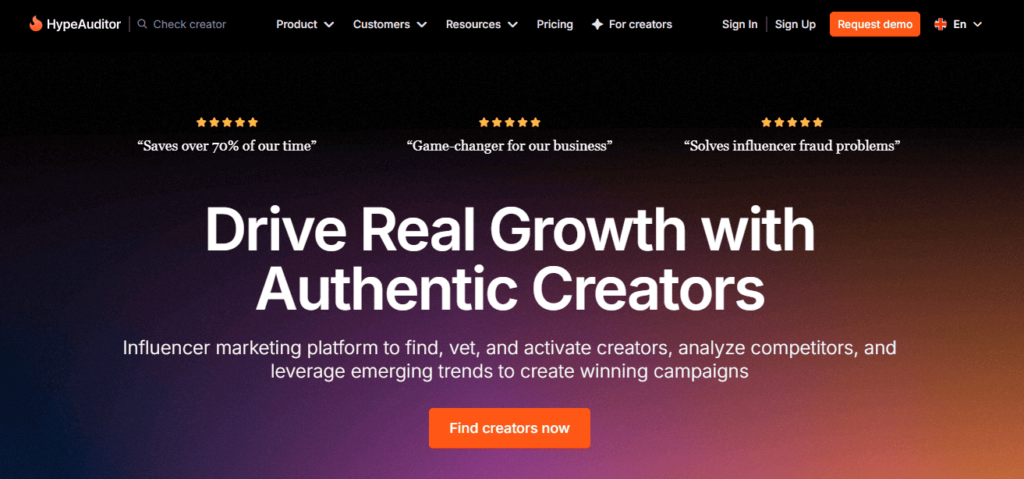
HypeAuditor built its reputation as the gold standard for detecting fake followers and auditing influencer account quality. For DTC brands spending real budget on creator partnerships, knowing that your money is going toward genuine audiences is non-negotiable.
Best for: DTC brands that prioritize data integrity and want to verify every creator’s audience authenticity before committing budget. Strong for teams that have been burned by inflated metrics.
Pricing:
- Business plans start around $10,000/year
- Enterprise plans up to $60,000/year
- Short free trial available
Standout features:
- Advanced Fraud Detection & Analytics: Breaks down audience authenticity and engagement quality so you don’t accidentally partner with bot-heavy accounts.
- AI-Powered Discovery & Lookalike Search: The search engine reads captions and analyzes images to find creators who look and post like your competitors’ top performers.
- Social Listening & Competitor Monitoring: Track hashtags and mentions to find organic fans who already love your product – often the highest-converting partners.
- Shopify Revenue Attribution: See exactly how much revenue each creator generates through their affiliate links and promo codes.
- Creator Applications & Content Approvals: Build custom landing pages for creators to apply, and manage contracts and content reviews in one place.
HypeAuditor can feel complex for teams that are new to influencer marketing. Only a small portion of influencers are registered for direct in-platform applications, and the pricing may be high for DTC brands focused primarily on outreach volume rather than deep analytics.
6. Traackr
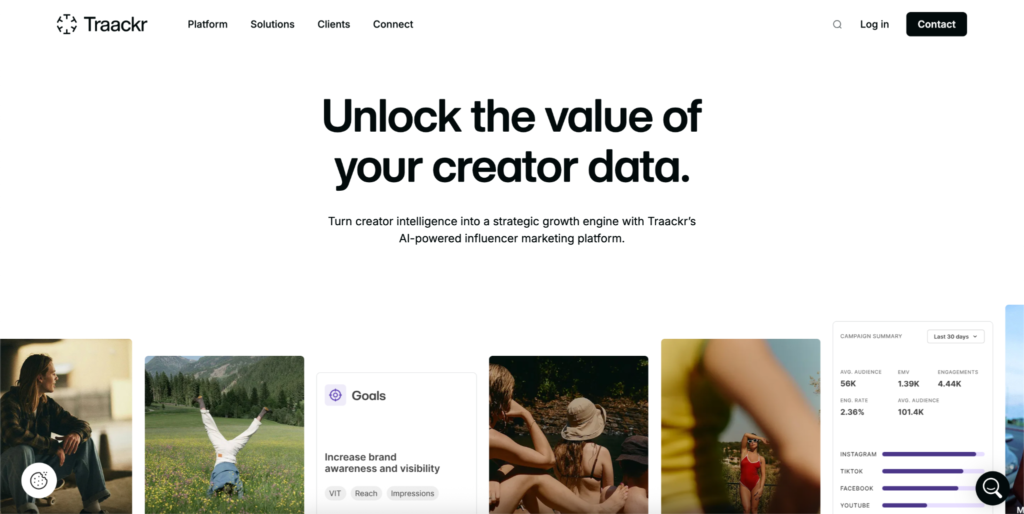
Traackr is a data-driven influencer marketing platform focused on performance benchmarking and spend optimization. It’s built for teams that want granular visibility into what’s working, what’s not, and how their influencer spend compares over time.
Best for: DTC brands with established influencer programs that need to optimize spend efficiency and prove ROI to leadership. Particularly strong for teams managing large budgets across multiple campaigns.
Pricing:
- Starts around $32,500/year
Standout features:
- Brand Vitality Score (BVS): A proprietary metric measuring your brand’s visibility, trust, and influence relative to competitors.
- Advanced Performance Reporting: Tracks CPC, CPE, CPV, and ROI across campaigns – the efficiency metrics DTC brands need to justify spend.
- Historical Benchmarking: Compare creator and campaign performance over time to identify trends and optimize future partnerships.
- Product Gifting Workflows: Manage seeding logistics and correlate product delivery with downstream content and sales results.
- Exportable Executive Reports: Granular, presentation-ready analytics designed for boardroom conversations about influencer ROI.
Traackr excels at measurement and benchmarking but is less focused on end-to-end campaign execution. DTC teams looking for a platform that handles the full workflow – from AI-powered discovery through outreach, CRM, gifting, and affiliate tracking in one place – may find Traackr’s scope limiting compared to all-in-one platforms.
7. Modash
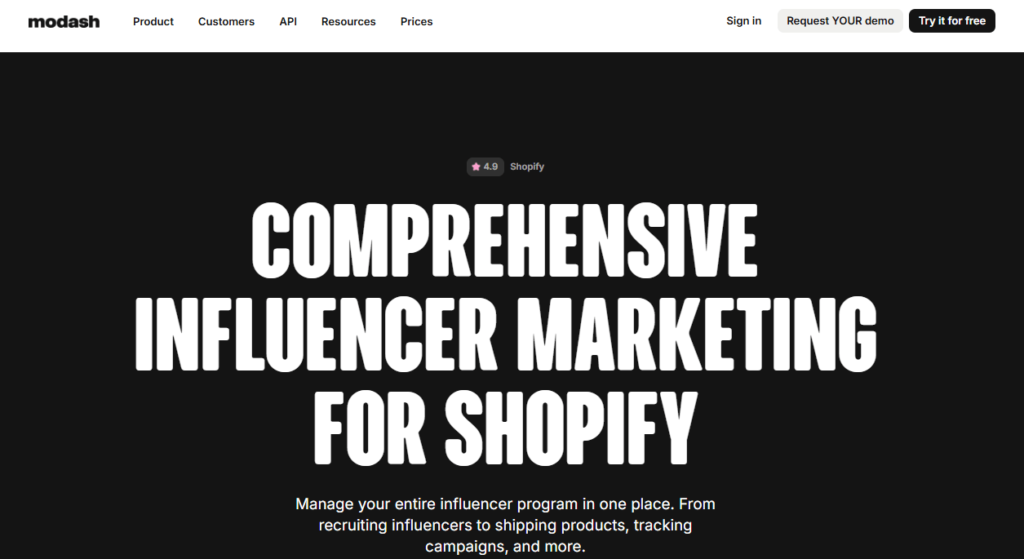
Modash is a versatile influencer marketing platform with one of the largest public creator databases available. It’s a strong pick for Shopify-based DTC brands that need deep discovery and affiliate workflows without the enterprise price tag.
Best for: Shopify-based DTC brands that prioritize large-scale creator discovery and affiliate-driven campaigns. Especially strong for teams that want access to non-opt-in creator data at an accessible price point.
Pricing:
- Essentials: $199/month
- Performance: $499/month
- Enterprise: Custom (annual billing)
Standout features:
- 350M+ Public Creator Database: Access profiles without opt-in limitations – find creators that other platforms can’t surface.
- AI Visual Discovery: Describe a “vibe” or upload a product image to find creators with matching aesthetics – perfect for DTC brands with strong visual identities.
- Shopify-Native Gifting & Affiliates: Automates product seeding, discount code generation, UTM tracking, and lets influencers pick their own products.
- Fake Follower Detection: Built-in audience authenticity analysis helps you avoid wasting budget on inflated followings.
- Automated Affiliate Payouts: Monthly commission tracking and influencer payments handled directly in-platform.
The biggest limitation for DTC brands is that Modash’s deep integration only works with Shopify. If you’re on WooCommerce, Magento, or BigCommerce, the affiliate and gifting workflows won’t be available. It also lacks native tools for content licensing or running whitelisted ads.
8. SocialLadder
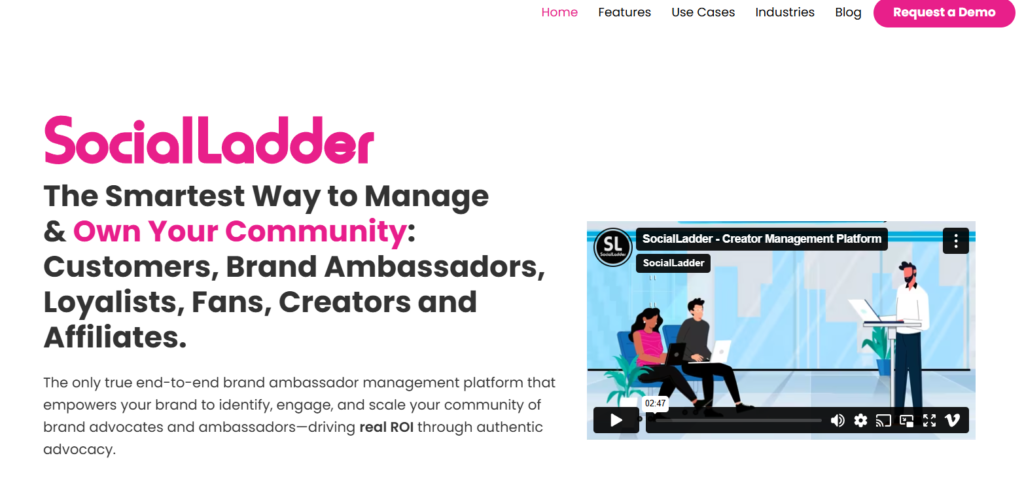
SocialLadder takes a fundamentally different approach to influencer marketing. Instead of chasing big-name creators, it helps DTC brands turn their existing customers and followers into a loyal army of brand ambassadors – often the highest-converting partners you’ll ever find.
Best for: DTC brands focused on community-led growth and ambassador programs. Ideal if you want to activate your existing customer base rather than relying entirely on paid creator partnerships.
Pricing:
- Typically under $2,000/month
- 6 to 12 month commitment recommended for meaningful results
Standout features:
- Customer-First Ambassador Programs: Scans your customer lists and social followers to find people who already love your brand – authentic advocacy over paid reach.
- Gamified UGC Challenges: Ambassadors earn points for posting content, redeemed for discounts or exclusive perks. Keeps your community active without paying per-post fees.
- eCommerce & CRM Integration: Auto-invite customers to join your ambassador program right after they make a purchase.
- Built-In Content Usage Rights: Ambassadors agree to usage rights when they join, so you can use their photos in ads without extra paperwork.
- Performance Leaderboards: Track which ambassadors drive the most engagement and add a competitive element that keeps your top fans active.
Community building takes patience – it typically takes several months for ambassador programs to hit their stride. Since participation is voluntary, content volume can be less predictable than paid partnerships. For DTC brands that need immediate scale and volume, a platform with AI-powered outreach like Influencer Hero may be more effective as a primary tool, with SocialLadder as a complementary community layer.
9. Later
Later started as a social media scheduling tool and has expanded into influencer marketing through creator collaboration features. For DTC brands already using Later for their organic social content, adding influencer campaigns into the same workflow can be a natural fit.
Best for: Social-first DTC brands that want influencer marketing tightly integrated with their content calendar and organic posting strategy.
Pricing:
- Self-serve influencer marketing plans start at approximately $28,500/year
- Pro and full-service options can reach $50,000-$60,000/year
Standout features:
- 15M Contactable Creators: All with verified email addresses, making initial outreach much easier than scraping contact info manually.
- Integrated Social + Influencer Workflows: Plan influencer content alongside your organic posts and content calendar in one view.
- Creator Application Pages: Build custom landing pages to attract and vet creators interested in your brand.
- Shopify Gifting & Discount Workflows: Creates one-time discount codes for product seeding with accurate inventory tracking.
- Brand Safety & Content Review: AI tools scan for red flags in creator history and let you preview content before it goes live.
At the entry level, many of Later’s influencer features overlap with what you’d find on cheaper platforms. To access the features that actually differentiate it – managed services, advanced analytics – you need to commit to the significantly more expensive tiers.
10. Heepsy
Heepsy is a straightforward, budget-friendly platform built for small to mid-sized eCommerce brands. If you’re a DTC brand just getting started with influencer marketing and don’t want to sign a restrictive contract, Heepsy makes it easy to test the waters.
Best for: Early-stage DTC brands that need affordable discovery and outreach tools. Especially suitable for teams running their first gifting or affiliate campaigns on a tight budget.
Pricing:
- Free plan available
- Starter: $89/month
- Plus: $249/month
- Advanced: $369/month (required for Shopify sales tracking)
Standout features:
- 50M+ Influencer Database: Strong coverage across the US and Europe – the markets most DTC brands target first.
- Authenticity Filters: Detect fake followers and low-quality audiences with quality scores before you commit budget.
- Kanban-Style CRM: A visual pipeline to track creators through campaign stages – intuitive for teams used to tools like Trello or Asana.
- Bulk Email Outreach: Send up to 3,000 emails a month with follow-ups – enough volume for most growing DTC programs.
- Shopify & WooCommerce Integrations: Track affiliate links and discount codes to see which influencers actually drive revenue (available on advanced plans).
The most valuable tools – sales tracking, affiliate management, and eCommerce integrations – are locked behind the more expensive plans. And unlike AI-powered platforms, Heepsy’s outreach tools don’t generate personalized emails for you, so you’ll need to write those manually.
Final Thoughts
The influencer marketing landscape for DTC brands has changed dramatically. You no longer have to choose between a clunky enterprise tool that drains your budget and a bare-bones spreadsheet that drains your time. The platforms on this list represent a genuine shift toward automation, accountability, and eCommerce-native workflows that match how DTC brands actually operate.
It’s also worth noting that many influencer marketing agencies use these same software platforms to manage campaigns at scale for their DTC clients. Whether you’re running your program in-house or partnering with an agency, having the right tool underneath makes all the difference.
At the end of the day, the “best” platform is the one that turns your creator program into a predictable revenue channel – not another expense to justify. Whether you need full automation and deep CRM capabilities or just a solid discovery engine to get started, there’s a tool on this list built for where your brand is today.
FAQs
1. What is the best Upfluence alternative for Shopify-based DTC brands?
For Shopify-based DTC brands, Influencer Hero is the strongest option in 2026. It offers native Shopify integration for product gifting, automated discount code generation, real-time affiliate tracking, and a CRM built around eCommerce workflows – all at a fraction of Upfluence’s annual cost.
2. Is there a cheaper alternative to Upfluence with similar features?
Yes. Influencer Hero starts at $649/month with no annual lock-in, compared to Upfluence’s $24,000+ annual commitment. It offers comparable features including discovery, outreach, CRM, gifting, and affiliate tracking. For even more budget-friendly options, Modash starts at $199/month and Heepsy has a free plan.
3. Which platforms are best for DTC brands running product seeding campaigns?
Influencer Hero, GRIN, and Modash all excel at product seeding with native Shopify integrations. Influencer Hero stands out with its automation engine that auto-ships products and generates discount codes when creators sign contracts. GRIN offers unlimited creator slots for high-volume seeding, while Modash lets creators pick their own products from your catalog.
4. Do these alternatives track actual sales and ROI?
Most platforms on this list offer some form of affiliate tracking and sales attribution, especially through Shopify integrations. Influencer Hero, GRIN, Modash, and HypeAuditor all provide real-time revenue data per creator, making it easy to calculate true ROAS on your influencer spend.
5. Which tool is best for a DTC brand just getting started with influencer marketing?
Heepsy is the most accessible starting point with its free plan and simple interface. However, if you plan to scale quickly, starting with Influencer Hero’s Standard plan ($649/month) gives you automation and CRM capabilities from day one, avoiding the need to migrate platforms later.
6. Can I run an ambassador program alongside paid influencer campaigns?
Yes. SocialLadder specializes in turning customers into brand ambassadors with gamified challenges and rewards. Many DTC brands pair an ambassador tool like SocialLadder with a full-suite platform like Influencer Hero to cover both community-driven and paid creator programs.
Keywords: best Upfluence alternatives 2026, Upfluence alternative for DTC, influencer marketing software for eCommerce, DTC influencer marketing platform, Shopify influencer marketing tools, Influencer Hero, influencer CRM for DTC brands, influencer outreach automation
