
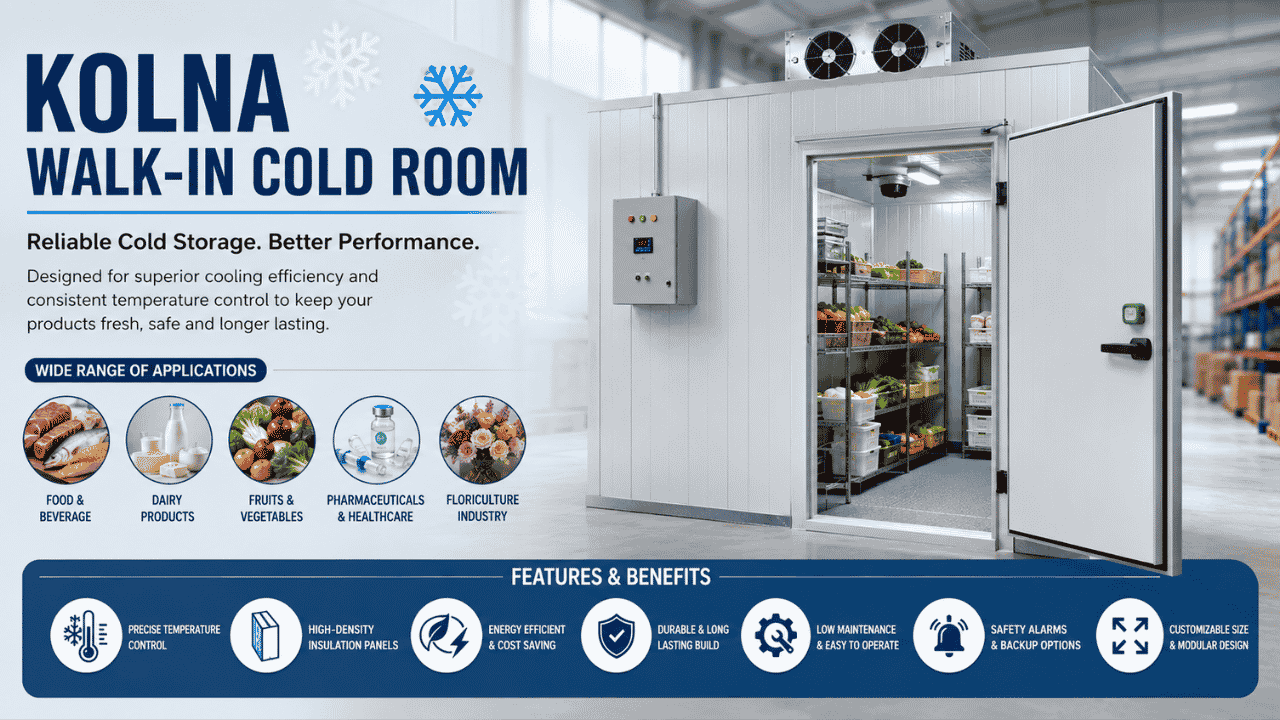
The Kolna walk-in cold room is one that users increasingly seek for reliable cold storage solutions in commercial and industrial applications. While there is limited publicly verified information about a specific product or manufacturer using the exact name Kolna Walk-In Cold Room, the keyword is commonly associated with modern walk-in cold room systems designed to preserve temperature-sensitive goods. Refrigeration systems play a critical role in industries such as food processing, pharmaceuticals, hospitality, agriculture, and healthcare. Walk-in cold rooms provide a controlled environment that helps maintain product quality, reduce waste, and comply with food safety and storage regulations. Whether you’re planning a new cold storage facility or upgrading an existing one, understanding how these systems work and what features to look for can help you make a well-informed decision. In this guide, we’ll explore everything you need to know about the Kolna walk-in cold room, including its features, components, applications, benefits, installation considerations, maintenance tips, and factors to evaluate before purchasing.
What Is a Kolna Walk-In Cold Room?
A Kolna walk-in cold room is a walk-in refrigeration system that provides temperature-controlled storage for perishable or temperature-sensitive products. Unlike standard refrigerators, walk-in cold rooms are spacious enough for personnel to enter, organize inventory, and perform routine inspections.
These rooms are built using insulated panels and commercial-grade refrigeration equipment to maintain consistent internal temperatures. Depending on the intended application, a walk-in cold room may operate at chilled temperatures for fresh products or freezing temperatures for frozen goods.
Modern cold rooms are available in modular designs, allowing businesses to customize the size, layout, insulation thickness, and refrigeration capacity according to their operational requirements.
How Does a Walk-In Cold Room Work?
A walk-in cold room operates using a refrigeration cycle similar to that of commercial refrigerators but on a much larger scale.
The refrigeration system includes several essential components:
- Compressor
- Condenser
- Evaporator
- Expansion valve
- Digital temperature controller
- Insulated wall panels
- Refrigerated doors with secure seals
The compressor circulates refrigerant through the system. Heat from inside the cold room is absorbed by the evaporator and transferred outside through the condenser. This continuous process keeps the interior at the desired temperature while preventing heat from entering through insulated walls and tightly sealed doors.
Common Temperature Ranges
Different products require different storage temperatures.
Typical operating ranges include:
| Storage Type | Temperature Range |
|---|
| Fresh Produce | 0°C to 5°C |
| Dairy Products | 2°C to 4°C |
| Chilled Foods | 2°C to 8°C |
| Frozen Foods | -18°C to -25°C |
| Deep Freezing | -30°C to -40°C |
Selecting the correct temperature range is essential for maintaining product quality and extending shelf life.
Main Components of a Kolna Walk-In Cold Room
A quality cold room consists of multiple integrated systems working together.
Insulated Panels
High-density polyurethane (PUF) insulated panels minimize heat transfer and improve energy efficiency.
Refrigeration Unit
This includes the compressor, condenser, evaporator, and expansion valve, which maintain cooling performance.
Temperature Controller
Digital controllers monitor and regulate internal temperatures with high accuracy.
Cold Room Door
Commercial cold room doors are designed with heavy-duty insulation and airtight gaskets to reduce energy loss.
Lighting
LED lighting offers excellent visibility while consuming minimal electricity.
Safety Features
Modern cold rooms often include:
- Emergency door release
- Temperature alarms
- Backup power compatibility
- Anti-slip flooring
- Automatic defrost systems
Applications of Kolna Walk-In Cold Room
Walk-in cold rooms are used across numerous industries.
Food Industry
Restaurants, supermarkets, catering companies, and food processors rely on cold rooms for storing:
- Meat
- Poultry
- Seafood
- Dairy
- Fruits
- Vegetables
- Frozen foods
Pharmaceutical Industry
Healthcare organizations use cold rooms for storing:
- Vaccines
- Medicines
- Laboratory samples
- Medical supplies
- Biological materials
Hospitality Industry
Hotels and resorts use walk-in cold rooms to manage large food inventories while maintaining freshness.
Agriculture
Farmers use cold rooms to preserve harvested produce before transportation or distribution.
Floral Industry
Flower wholesalers and florists use refrigerated storage to keep flowers fresher for longer.
Benefits of a Kolna Walk-In Cold Room
Investing in a professional cold room offers numerous operational advantages.
Extended Product Shelf Life
Consistent temperatures help preserve food, medicines, and other sensitive products for longer periods.
Reduced Product Waste
Proper refrigeration minimizes spoilage and reduces inventory losses.
Improved Food Safety
Maintaining appropriate storage temperatures helps reduce bacterial growth and supports food safety standards.
Large Storage Capacity
Walk-in cold rooms can store significantly more products than standard refrigeration units.
Energy Efficiency
Modern insulation materials and energy-efficient compressors reduce electricity consumption.
Flexible Design
Cold rooms can be customized to meet business requirements, from small retail stores to large industrial warehouses.
Inventory Organization
Spacious interiors enable businesses to organize products efficiently, enabling faster access and improved inventory management.
Factors to Consider Before Buying
Choosing the right cold room involves evaluating several important factors.
Storage Capacity
Estimate current and future storage requirements before selecting room dimensions.
Temperature Requirements
Different products require different storage temperatures. Ensure the refrigeration system meets your specific needs.
Insulation Thickness
Better insulation improves energy efficiency and temperature stability.
Energy Consumption
Look for energy-efficient compressors, LED lighting, and digital controls to lower operating costs.
Installation Location
The installation site should have:
- Proper ventilation
- Stable flooring
- Adequate electrical supply
- Easy access for deliveries
Expansion Possibilities
Modular systems allow businesses to expand storage capacity as operations grow.
Installation Process
Installing a walk-in cold room generally involves several stages.
Site Assessment
Engineers evaluate the installation area to determine size, electrical requirements, and ventilation needs.
Panel Assembly
Insulated wall, ceiling, and floor panels are assembled using locking systems.
Refrigeration Installation
The refrigeration equipment is connected and tested for proper operation.
Electrical Wiring
Controllers, lighting, alarms, and refrigeration units are connected to the power supply.
Performance Testing
Technicians verify temperature stability, door seals, airflow, and overall system performance before commissioning.
Maintenance Tips
Routine maintenance extends equipment life and improves efficiency.
Recommended maintenance practices include:
- Clean condenser coils regularly.
- Inspect door gaskets for air leaks.
- Monitor temperature records.
- Defrost evaporators when necessary.
- Clean evaporator fans.
- Check refrigerant levels.
- Test safety alarms.
- Service compressors according to manufacturer recommendations.
- Keep drainage systems clear.
- Schedule professional inspections at least once a year.
Preventive maintenance reduces unexpected breakdowns and expensive repairs.
Energy-Saving Tips
Operating a cold room efficiently can significantly reduce electricity costs.
Best practices include:
- Minimize door opening time.
- Avoid overloading shelves.
- Maintain proper airflow around stored products.
- Replace damaged door seals promptly.
- Use LED lighting.
- Schedule routine maintenance.
- Monitor compressor performance.
- Install automatic door closers if appropriate.
These measures help maintain stable temperatures while reducing energy consumption.
Common Challenges
Although walk-in cold rooms are highly reliable, operators may encounter certain issues.
Temperature Fluctuations
Possible causes include:
- Faulty thermostat
- Damaged door seals
- Frequent door openings
- Refrigerant leaks
Ice Build-Up
Excessive frost may result from:
- High humidity
- Defrost system malfunction
- Air leakage
High Energy Bills
Common reasons include:
- Dirty condenser coils
- Poor insulation
- Aging compressors
- Inadequate maintenance
Regular inspections help identify and resolve these problems early.
Future Trends in Walk-In Cold Rooms
Cold storage technology continues to evolve, driven by advances in energy efficiency and automation.
Emerging innovations include:
- Smart remote temperature monitoring
- IoT-enabled refrigeration systems
- AI-assisted maintenance alerts
- Variable-speed compressors
- Solar-powered refrigeration solutions
- Eco-friendly refrigerants with lower environmental impact
- Cloud-based inventory integration
These technologies improve operational efficiency while supporting sustainability goals.
Is a Kolna Walk-In Cold Room Worth Considering?
For businesses that depend on reliable refrigerated storage, a Kolna walk-in cold room is the solution that can improve inventory preservation, operational efficiency, and product quality. Because there is limited publicly verified information about a specific product or manufacturer under this exact name, buyers should carefully evaluate the supplier, technical specifications, warranty coverage, certifications, and after-sales support before making a purchase.
A well-designed walk-in cold room with quality insulation, dependable refrigeration components, and regular maintenance can provide years of reliable service while helping businesses reduce waste and maintain consistent storage conditions.
Conclusion
The kolna walk-in cold room keyword is commonly associated with modern walk-in cold storage solutions used across food service, agriculture, healthcare, pharmaceuticals, and industrial sectors. These systems offer reliable temperature control, customizable storage capacity, and energy-efficient operation, making them an essential investment for businesses handling perishable or temperature-sensitive products.
You May Like: Air-Cooled Industrial Water Chillers: A Technical Overview of Process Cooling
