
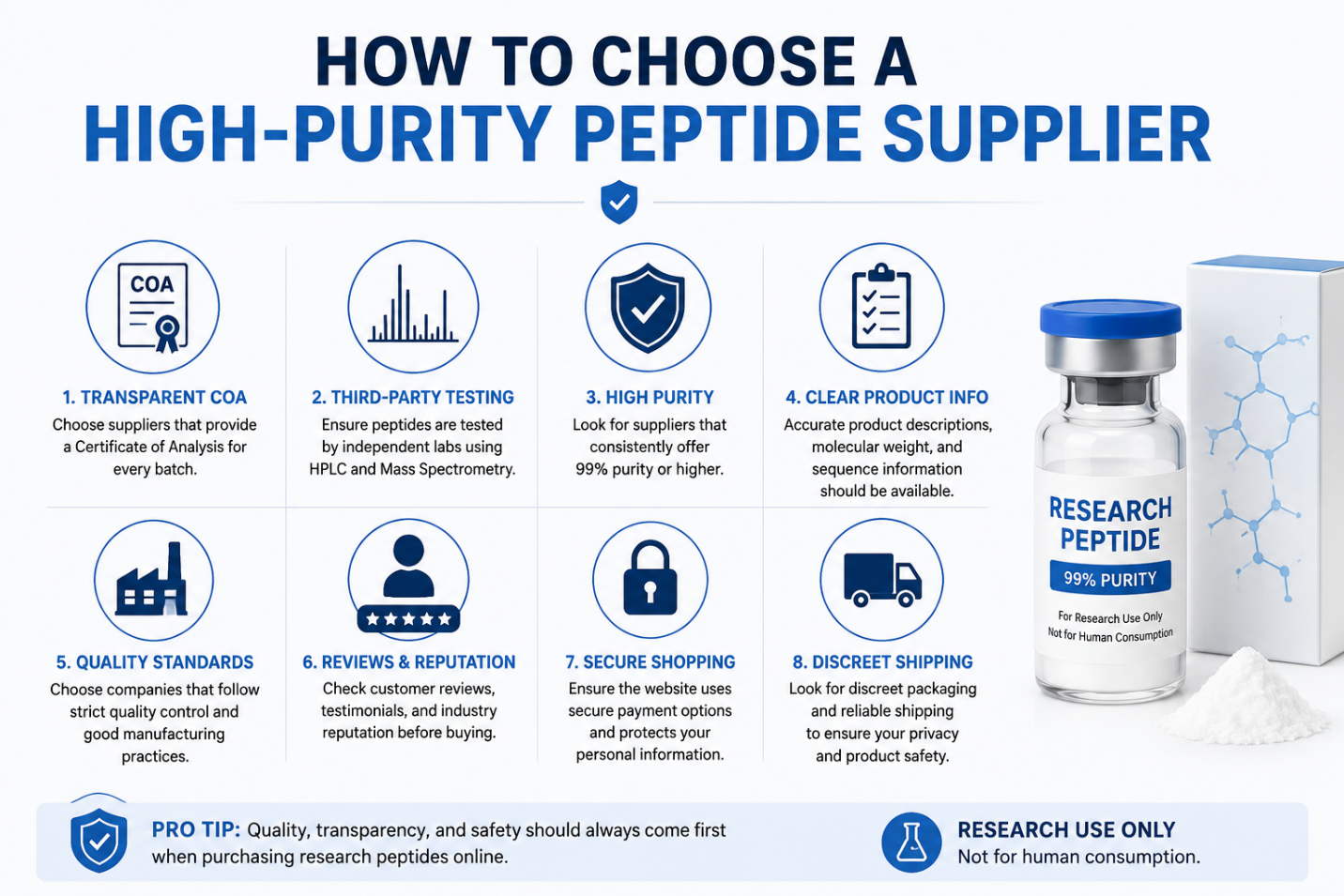
As peptide research continues to expand across biotechnology, molecular biology, regenerative medicine, and pharmaceutical science, the demand for reliable research materials has grown significantly. One of the most important decisions a researcher or laboratory can make is selecting a trusted supplier for high-purity research peptides.
Not all peptide suppliers maintain the same manufacturing standards or quality control processes. While many companies offer similar products, differences in purity, testing, transparency, and customer support can have a major impact on research quality. Core Power Peptides is dedicated to supporting scientific research by providing high-purity research peptides backed by rigorous quality control and transparent documentation.
In this guide, we’ll explore the most important factors to consider when choosing a high-purity peptide supplier and explain why quality should always come before price.
Why High Purity Matters
Research peptides are used to investigate biological processes, molecular interactions, and cellular functions in controlled laboratory settings. Because experiments often require consistent and reproducible results, the quality of the peptide itself is essential.
High-purity peptides help reduce the presence of unwanted compounds that could interfere with laboratory studies. They also improve confidence that experimental outcomes are based on the intended peptide rather than contaminants.
For many researchers, choosing high-purity materials is one of the first steps toward reliable scientific results.
Look for Transparent Quality Standards
A trustworthy peptide supplier should clearly explain its quality assurance process.
Rather than relying on marketing claims alone, reputable companies typically provide information about:
- Manufacturing procedures
- Quality control practices
- Product testing
- Batch consistency
- Storage recommendations
Transparency demonstrates that a supplier is committed to scientific integrity and allows researchers to make informed purchasing decisions.
Verify Product Purity
Purity is one of the most important characteristics of any research peptide.
High-purity products are generally produced using advanced synthesis and purification methods, followed by analytical testing to confirm product quality.
When evaluating suppliers, researchers should look for clearly documented purity values supported by laboratory analysis instead of broad claims such as “premium quality” or “best available.”
Reliable suppliers explain how purity is measured and provide supporting documentation whenever possible.
Review the Certificate of Analysis (COA)
A Certificate of Analysis (COA) is an essential quality document for research peptides.
It provides batch-specific information that may include:
- Product identification
- Batch number
- Purity results
- Testing methods
- Manufacturing details
- Analytical verification
Researchers should always review the COA before purchasing whenever it is available. A supplier willing to provide detailed documentation demonstrates greater transparency and accountability.
Confirm Analytical Testing
Analytical testing helps verify that research peptides meet expected quality standards.
Two of the most commonly used techniques are:
High-Performance Liquid Chromatography (HPLC)
HPLC is widely used to evaluate peptide purity by separating compounds within a sample. The resulting chromatogram provides evidence supporting the reported purity value.
Mass Spectrometry (MS)
Mass spectrometry confirms the molecular weight and identity of the peptide, helping verify that the synthesized product matches the expected structure.
Suppliers that provide information about these analytical methods generally inspire greater confidence among researchers.
Evaluate Batch Consistency
Many research projects continue for weeks, months, or even years.
If peptide quality varies between production batches, researchers may experience inconsistent experimental results.
Reliable suppliers emphasize standardized manufacturing processes that help maintain consistent quality across batches. Batch consistency is especially important for long-term laboratory studies and reproducibility.
Research the Supplier’s Reputation
Before purchasing research peptides, take time to evaluate the supplier’s reputation.
Consider factors such as:
- Years of industry experience
- Scientific focus
- Product documentation
- Customer service
- Educational resources
- Overall professionalism
A supplier with a strong reputation for quality and transparency is often a better long-term partner than one competing only on price.
Examine Product Information
Professional suppliers provide detailed product descriptions that help researchers understand what they are purchasing.
Useful information may include:
- Peptide sequence
- Molecular weight
- Storage recommendations
- Purity specification
- Product format
- Laboratory use information
Comprehensive product pages reflect a supplier’s commitment to supporting the scientific community.
Ask About Storage and Shipping
Proper handling is just as important as manufacturing quality.
Research peptides should be packaged and shipped in a way that helps maintain product integrity during transportation.
Before placing an order, researchers may wish to ask:
- How are peptides packaged?
- Are temperature-sensitive products handled appropriately?
- What storage conditions are recommended upon arrival?
Suppliers that provide clear answers demonstrate attention to product quality throughout the entire process.
Compare Customer Support
Reliable customer service is another sign of a professional peptide supplier.
Researchers may require assistance regarding:
- Product selection
- Certificates of Analysis
- Shipping questions
- Storage recommendations
- Batch information
Responsive and knowledgeable customer support helps build confidence and strengthens long-term relationships with laboratories.
Avoid Common Warning Signs
Researchers should exercise caution when encountering suppliers that:
- Do not provide Certificates of Analysis
- Hide purity information
- Make unrealistic marketing claims
- Offer prices that seem unusually low
- Provide little company information
- Lack analytical testing documentation
- Offer poor customer support
Recognizing these warning signs helps researchers avoid unnecessary risks.
Why Transparency Matters
Scientific research is built on accuracy, documentation, and reproducibility.
Researchers increasingly value suppliers that openly share manufacturing standards, testing procedures, and quality assurance practices.
Transparency allows laboratories to evaluate products objectively rather than relying solely on advertising claims.
A supplier that communicates clearly often demonstrates greater confidence in the quality of its products.
Building Long-Term Research Partnerships
Many laboratories purchase peptides repeatedly for ongoing projects.
Rather than selecting a supplier based only on a single order, researchers often seek long-term partners that consistently provide:
- High-purity products
- Reliable documentation
- Consistent manufacturing
- Professional customer support
- Transparent quality standards
Strong supplier relationships contribute to smoother purchasing processes and greater confidence in future research.
Conclusion
Choosing a high-purity peptide supplier is one of the most important decisions in any peptide research project. Product quality, analytical testing, transparency, manufacturing consistency, and customer support all play essential roles in supporting reliable laboratory investigations.
By carefully reviewing Certificates of Analysis, confirming purity data, evaluating testing methods, and selecting suppliers with strong quality standards, researchers can obtain dependable materials that support reproducible scientific results.
As peptide science continues advancing, working with a trusted supplier committed to quality and transparency will remain an important part of successful research.
Disclaimer: Research peptides are intended for laboratory research purposes only. They are not intended for human consumption, veterinary use, diagnosis, treatment, cure, or prevention of any disease. All products should be handled and used by qualified professionals in accordance with applicable laws and laboratory safety guidelines.
