
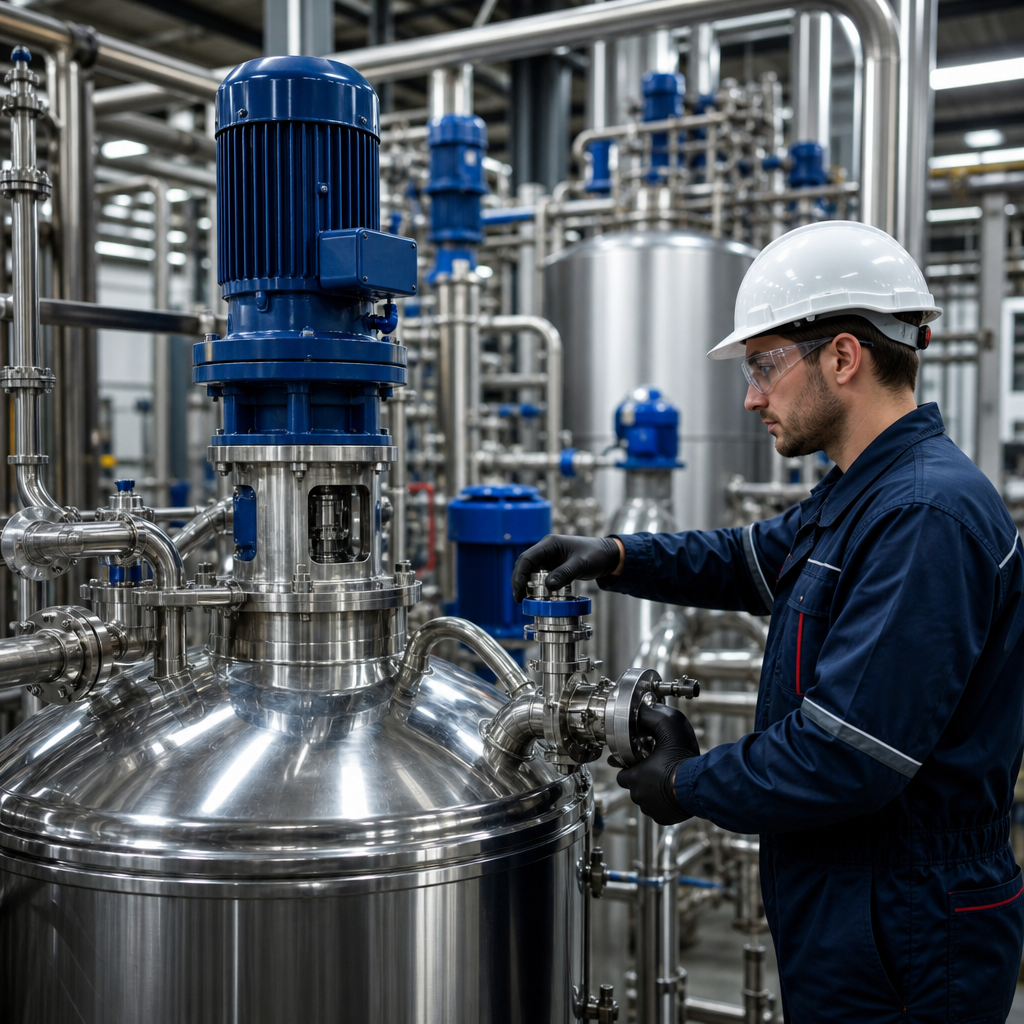
Modern industrial facilities depend on a carefully coordinated ecosystem of process equipment. From the way raw materials are blended to how fluids are moved, measured, and controlled, every component plays a role in determining the efficiency, quality, and cost-effectiveness of the final product. Understanding how mixing technology, fluid management systems, and precision instrumentation work together is essential for engineers, plant managers, and procurement specialists who are serious about operational excellence.
The Central Role of Mixing in Industrial Processing
Mixing is one of the most fundamental operations in any process plant. Whether you are working in the chemical, pharmaceutical, food and beverage, ceramics, or construction materials sector, the ability to blend raw materials consistently and efficiently determines the quality of your output. Poor mixing leads to inconsistent product batches, wasted raw materials, and costly rework. Effective mixing, on the other hand, creates the foundation for repeatable, high-quality production.
Industrial mixers come in a wide range of configurations, each suited to specific material types and production demands. Ribbon blenders, paddle mixers, drum mixers, and high-shear units each have their place. However, for applications requiring intensive mechanical action — particularly those involving dense, viscous, or cohesive materials — the intensive mixer stands apart as the preferred solution.
What Makes Intensive Mixers Different
Intensive mixers are engineered to apply high mechanical energy to materials in a controlled environment. Unlike conventional mixers that rely on gentle tumbling or slow agitation, intensive mixers use high-speed rotors, counter-rotating tools, or friction-based mechanisms to break down agglomerates, distribute binders evenly, and achieve homogeneous blends in significantly shorter cycle times. This makes them indispensable in industries where material uniformity directly affects product performance — such as refractory materials, asphalt production, carbon products, and advanced ceramics.
Sourcing the right intensive mixer for your facility requires careful evaluation of capacity, rotor design, wear resistance, and compatibility with your specific materials. For facilities looking to manage capital expenditure without compromising on performance, a used intensive mixer from a reputable supplier can offer significant cost advantages while still delivering the mechanical performance required for demanding applications. Refurbished and pre-owned units from established manufacturers often retain their core engineering integrity and can be inspected, tested, and certified before deployment.
Fluid Management: The Invisible Backbone of Process Operations
While mixing handles the solid and semi-solid phases of production, fluid management systems govern the movement, conditioning, and control of liquids throughout a facility. Pumps, valves, flow meters, and dehumidification systems all contribute to maintaining the precise environmental and process conditions that industrial operations require.
One often-overlooked aspect of fluid management is moisture control. Excess humidity in a production environment can compromise material quality, damage sensitive equipment, and create safety hazards. Industrial dehumidifiers play a critical role in maintaining optimal conditions, particularly in facilities that handle hygroscopic materials or operate precision instrumentation. For facilities evaluating dehumidification solutions, understanding the performance specifications of available units is essential — a detailed review of the Pelonis 50-pint dehumidifier with pump offers a useful reference point for comparing capacity, efficiency, and pump-assisted drainage features in modern dehumidification units.
Precision Pumping in Process Environments
Beyond environmental control, precision liquid delivery is critical in many process plant operations. Whether transferring reagents, solvents, or process fluids, the accuracy and reliability of pumping systems directly affect product consistency and safety. In analytical and quality control laboratories within process facilities, high-performance liquid chromatography systems rely on pumps that deliver exceptionally precise flow rates. The Agilent 1260 Flexible Pump is a well-regarded example of the precision engineering applied to liquid delivery in analytical settings, offering consistent flow performance that supports accurate chromatographic analysis.
Integrating Equipment Across the Process Chain
One of the most significant challenges facing plant engineers is not the selection of individual pieces of equipment, but the integration of those components into a coherent, efficient process chain. A high-performance intensive mixer is only as effective as the feeding systems that supply it, the conveyors that remove its output, and the environmental controls that maintain consistent operating conditions around it.
This systems-level thinking is what separates well-designed process plants from those that struggle with bottlenecks, downtime, and inconsistent output. Engineers must consider how each piece of equipment communicates with the others — whether through automated control systems, manual interfaces, or sensor-driven feedback loops. Temperature, humidity, pressure, and flow rate all interact in ways that can either amplify or undermine the performance of individual components.
Maintenance Planning and Equipment Lifecycle Management
Effective process plant management extends well beyond initial equipment selection. Lifecycle planning — including scheduled maintenance, wear part replacement, and eventual equipment upgrades — is essential for sustaining long-term operational efficiency. Intensive mixers, for example, are subject to significant mechanical wear due to the high-energy nature of their operation. Rotor tips, liner plates, and sealing systems require regular inspection and timely replacement to prevent unplanned downtime.
Similarly, fluid management systems require periodic calibration and component replacement to maintain accuracy and reliability. Pump seals, valve actuators, and flow meter sensors all have defined service intervals that must be respected to avoid process deviations. Facilities that invest in proactive maintenance programs consistently outperform those that operate reactively, responding only when failures occur.
International Process Plants: A Trusted Source for Process Equipment
For procurement teams and plant engineers seeking reliable process equipment, International Process Plants has established a strong reputation as a global supplier of quality used and refurbished industrial machinery. Their inventory spans a broad range of process equipment categories, including mixers, reactors, dryers, filtration systems, and heat exchangers. The company’s rigorous inspection and evaluation standards ensure that equipment offered for sale meets the performance expectations of demanding industrial applications.
Their specialist knowledge of mixing technology, in particular, makes them a valuable partner for facilities evaluating intensive mixing solutions. With access to equipment from leading manufacturers and the technical expertise to match machinery to specific process requirements, International Process Plants supports buyers in making informed, cost-effective procurement decisions.
Conclusion: Building Smarter Process Facilities
The performance of a modern process plant is determined by the quality and integration of its equipment across every stage of production. Intensive mixing technology delivers the material homogeneity that demanding applications require. Fluid management systems — from precision pumps to industrial dehumidifiers — maintain the environmental and process conditions that protect both product quality and equipment longevity. And analytical instrumentation ensures that quality control keeps pace with production demands.
Whether you are commissioning a new facility, upgrading existing equipment, or optimizing an established production line, the decisions you make about process equipment will shape your operational outcomes for years to come. Investing time in thorough equipment evaluation, supplier due diligence, and lifecycle planning is not a cost — it is a competitive advantage.
