
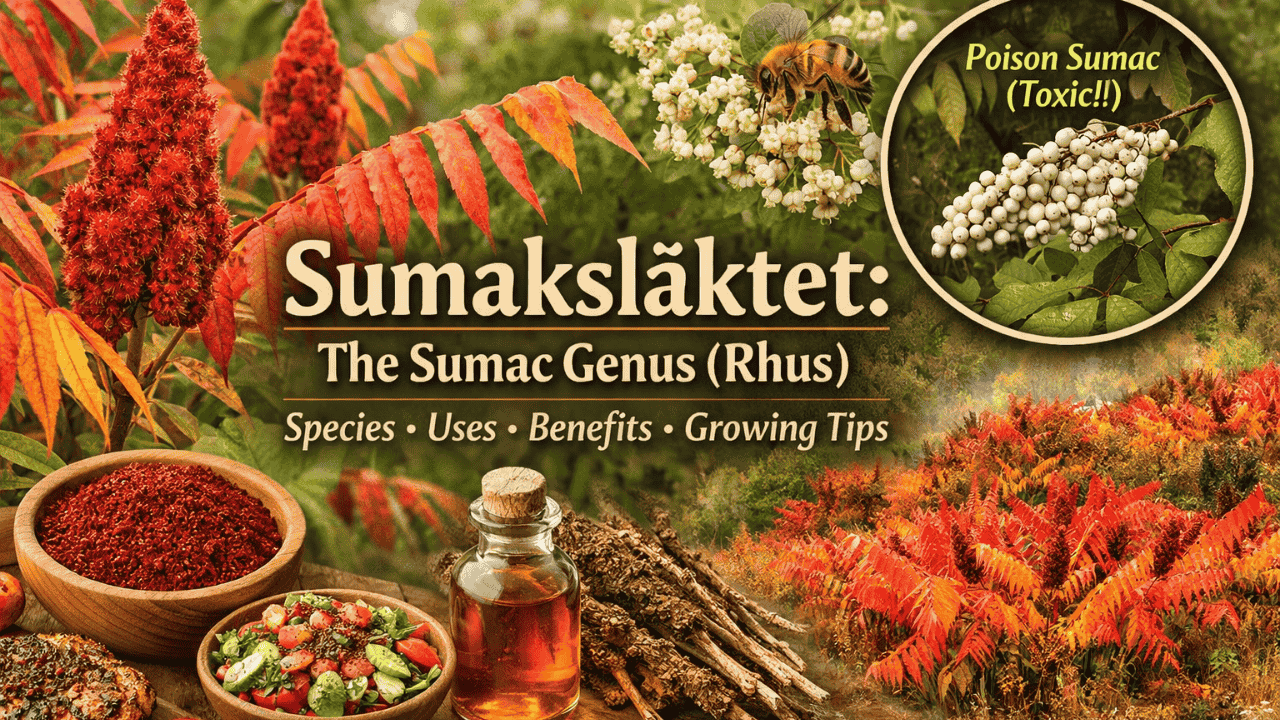
The sumaksläktet refers to the plant genus Rhus, commonly known as sumac. This fascinating group of plants belongs to the cashew family (Anacardiaceae) and includes a wide variety of shrubs, small trees, and woody plants known for their striking appearance and diverse uses. From ornamental landscaping to culinary spices and traditional medicine, sumaksläktet (sumac) has played an important role across different cultures and ecosystems. In this comprehensive guide, we will explore everything you need to know about sumac—its characteristics, types, uses, and how to grow it.
What is Sumaksläktet?
Sumaksläktet, or the genus Rhus, consists of deciduous plants found mainly in temperate and subtropical regions around the world. These plants are highly adaptable and are often among the first to colonize disturbed areas such as roadsides and open fields.
Depending on classification, the genus includes 50-250 species, making it one of the more diverse plant groups within its family.
Key characteristics of sumaksläktet:
- Shrubs or small trees (sometimes climbing plants)
- Compound or simple leaves
- Small flowers arranged in dense clusters
- Distinctive red, berry-like fruits
- Ability to spread through underground rhizomes
Botanical Features of Sumac Plants
Leaves
Sumac plants typically have pinnate (feather-like) leaves, giving them a tropical and elegant appearance. These leaves can grow quite large and are arranged alternately along the stem.
One of the most attractive features of sumac is its spectacular fall foliage, with vibrant shades of:
- Red
- Orange
- Yellow
This makes sumac a popular choice in landscaping.
Flowers
The flowers of sumaksläktet are:
- Small and clustered
- Greenish, white, or reddish
- Arranged in cone-shaped panicles
They bloom during late spring to summer and attract pollinators such as bees.
Fruits
The fruits of sumac are one of its most recognizable features:
- Dense clusters of small red drupes
- Slightly fuzzy texture
- Tart, lemon-like flavor
These fruits are not only visually appealing but also widely used in cooking.
Where Does Sumac Grow?
Sumaksläktet plants are widely distributed across the globe. They are native to:
- North America
- Europe (introduced species)
- Asia (especially the Middle East)
- Africa
Preferred growing conditions:
- Full sun
- Well-drained soil
- Dry or semi-arid environments
Sumac is known for its resilience and can flourish in poor soils where many other plants struggle.
Common Species of Sumaksläktet
Staghorn Sumac (Rhus typhina)
One of the most recognizable species, especially in Europe and North America.
Features:
- Velvety branches resembling deer antlers
- Large compound leaves
- Bright red autumn foliage
Uses:
- Ornamental landscaping
Smooth Sumac (Rhus glabra)
A widespread North American species.
Features:
- Smooth stems (no fuzz)
- Bright red fruit clusters
- Hardy and adaptable
Uses:
- Erosion control
- Native landscaping
Sicilian Sumac (Rhus coriaria)
This species is widely known for its culinary use.
Features:
- Small shrub
- Edible berries
- Rich in flavor
Uses:
- Spice in Middle Eastern cuisine
- Ingredient in za’atar
- Flavoring for meats and salads
Fragrant Sumac (Rhus aromatica)
A smaller, low-growing species.
Features:
- Aromatic leaves
- Dense growth habit
Uses:
- Ground cover
- Garden decoration
Sumac vs. Poison Sumac: Key Differences
One of the most important things to understand about sumaksläktet is that not all “sumac” plants are safe to eat.
There is a related genus called Toxicodendron, which includes:
- Poison ivy
- Poison oak
- Poison sumac
These plants contain urushiol, an oil that causes severe allergic skin reactions.
How to tell them apart:
| Fruit color | Red | White or gray |
| Habitat | Dry, open areas | Wetlands and swamps |
| Toxicity | Generally safe | Highly toxic |
👉 As a rule: Red berries = usually safe; white berries = avoid.
Uses of Sumaksläktet
Culinary Uses
The most popular use of sumac comes from Rhus coriaria, whose dried berries are ground into a spice.
Common culinary uses:
- Seasoning for grilled meat
- Sprinkled over salads
- Used in rice dishes
- An ingredient in spice blends like za’atar
Its flavor is tangy and citrus-like, often used as a substitute for lemon.
Medicinal Uses
Historically, sumac has been used in traditional medicine for its:
- Antioxidant properties
- Anti-inflammatory effects
- Digestive benefits
However, modern use should always be approached with proper knowledge and care.
Industrial Uses
Sumac has also been important in industry:
- Source of tannins for leather processing
- Natural dyes for textiles
- Wood used for small crafts
Landscaping and Gardening
Sumac is widely used in landscaping because of its:
- Dramatic fall colors
- Fast growth
- Ability to stabilize soil
It is especially useful in:
- Slopes and erosion-prone areas
- Naturalistic gardens
- Wildlife-friendly landscapes
How to Grow Sumac
Growing plants from the sumaksläktet is relatively easy due to their hardy nature.
Light
- Prefers full sun
- Can tolerate partial shade
Soil
- Well-drained soil is ideal
- Tolerates poor or rocky soil
Watering
- Drought-tolerant once established
- Moderate watering during early growth
Maintenance
- Minimal care required
- Prune to control spread
- Watch for root suckers (can spread aggressively)
Benefits of Growing Sumac
There are many advantages to planting sumac:
- ✅ Low maintenance
- ✅ Drought resistant
- ✅ Beautiful autumn colors
- ✅ Supports wildlife
- ✅ Useful for erosion control
Conclusion
Sumaksläktet (Rhus) är en versatil och visuellt imponerande grupp av växter med global betydelse. Whether you are interested in gardening, cooking, or simply learning about plant biodiversity, sumac offers something valuable.
