
Think about the last time you called a company and immediately heard “Your call is important to us. Please hold.” That message has not changed in thirty years. The experience behind it has not changed much either.
But AI voice agents are ending that era. Nearly nine out of ten business leaders surveyed by PwC say they have already moved on to AI in customer-facing functions, either partially or fully. Businesses that once viewed voice support as a routine necessity are now discovering it can become a defining edge in customer experience.
This article explores what AI voice agents are, why they matter, how they work, and how to implement them effectively.
What Are AI Voice Agents and How Do They Fit Into Customer Experience?
Anyone who has talked in the press and reply system knows the headache of that. Press one for this, say yes for that, get cut off and start again.
An AI voice agent is refreshingly different. It listens to what you say, understands what that means, and then finds a solution. When a customer communicates a problem, the system already has their history. It resolves the problem, and if it cannot do that, it passes the rest to a human, with a full summary, so the customer never has to repeat a word.
Why Businesses Are Moving Towards AI Voice Agents Now
The Old Model Is Breaking Under Modern Expectations
Customers today do not distinguish between a small business and a large one when it comes to service expectations. They expect fast answers, consistent information, and no repetition. A sole trader competing with a national brand has to meet the same bar.
The problems with the traditional support model are well-documented. Staffing contact centres is expensive. Agents burn out on repetitive queries. Who picks up the phone and when they pick it up determine the experience a customer gets that day. A call that comes in at 11 PM on a Friday goes nowhere useful.
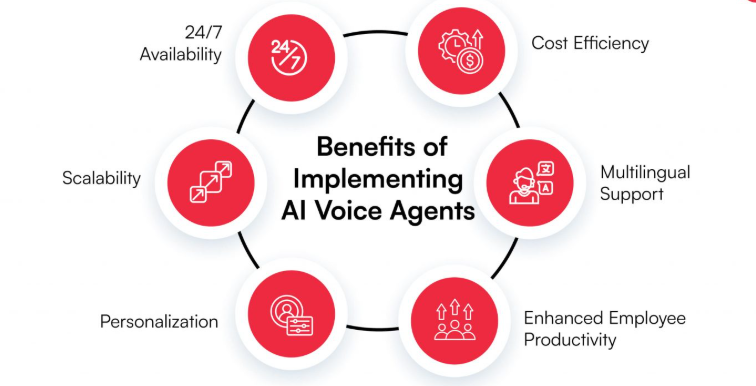
None of this has a clean human solution at scale. AI voice agents address all of it simultaneously:
- Round-the-clock availability without overtime costs or rota management
- Consistent responses every time, regardless of call volume or time of day
- Instant query resolution for common questions without queue time
- Seamless human handoff for complex issues, with full context transferred
For businesses managing AI-generated video content and digital communications with customer service, the same AI infrastructure with voice agents can connect across channels. This keeps the experience the same whether a customer reaches you by phone, chat, or video.
The Cost of Not Acting Is Growing
Every unanswered call is a missed sale. Every hold queue is a loyalty problem in progress. Businesses still running entirely human contact centres are paying more per interaction than competitors using AI, while achieving slower resolution times. That gap compounds over time.
How AI Voice Agents Work in Practice
1. They Listen to Intent, Not Just Words
When a customer calls you and says, “I’m not happy with my last order,” that sentence tells you almost nothing about what needs to happen next. But it tells you everything about how they are feeling. Those are two different things, and closing that gap is where older phone systems have always fallen short.
AI voice agents do not wait for the customer to spell out what they need. They read what is underneath the words, the frustration, the expectation, the history behind a particular call, and respond to that rather than just the surface-level request. The conversation moves like a real one instead of feeling like both sides are working through a script neither of them chose.
Action tip: When evaluating platforms, test with deliberately vague or colloquial phrasing. If the system handles it well, it will handle real customers well.
2. They Resolve Queries Without a Queue
The moment a call arrives, the AI answers. No hold music. No “your call is important to us.” For regular and common questions that a company might get, like account balances, appointment confirmations, or order status, customers get the answers quickly using AI voice agents.
Action tip: Identify your three most frequent inbound call types. If any of them follow a predictable resolution path, those are your first automation candidates.
3. They Pull Context Before Saying a Word
Before responding to a customer, an AI voice agent quickly checks the customer’s history, open tickets, recent purchases, and account status. This data helps it answer the customer’s questions more efficiently. The caller does not have to introduce themselves or explain their situation from scratch. The system already knows from the data.
Action tip: Ensure your voice agent integrates with your CRM from day one. Without that connection, the contextual advantage disappears entirely.
4. They Hand Off to Humans Without Losing the Thread
When an AI agent cannot answer a question, it directs the call to humans. It also passes a full summary to the human, so the customer does not have to repeat themselves. That transition is where most AI implementations either earn or lose customer trust.
Action tip: Script and test the handoff moment specifically. It is the most fragile point in the entire interaction flow and deserves more attention than any other part of the setup.
5. They Work Outbound as Well as Inbound
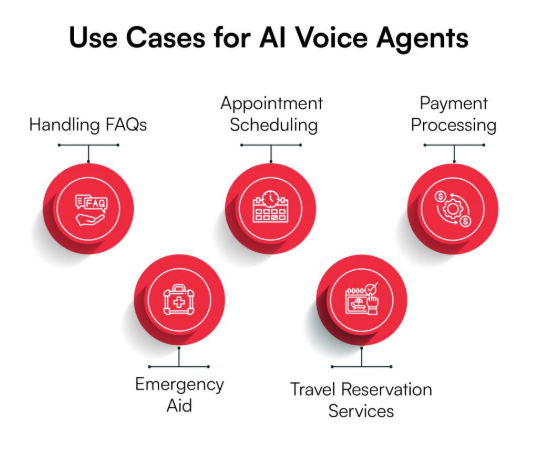
Most businesses think of voice agents as call-answering tools. But they also handle outbound calls. Appointment reminders, payment confirmations, satisfaction follow-ups, and renewal notifications. All of it delivered in a natural voice, at scale.
Action tip: List every outbound call your team makes weekly. Any call where the content follows a fixed pattern is a candidate for automation.
6. They Support Human Agents in Real Time
Nobody expects a human agent to remember everything mid-call. The best setups do not make them try. AI runs alongside the agent, pulling up what is relevant, flagging compliance prompts, and suggesting responses as a conversation moves. The agent stays present with the customer.
Capable tools like an AI voice assistant make this kind of setup far more accessible than it used to be. Modern voice APIs now support 35+ languages, handle thousands of simultaneous calls, and run at a cost that makes the business case straightforward without needing an enterprise budget to back it.
Action tip: If full automation feels like too large a step, start here. Assisted agent mode delivers measurable gains without removing the human from the conversation.
7. They Get Better With Every Call
Each interaction generates data. Every team has people who are brilliant on the phone. They know the product, they know the customers, and they know how to handle the ones who call in already frustrated. Then they leave, and that knowledge walks out with them.
AI does not work that way. Every call adds something. A phrase the system had not heard before. A complaint pattern that keeps coming up on Wednesday afternoons. A type of query that consistently goes to a human when it does not need to. None of it disappears between shifts or gets lost in a handover note nobody reads.
Action tip: Set aside time each month for the first six months to go through a sample of call transcripts. The moments where the AI stumbles or hands off unnecessarily are not failures. They are the exact information you need to make the next version better.
8. They Keep the Experience Consistent Regardless of Volume
Two o’clock on a Tuesday afternoon or midnight on a bank holiday weekend, the customer gets the same experience. It does not shift based on who drew the short straw on the rota that day. Human teams do their best, but volume, fatigue, and individual variation make consistency genuinely difficult to maintain. It is a structural reality. Removing that variable is one of the clearest cases for AI adoption in business operations.
Action tip: Use your existing customer satisfaction data to identify when scores dip lowest. If out-of-hours or peak volume periods show the sharpest drops, that is where AI voice agents deliver the fastest and most measurable return.
How to Implement AI Voice Agents Without Committing Mistakes
Most implementations that underperform make the same errors. They automate before understanding, they skip the pilot stage, and they fail to bring the team along.
1. Start with a specific use case, not a platform
Pick one call type to automate first. Not the most complex one, and not a trivial one. Pick a medium-complexity query that occurs frequently and has a relatively predictable resolution path. Get that working properly before expanding.
2. Invest in the voice experience
The naturalness of the voice matters more than most businesses expect. A voice agent that sounds robotic or hesitates oddly loses the caller’s trust immediately. Test extensively with real users before going live.
3. Design the human handoff carefully
The transition from AI to human is where most frustrating experiences occur. When the AI cannot resolve something, the handoff should feel seamless to the caller. The human agent needs full context without asking the caller to repeat themselves.
4. Tell your customers
UK consumers are increasingly comfortable with AI-handled interactions, but transparency builds trust faster than concealment. A brief disclosure at the start of a call sets the right expectation.
5. Measure what matters
Resolution rate, average handling time, and customer satisfaction scores are the metrics worth tracking. Do not track call volume deflection in isolation, as it can mask poor resolution quality.
The Future of Customer Interaction Runs on Voice
Voice is the most natural human interface that exists. Typing a query into a search box or navigating a help menu requires effort. Speaking requires none. AI voice agents remove the friction that has always existed between a customer with a problem and a business that wants to solve it.
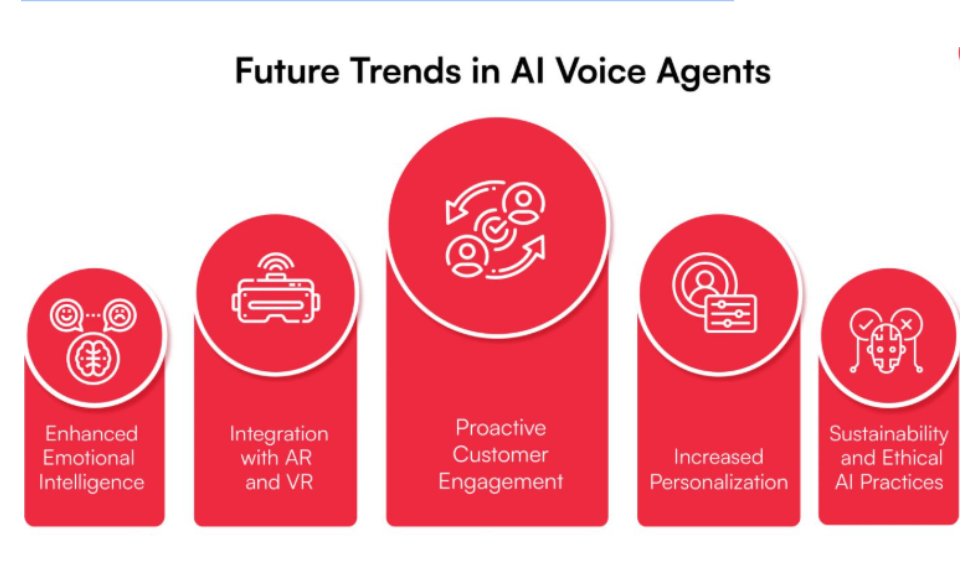
The businesses that move on this now are building an advantage that compounds. Every call handled by an AI agent generates data. That data trains better models. Better models handle more complex queries. The system improves continuously.
Ventox Weekly covers the emerging technologies reshaping how modern businesses operate. Explore more topics across technology, business, and innovation and stay ahead of the shifts that matter.
