
Hotshot trucking is a specialised freight service that uses medium-duty trucks and flatbed trailers to move urgent, time-sensitive cargo faster than standard freight options, bypassing the delays of LTL consolidation or scheduled freight runs entirely. The core distinction isn’t volume or cost efficiency, but speed and directness.
In five industries, that distinction isn’t a convenience. It is an operational lifeline, and understanding which situations warrant it can save operations managers from decisions that cost far more than the freight premium itself.
1. Oil and Gas
A drilling rig does not pause gracefully when a pump seal fails. It stops operations instantly, and that sudden stoppage can cost anywhere from $10,000 to over $100,000 per hour depending on the rig scale and specific contract terms.
Standard LTL or scheduled freight cannot respond within that narrow operational window because consolidation logistics struggle to move a single critical component directly to a remote site within a few hours.
Expediting delivery closes that gap by moving the missing valve point-to-point without detours through regional freight hubs.
Many industrial managers might secure efficient hotshot trucking services by Titan Worldwide Logistics to bypass complex routing systems and resolve these costly bottlenecks. Every idle hour compounds the financial drain, trading a deferred freight invoice for a massive operational loss.
| Key Insight: Rig downtime can cost over $100,000 per hour, making the premium for a direct hotshot delivery economically invisible against the scale of operational losses from even a minor delay. |
2. Construction
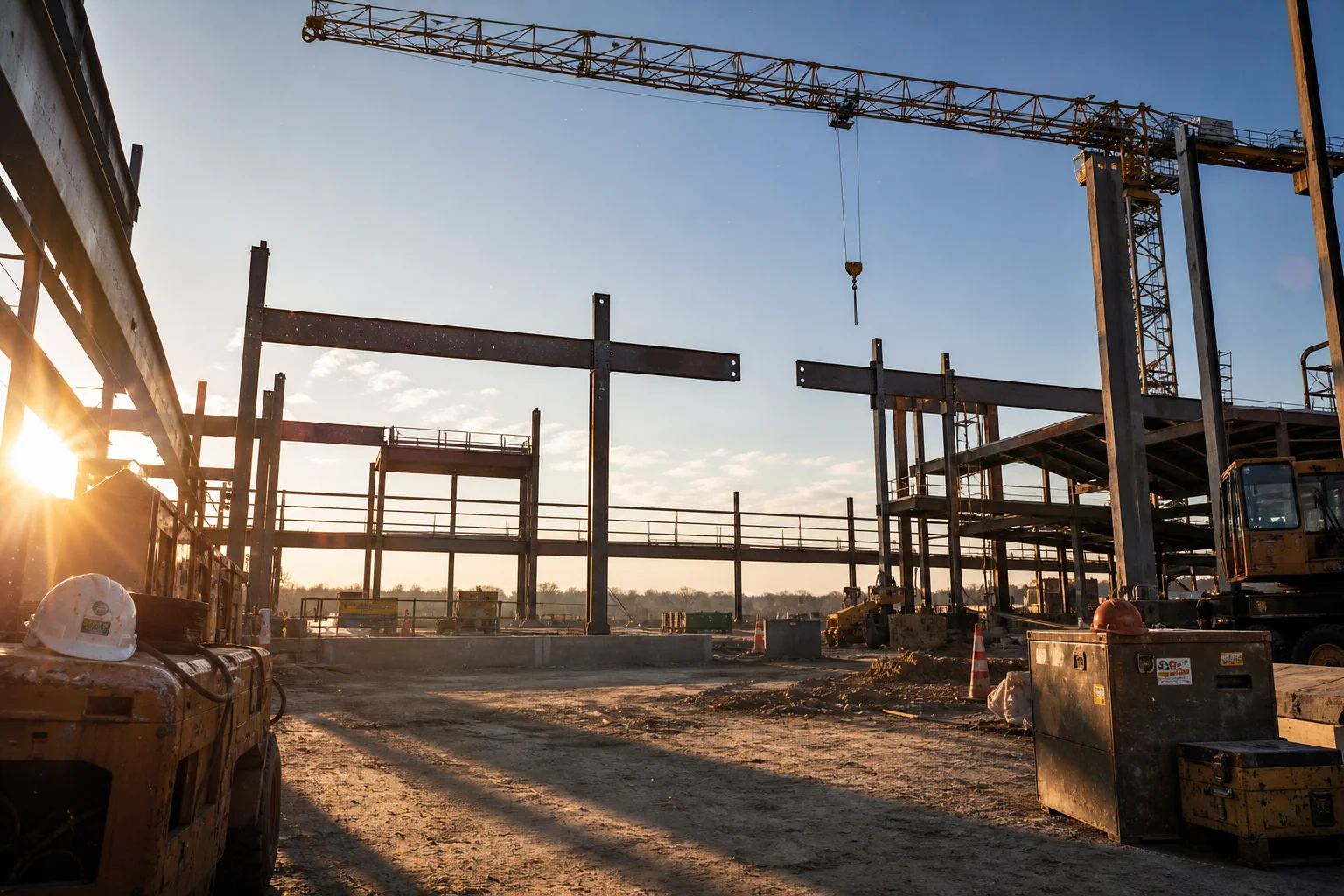
When a missing structural beam halts a build site, the financial drain is distributed across every worker standing idle. Equipment operators and subcontractors cannot advance their tasks since their immediate work relies on the delayed component arriving first.
With basic construction labourers earning around $22.14 per hour, one idle crew day for a large site team carries a labour expense that dwarfs expedited freight premiums.
The downstream consequences multiply the original disruption further over the following weeks. Construction delays trigger contractual penalty clauses where liquidated damages of $1,000 to $5,000 per day are common.
These interruptions force subcontractor rescheduling across multiple follow-on projects while creating scheduling gaps for specialised crane rentals, making direct transport the only logical choice to maintain the contracted timeline.
3. Agriculture
Agricultural planting and harvest windows open and close in a matter of days. The critical period for avoiding stress in corn occurs strictly during the two weeks before and after tassel emergence, giving farmers almost no margin for equipment downtime. When a combine breaks down during that specific period, the overarching season’s yield sits at ongoing risk until mechanics complete the repairs.
Standard freight timelines remain commercially unacceptable in this environment because the cost of waiting shifts into a crop health calculation. A standard 72-hour delivery schedule during a 14-day harvest cycle eats up a massive percentage of the viable operational season.
Managers utilise expedited logistics to move replacement components in hours, choosing a slight shipping increase to avoid permanent losses measured in harvested crops.
4. Renewable Energy
Solar and wind installation projects run on pre-sequenced schedules where commissioning engineers and specialised crews are booked months in advance. A delayed inverter shipment or missing mounting hardware cascades rapidly across the calendar. Each subsequent phase requires the prior one to finish, meaning a single missing piece effectively stalls the ongoing build.
Rescheduling these specialist crews carries high financial cost and complex contractual headaches for project managers. Rebooking them often means waiting weeks for the next available window since these experts remain heavily scheduled across regions. Direct dispatch prevents a one-day component delay from escalating into a three-week schedule disruption.
5. Emergency Response
When floodwaters rise, or local infrastructure fails after a declared disaster, generators and medical supplies must reach distinct staging locations immediately.
Standard transport networks are frequently disrupted in exactly those scenarios, as damaged roads and overwhelmed regional hubs cause consolidated delivery routes to collapse. Direct dispatch fills the logistical gap that fixed freight networks cannot physically cover during active crisis operations.
Government agencies and emergency contractors depend on this localised capability when timelines shift from commercial deadlines to humanitarian necessities.
The focus in this context ignores freight premiums in favour of achieving the fastest possible arrival time at the staging zone. Point-to-point delivery without scheduled consolidation stops is often the only transport structure that manages to navigate disrupted terrain effectively.
The Bottom Line
Evaluating when a freight situation demands point-to-point delivery requires calculating whether the per-hour cost of site downtime outpaces the shipping premium. Decision-makers must also determine if standard expedited transit is geographically too slow, or if the specific cargo requires transit without intermediate hub stops.
Across all five critical sectors, the underlying logic is consistent since the financial risk of extended delays heavily exceeds specialised transport pricing.
Direct dispatch solves this logistical problem when standard transit risks a harvest window or stalls an offshore drilling rig. Managers building contingency plans for high-stakes equipment integrate these transport parameters before mechanical failures ever strike.
| Author Profile: Titan Worldwide Logistics is the leading third-party logistics provider of heavy haul trucking and heavy equipment transport solutions for vital industries across North America. |
