
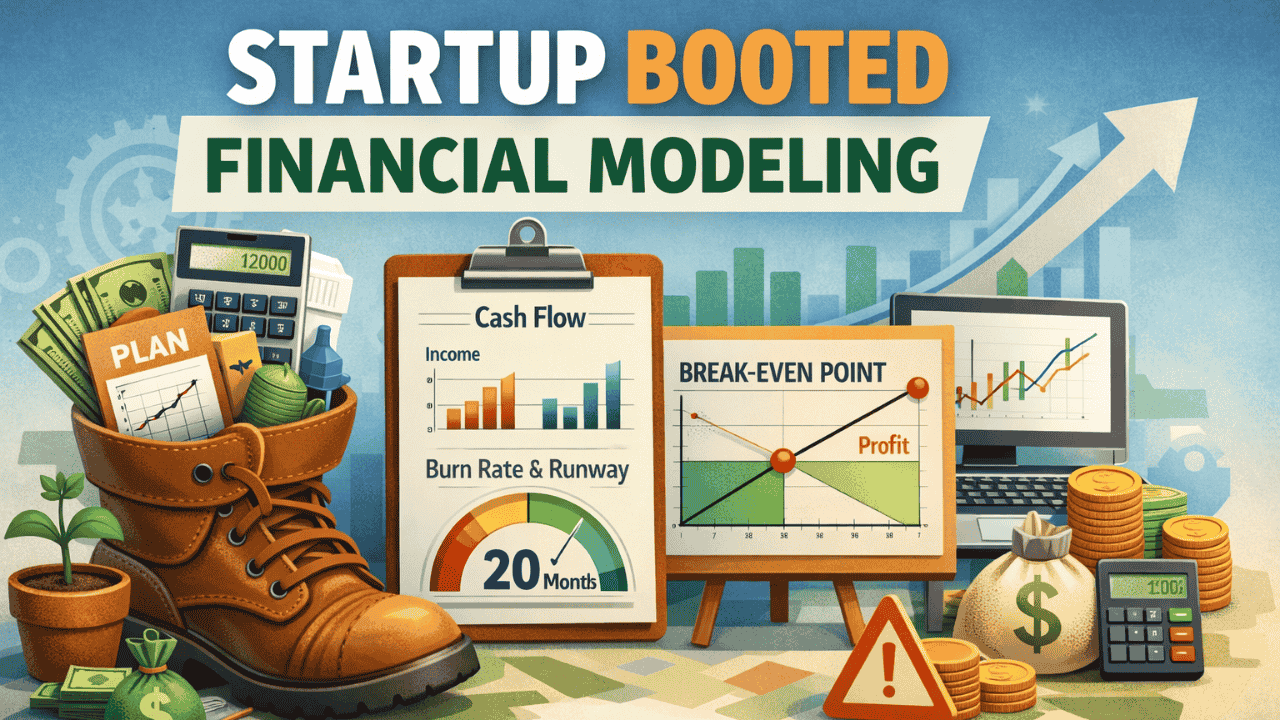
In the fast-paced world of entrepreneurs, financial planning can determine whether a business thrives or fails. While many founders dream of venture capital funding, a growing number are choosing the bootstrapped path—building their startups with minimal external investment. This is where startup booted financial modeling becomes essential. Unlike traditional financial models designed for investor-backed startups, startup booted financial modeling focuses on sustainability, cash flow management, and disciplined growth. It provides founders with a realistic roadmap for operating efficiently and making smarter financial decisions. In this guide, we’ll explore what startup booted financial modeling is, why it matters, and how you can build one for your business.
What is Startup Booted Financial Modeling?
Startup booted financial modeling is the process of creating a financial plan tailored for bootstrapped startups—businesses that rely on internal revenue rather than external funding.
This type of financial model emphasizes:
- Cash flow over profit projections
- Realistic revenue forecasting
- Strict cost control
- Sustainable growth
Instead of chasing aggressive growth metrics, the focus is on ensuring that the business can survive, operate, and gradually scale using its own resources.
Why Startup Booted Financial Modeling is Important
For bootstrapped startups, every dollar counts. Without access to large funding rounds, founders must rely on accurate financial planning to stay afloat.
Here’s why startup booted financial modeling is crucial:
Ensures Financial Survival
Bootstrapped startups operate with limited capital. A well-built model helps track cash flow and avoid running out of money.
Improves Decision Making
From hiring employees to investing in marketing, every decision can be evaluated using financial projections.
Encourages Discipline
It forces founders to think carefully about expenses and prioritize essential investments.
Reduces Risk
By forecasting different scenarios, startups can prepare for uncertainties and market changes.
Key Components of Startup Booted Financial Modeling
A strong financial model for a bootstrapped startup includes several critical elements:
Revenue Forecasting
Revenue projections should be realistic and founded on actual data, not assumptions.
- Customer acquisition rates
- Pricing strategy
- Sales channels
Avoid overly optimistic “hockey stick” growth curves. Instead, focus on gradual and achievable growth.
Expense Planning
Understanding your costs is essential.
Fixed Costs:
- Rent
- Salaries
- Software subscriptions
Variable Costs:
- Marketing spend
- Production costs
- Delivery expenses
Tracking both helps you control spending and maintain profitability.
Cash Flow Management
Cash flow is the most important aspect of startup booted financial modeling.
Even profitable enterprises can fail if they run out of cash. Your model should include:
- Monthly cash inflows
- Monthly cash outflows
- Net cash position
This helps you understand how long your business can survive.
Burn Rate Calculation
Burn rate is the rate at which your startup spends money.
There are two types:
- Gross burn: Total monthly expenses
- Net burn: Expenses minus revenue
Monitoring burn rate helps you avoid overspending.
Runway Estimation
Runway tells you how many months your startup can operate before running out of cash.
Formula:
Runway = Available Cash / Monthly Burn Rate
This is a critical metric for survival.
Break-even Analysis
Break-even is the point where your revenue equals your expenses.
Knowing this helps you:
- Set realistic targets
- Plan growth strategies
- Understand profitability timelines
Startup Booted Financial Modeling vs Traditional Startup Models
Bootstrapped startups operate differently compared to venture-backed companies.
| Funding | Self-funded | External funding |
| Focus | Profitability | Growth |
| Risk | Controlled | High |
| Strategy | Sustainable | Aggressive |
| Cash Use | Conservative | Expansive |
Startup booted financial modeling prioritizes long-term survival over short-term scaling.
How to Build a Startup Booted Financial Model
Creating a financial model doesn’t have to be complicated. Follow these steps:
Define Your Business Model
Start with a clear understanding of:
- Your product/service
- Target customers
- Revenue streams
Estimate Revenue
Project monthly revenue based on:
- Number of customers
- Pricing
- Conversion rates
Keep your estimates conservative.
List All Expenses
Include every cost, even small ones.
Divide them into:
- Fixed costs
- Variable costs
Build a Cash Flow Statement
Track:
- Incoming cash (sales, payments)
- Outgoing cash (expenses)
This is the backbone of startup booted financial modeling.
Calculate Key Metrics
Focus on:
- Burn rate
- Runway
- Break-even point
These metrics guide your decisions.
Create Scenarios
Prepare for different situations:
- Best-case scenario
- Worst-case scenario
- Expected scenario
This helps you stay prepared for uncertainty.
Common Mistakes in Startup Booted Financial Modeling
Even experienced founders make mistakes. Here are some common ones to avoid:
Overestimating Revenue
Unrealistic projections can lead to poor decisions.
Ignoring Small Expenses
Small costs add up over time and impact cash flow.
Confusing Profit with Cash Flow
Profit doesn’t always mean you have cash available.
Not Updating the Model
Your financial model should be updated regularly based on actual performance.
Hiring Too Early
Expanding your team too quickly can increase burn rate and reduce runway.
Tools for Startup Booted Financial Modeling
You don’t need expensive software to build a financial model.
Popular tools include:
- Microsoft Excel – Flexible and widely used
- Google Sheets – Great for collaboration
- Notion – Useful for combining financial planning with documentation
- Startup financial templates – Ready-made models to save time
Choose a tool that suits your productivity and level of expertise.
Best Practices for Effective Financial Modeling
To make the most of startup booted financial modeling, follow these best practices:
Stay Conservative
Always underestimate revenue and overestimate expenses.
Focus on Cash
Cash flow is more important than profit in the early stages.
Review Monthly
Update your model regularly to reflect real data.
Track Key Metrics
Monitor burn rate, runway, and break-even point consistently.
Keep It Simple
Avoid overly complex models. Simplicity improves clarity and usability.
Real-World Example of Startup Booted Financial Modeling
Imagine a SaaS startup with:
- Monthly revenue: $5,000
- Monthly expenses: $4,000
- Cash in bank: $20,000
Net burn: $1,000/month
Runway: 20 months
With this model, the founder can:
- Plan hiring carefully
- Invest in growth strategically
- Avoid unnecessary expenses
This is the power of startup booted financial modeling—making informed, data-driven decisions.
Conclusion
Startup booted financial modeling is not just a financial exercise—it’s a survival strategy. For bootstrapped enterprises, where resources are limited and risks are high, having a clear financial roadmap is essential.
By focusing on cash flow, maintaining disciplined spending, and making realistic projections, founders can build sustainable businesses without relying on external funding.
You May Like: Management Tips Ftasiastock: Smarter Leadership and Sustainable Growth
