
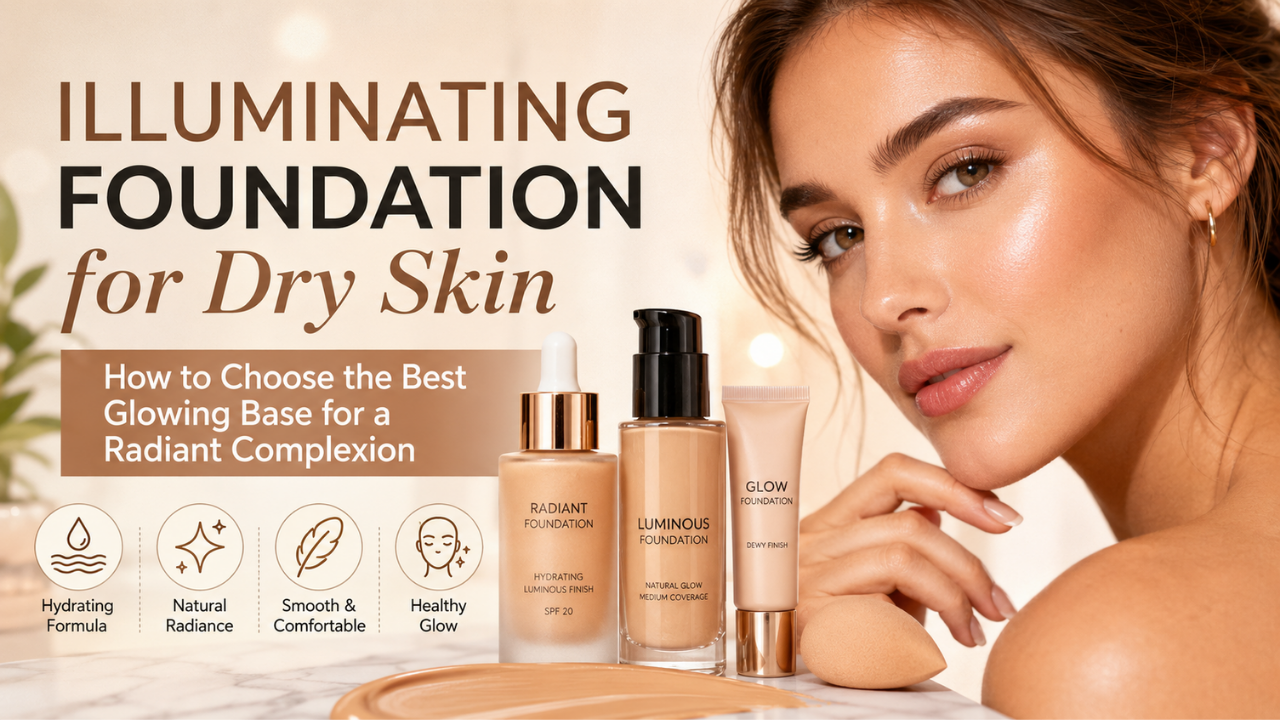
Finding the right foundation can be challenging when you have dry skin. Many traditional foundations can settle into dry patches, emphasise flaky areas, or leave the complexion looking dull and uneven. This is why an illuminating foundation for dry skin has become a popular choice among makeup lovers who want a smooth, radiant, and healthy-looking complexion. Unlike heavy matte foundations, illuminating formulas are designed to create a luminous appearance that reflects light and gives the skin a fresh glow. The right formula can help dry skin look more hydrated, comfortable, and naturally radiant while providing the coverage needed to even out the complexion. However, choosing the best illuminating foundation is not simply about picking a product labelled “glow” or “radiance.” A good foundation for dry skin should also have a comfortable texture, a suitable coverage level, and ingredients that support a moisturised appearance. It should blend easily without highlighting texture and should work well with your existing skincare routine. In this guide, we will explore everything you need to know about choosing an illuminating foundation for dry skin, including the best ingredients to look for, different coverage options, application techniques, common mistakes, and tips for achieving a beautiful glowing makeup look.
What Is an Illuminating Foundation for Dry Skin?
An illuminating foundation is a complexion product designed to provide a radiant, glowing, or light-reflective finish. Instead of creating a completely flat or powdery appearance, these foundations help the skin look more luminous and fresh.
For people with dry skin, an illuminating foundation can be particularly appealing because dryness often makes the complexion appear dull. A luminous foundation can visually bring life back to the face and create the appearance of healthier-looking skin.
However, it is important to understand that an illuminating finish and a hydrating formula are not necessarily the same thing. A foundation may contain light-reflecting pigments that create glow without actually providing much moisture. Therefore, people with dry skin should consider both the finish and the formula when shopping for foundation.
The best illuminating foundation for dry skin often combines a radiant finish with moisturising or skin-conditioning ingredients. These formulas may include ingredients such as glycerin, hyaluronic acid, squalane, or nourishing botanical oils.
Why Choose an Illuminating Foundation for Dry Skin?
Dry skin often has unique makeup concerns. Foundation may appear patchy, settle around dry areas, or make fine lines and texture more visible. A very matte foundation can sometimes make these concerns more noticeable.
An illuminating formula can provide several visual benefits.
It Creates a Healthy-Looking Glow
The primary advantage of an illuminating foundation is its ability to create radiance. Light-reflecting ingredients can help the complexion appear brighter and more refreshed.
It Can Make Skin Look Less Dull
Dry skin can sometimes look tired or lacklustre. A luminous foundation can add dimension and brightness, helping the complexion appear more awake.
It Can Create a More Natural Finish
Many modern illuminating foundations are designed to mimic the appearance of real skin. Instead of looking completely matte or overly powdered, they can provide a soft, skin-like finish.
It Works Well With Hydrating Makeup Routines
When paired with a suitable moisturiser and hydrating primer, a luminous foundation can become part of a complete makeup routine designed for dry skin.
What to Look for in an Illuminating Foundation for Dry Skin
Choosing the right foundation requires more than looking at the shade. Several factors can affect how the product looks and feels throughout the day.
Look for a Radiant or Luminous Finish
The finish is one of the most important considerations. Search for terms such as:
- Luminous
- Radiant
- Dewy
- Natural glow
- Satin
- Skin-like
- Hydrating
- Moisturizing
These descriptions often indicate that the product is designed to avoid an extremely flat, powdery finish.
Consider Hydrating Ingredients
If you have dry skin, look for formulas that contain moisturising or skin-conditioning ingredients.
Hyaluronic acid is commonly used in beauty products because it helps attract and retain moisture.
Glycerin is another popular humectant that can help support a comfortable, moisturised feel.
Squalane is a lightweight emollient that is frequently used in skincare and makeup products designed for dry or dehydrated skin.
Some foundations may also contain botanical oils or other emollients that help create a softer, smoother feel.
Keep in mind that the presence of an ingredient does not guarantee that a foundation will work for everyone. Skin type, individual sensitivity, climate, and the overall formulation all matter.
Choose the Right Coverage
Illuminating foundations are available in a variety of coverage levels.
Sheer coverage is ideal for people who want to even out their complexion while maintaining a natural skin-like appearance.
Light-to-medium coverage offers a balance between a natural finish and the ability to cover mild discolouration.
Medium-to-full coverage may be better for those who want to conceal more noticeable redness, pigmentation, or unevenness.
For dry skin, applying a thin layer and building coverage gradually can often produce a more natural result than applying a large amount of full-coverage foundation at once.
Pay Attention to Texture
Liquid and serum-style foundations are often popular among people with dry skin because they can spread easily across the complexion.
Cream foundations may also work well, depending on the formulation.
Powder foundations can be more challenging for very dry skin because they may emphasise texture or flaky areas. However, individual results vary, and some finely milled powder products may still work when applied over properly moisturised skin.
Illuminating vs Dewy Foundation: What’s the Difference?
The terms “illuminating” and “dewy” are sometimes used interchangeably, but they can describe slightly different effects.
An illuminating foundation typically focuses on creating visible radiance through light-reflecting pigments or ingredients.
A dewy foundation generally creates a fresh, moist, skin-like appearance.
Some products can be both illuminating and dewy. Others may provide a subtle satin glow without looking especially wet or shiny.
If you have dry skin, your personal preference is important. If you want a noticeable glow, an illuminating foundation may be ideal. If you prefer a softer, natural appearance, a foundation with a satin or natural finish may be a better choice.
Best Types of Illuminating Foundation for Dry Skin
There is no single foundation that works perfectly for everyone. The best choice depends on your skin’s needs, desired coverage, and preferred finish.
Best Lightweight Illuminating Foundation
A lightweight formula is a great option if you prefer makeup that feels comfortable and looks natural. These foundations typically provide sheer-to-medium coverage and allow some of your natural skin to remain visible.
They are ideal for everyday makeup, especially when you want a fresh appearance rather than a heavily made-up look.
Best Full-Coverage Illuminating Foundation
If you need more coverage, look for a foundation that provides medium-to-full coverage while maintaining a radiant finish.
The key is to avoid applying too much product. Start with a small amount and build coverage only where needed.
Best Illuminating Foundation for Mature Dry Skin
Mature skin can have concerns similar to dry skin, including visible texture and fine lines. A lightweight, radiant foundation may help create a softer and more youthful-looking finish.
However, excessive shimmer can sometimes draw attention to texture. For mature skin, a refined glow is often preferable to large glitter particles.
Best Illuminating Foundation for Very Dry Skin
People with very dry skin may benefit from combining a hydrating skincare routine with a foundation formulated for comfort.
Before applying makeup, use a moisturiser suited to your skin. If needed, follow with a hydrating primer. Then apply a thin layer of foundation and gently blend it into the skin.
How to Prepare Dry Skin Before Foundation
Even the best illuminating foundation for dry skin may not look its best if the skin underneath is not properly prepared.
Step 1: Start With Clean Skin
Begin with a gentle cleansing routine. Avoid using products that leave your skin feeling excessively tight or uncomfortable.
Step 2: Apply Moisturiser
Use a moisturiser appropriate for your skin type. Give it enough time to absorb before applying makeup.
Step 3: Add Hydrating Primer if Needed
A hydrating primer can help create a smoother base. If your foundation is already moisturising, you may not need a separate primer.
Step 4: Avoid Overloading the Skin
Using too many skincare and makeup products can sometimes cause pilling. Allow each layer to settle before applying the next.
How to Apply Illuminating Foundation for Dry Skin
Application technique can have a major impact on the final result.
Use a Small Amount First
Start with a small amount of foundation. Place it on the centre of your face and blend outward.
This approach prevents unnecessary buildup around the hairline and jaw.
Blend Gently
Use a makeup sponge or foundation brush depending on your preferred finish. A damp sponge can create a soft, natural effect, while a brush may provide more coverage.
Avoid excessive rubbing, especially if your skin is dry or sensitive.
Build Coverage Gradually
If you need more coverage, add another thin layer rather than applying a thick layer immediately.
This technique can help maintain the luminous finish while still providing additional coverage where needed.
Use Powder Sparingly
Powder is not necessarily the enemy of dry skin, but excessive powder can reduce the luminous effect you are trying to achieve.
If you need powder, apply a small amount only to areas where makeup tends to crease or become shiny.
Finish With Setting Spray
A suitable setting spray can help bring your makeup layers together and create a more seamless appearance. Choose a formula that complements your desired finish.
How to Stop Illuminating Foundation From Looking Cakey
Even a radiant foundation can look cakey if it is applied incorrectly.
One of the biggest mistakes is using too much product. More foundation does not always mean better coverage. Instead, start with a thin layer and add coverage only where necessary.
Another common problem is applying foundation over extremely dry, unprepared skin. Moisturising beforehand can help create a smoother base.
Excessive powder can also make makeup look dry. If you have dry skin, consider powdering only the areas that truly need it.
Finally, make sure your skincare and makeup products work well together. If products begin to roll or peel when layered, you may need to adjust the order or amount of product you use.
Common Mistakes to Avoid
When using an illuminating foundation for dry skin, avoid these common mistakes:
Choosing the Wrong Shade
A radiant finish cannot compensate for an incorrect shade. Test your foundation carefully and consider your undertone.
Applying Too Much Product
Heavy layers can settle into texture and make the complexion look less natural.
Using Too Much Powder
Excessive powder can reduce the glow and emphasise dry areas.
Skipping Moisturizer
Foundation should generally be applied to skin that has been properly prepared for makeup.
Confusing Shimmer With Radiance
A good illuminating foundation usually creates a refined glow. Products containing large amounts of visible glitter may emphasise texture rather than create a natural-looking radiance.
Ignoring Your Skin’s Individual Needs
Dry skin is not identical for everyone. Some people experience mild dryness, while others have significant dehydration or sensitivity. Consider your individual needs when choosing products.
How to Choose the Right Shade
Shade selection is essential when purchasing an illuminating foundation.
Start by identifying your skin’s undertone. The most common undertones are:
- Warm
- Cool
- Neutral
- Olive
A foundation that matches both your skin depth and undertone will generally look more natural.
If possible, test the shade along the jawline rather than only on the hand. The goal is to find a shade that blends naturally between the face and neck.
Is Illuminating Foundation Good for Dry Skin?
In many cases, yes. An illuminating foundation can be an excellent choice for dry skin because its radiant finish may help the complexion appear fresher and less dull.
However, the best option depends on the specific formula. A foundation can have a beautiful glow but still feel uncomfortable if it lacks ingredients suitable for dry skin.
Therefore, when shopping for an illuminating foundation for dry skin, look at the complete product description and ingredient list. Consider the finish, texture, coverage, and how the foundation interacts with your skincare routine.
Can You Use Illuminating Foundation Every Day?
Yes, an illuminating foundation can be used for everyday makeup if you enjoy the finish and the product feels comfortable on your skin.
For daily wear, many people prefer lightweight or medium-coverage formulas that allow the skin to look natural.
If you have particularly dry skin, you may also want to adjust your makeup routine according to the season. Cold weather, indoor heating, and dry environments can affect how foundation sits on the skin.
Tips for a Long-Lasting Glowing Makeup Look
A glowing finish does not have to disappear quickly. You can improve the longevity of your makeup with a few simple techniques.
First, prepare your skin properly. Use moisturiser and allow it to absorb.
Next, apply foundation in thin layers. Avoid creating a thick layer that may break down throughout the day.
Use powder strategically rather than applying it everywhere.
Finally, consider using a setting spray that works with your skin type and desired finish.
The goal is to maintain the balance between longevity and radiance.
Frequently Asked Questions
What is the best illuminating foundation for dry skin?
The best illuminating foundation depends on your skin tone, coverage preferences, and specific level of dryness. Look for a foundation with a radiant or natural finish and a formula designed to feel comfortable on dry skin.
Is dewy foundation better than matte foundation for dry skin?
Many people with dry skin prefer dewy or luminous foundations because they can create a fresher appearance. However, the best choice ultimately depends on personal preference and the specific formulation.
Should I use primer before illuminating foundation?
A hydrating primer can be useful, but it is not always necessary. If your foundation already provides a comfortable, radiant finish, moisturiser alone may be enough.
How do I prevent foundation from emphasising dry patches?
Start with proper skincare preparation, use a suitable moisturiser, avoid applying excessive foundation, and blend gently. Strategic powder application can also help maintain a natural finish.
Can mature skin use illuminating foundation?
Yes. A soft, refined luminous finish can work beautifully on mature skin. However, very intense shimmer may emphasise texture, so a subtle radiance is often preferable.
Final Thoughts on Illuminating Foundation for Dry Skin
Choosing the right illuminating foundation for dry skin can make a significant difference in the overall appearance of your makeup. Instead of leaving the complexion looking flat or overly powdered, a well-formulated luminous foundation can help create a fresh, radiant, and natural-looking finish.
You May Like: Fashionisk .com: Your Modern Hub for Style, Beauty, and Lifestyle Trends
