
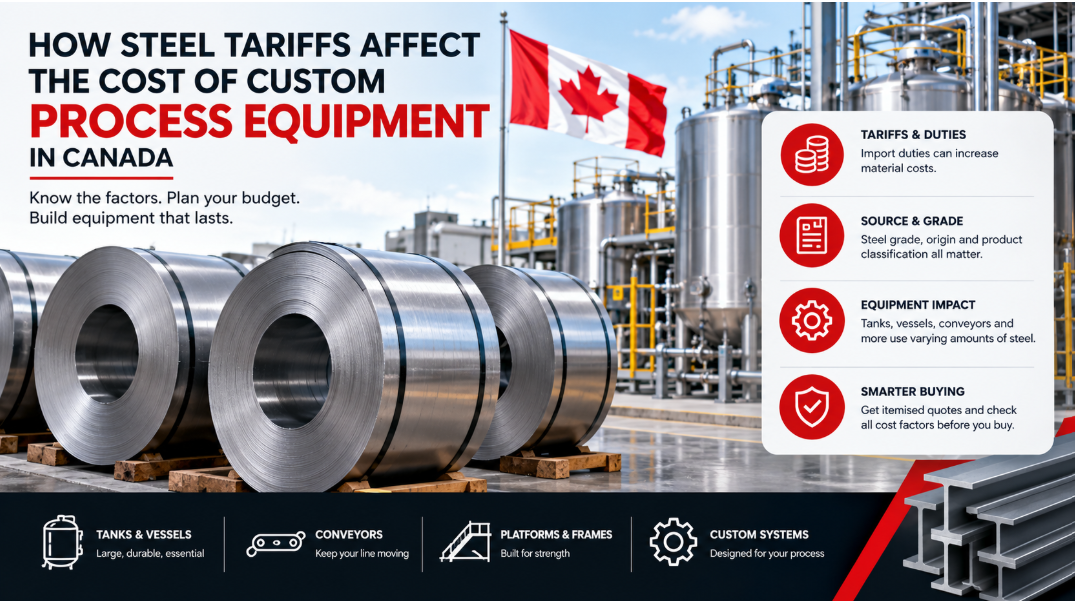
Buying custom equipment is rarely as easy as lining up a few quotes and picking the lowest number. You need to know what is included in that price. You need to know how long production will take, and whether the finished machine will actually do the job your operation needs. And then steel prices shift, and the budget you worked hard on starts to look shaky.
Tanks, storage vessels, conveyors, platforms, processing systems. All of them lean on materials and fabrication work. The cost can be higher owing to import duties, but that extra expense depends on what steel is used and from where it is sourced. Along with these details, you’ll be able to set a realistic budget and choose equipment that will last.
How Steel Tariffs Influence Equipment Pricing
A steel tariff is a duty charged on certain imported steel products. When it applies, getting that material into the country costs more. Here’s the catch for you as a buyer: you probably won’t see a line on the quote labelled “tariff”. It usually hides inside the final price.
The steel tariffs Canada equipment cost depends on a handful of things. Steel grade, product classification and country of origin all play a part. So do supplier contracts, and whether your manufacturer buys domestic or imported material.
Domestic steel isn’t standing still either. Demand, production costs, exchange rates and international markets can all nudge prices. A tariff doesn’t mean every piece of equipment gets pricier by the same percentage.
My advice is simple. Find out how your supplier sources their material and builds up project costs. An itemised quotation is a big help because it shows where your money goes, whether that’s raw materials, engineering, labour, finishing, transport or something else.
Steel Tariffs Canada Equipment Cost: What Buyers Need to Know
Changes in trade rules can make imported steel more expensive. However, it depends on the type of steel being brought in and the rules that cover it. Some products may have tariffs or surtaxes, while others may qualify for an exemption.
The federal government’s published steel measures, for example, list different rates and effective dates for certain products. So don’t expect to pay one rate for all your steel purchases. Look at the latest official notices.
This matters when you’re asking for a quote on made-to-order machinery. A supplier importing one type of steel may face very different costs from a supplier buying an equivalent material through another channel.
Before you sign off on a budget, run through these points with your equipment manufacturer:
- Grade and origin of the proposed material
- Whether any import duties or surtaxes touch the product
- How long the quote stays valid
- Whether material-price changes could alter the agreed price before production starts
Do that and you’ll get a real picture of the commercial impact, not just a reaction to tariff headlines.
Equipment Components Most Affected by Steel Prices
Steel quantity makes a noticeable difference to the total. A large storage tank swallows a lot of sheet material. A small replacement bracket needs hardly any.
Custom process equipment comes in many forms, from mixing vessels and hoppers to conveyors, platforms, frames and storage containers. Each type needs different materials and a different amount of work to build.
Steel parts don’t all come in the same thickness. Something that carries heavy equipment, or sits in harsh conditions, usually needs thicker steel than a basic support does. Design plays a part in cost too. Odd shapes, careful welding, polished surfaces, tight dimensions. Each one adds more work, and more work adds to the price.
The steel itself is only one part of the cost. There’s also the work involved in designing the equipment, cutting and shaping the steel, welding the parts, putting everything together and checking the finished product. Any finishing work adds to the bill.
Don’t rush into accepting a quote. Two prices may be close but may not cover the same work. One quote might include testing and assembly; and another might charge them separately. Check the details with the supplier and make sure that finishing, documentation and any other extra charges are written down. By comparing the total cost, you will see which quote is right.
How Material Selection Affects Your Budget
Everyone looks at price first when picking a stainless-steel grade. Makes sense. But price isn’t the whole story. Think about what the equipment will actually do. What product goes through it, how hot it gets, how often it is cleaned, and what it deals with every single day.
Plenty of things push up the cost of custom stainless steel equipment. Grade, thickness, finish, design. For general processing, a standard grade usually does the job. Got corrosive conditions in the mix? Then you’ll probably need something more resistant.
Take 304. It’s the go-to for general processing. Grade 316L tends to fit better when certain corrosive substances are around. Either way, don’t let price make the call on its own.
Cheaper grade looking tempting? Hold on. Run it past your equipment designer first. If the material can’t take the wear, you’ll be paying for repairs or a replacement down the road. Hygiene compliance can take a hit too.
And remember, the sticker price is only part of what you’ll spend. Equipment that lasts longer and needs less fixing is often the better investment. Especially when downtime you didn’t plan for starts eating into your work.
Fabrication Choices That Help Control Rising Costs
Steel’s still pricey, sure. Good design helps anyway. You want to get the most out of your material without losing the strength, function or safety the job needs.
Solid Metal Fabrication starts with clear specs and a real feel for how the equipment will run day to day. Accurate measurements, sensible layouts, standard parts where they make sense, all that cuts waste and keeps assembly simpler.
On custom projects, an early design review is worth the time. Sort out access, connection points, dimensions and cleaning needs before production starts. Once fabrication is underway, changes get expensive fast.
Comparing suppliers? Don’t stop at the quote. A low number on paper tells you almost nothing about how the job will go. Look at their engineering, their quality checks, their welding standards, their finishing process. Can they take you from design right through to assembly? In-house engineering and fabrication keep everything connected, and there’s less room for miscommunication.
Save money by planning better and producing efficiently. Not by skipping inspections or loosening the specs. A well-designed system often gives you better long-term value than one built around the lowest price up front.
What Food Processing Businesses Should Consider
In food production, hygiene rules make material choice a big deal. Tanks, blenders, conveyors, storage containers, mixing systems. Each one has to suit what it handles and how it gets cleaned.
Good food processing industry equipment design covers corrosion resistance, cleaning surfaces you can actually reach, proper weld finishes and contamination risk. Depending on the application, you may need documentation, material traceability and compliance with certain standards as well.
Switch to a cheaper material without checking it first and it can backfire. You’ll often see the bill months later. Weak corrosion resistance or surfaces that are hard to clean? That means more maintenance and production that keeps getting interrupted.
Before you sign off on a design, confirm the basics, intended use, cleaning chemicals, temperature range, product-contact requirements, and your food safety obligations. With all that in hand, the manufacturer can choose the right materials and finishes from the start.
A clear specification does a few other things too. It heads off misunderstandings, avoids late design changes, and makes quotes easier to compare.
Practical Ways to Protect Your Equipment Budget
No one controls the steel market. What you can control is how you plan and buy. A few careful steps will help you avoid costs you don’t need.
- Request itemized quotations. Get suppliers to split out material, engineering, fabrication, finishing, assembly and delivery, where practical.
- Compare equivalent specifications. Grades, dimensions, finishes, testing, included services. Check them all before you choose.
- Confirm quotation validity. How long is the price fixed? Can material adjustments apply before production starts? Find out.
- Check availability early. Confirm supply and lead times before you commit to an installation date.
- Discuss design alternatives. Standard components or simpler shapes might cut waste without hurting performance.
- Plan for uncertainty. Set aside a reasonable contingency for documented cost changes and requirements that pop up unexpectedly.
If you’re sourcing custom stainless steel equipment, ask your supplier to explain how the chosen materials meet your operating needs. Ask how they’ll handle price changes too.
Same goes when you’re weighing up Metal Fabrication services. Look at engineering support, quality control and whether they can deliver the agreed specs. With food processing industry equipment, keep hygiene, cleanability and material suitability at the centre of every decision.
One more thing. Check current tariff requirements through official government information, then ask your supplier how any charges affect your order. Talk early. It gives you more time to adjust your procurement plans if you need to.
Make Better Equipment Decisions Despite Price Changes
News about steel tariffs Canada equipment cost can sound scary. But tariffs are just one piece of the puzzle. Material availability, design complexity, labour, finishing and supplier arrangements all shape the final price as well.
Before you commit, go over your specs. Compare quotes like for like. Confirm the terms that cover material-price changes. A little planning helps you handle the uncertainty and protect equipment quality, reliability and long-term value.
The best purchase isn’t always the cheapest quote. It’s the one that meets your production needs at a cost your business can handle across the equipment’s useful life.
