
Lower back pain is one of the most common sleep disruptors. If you wake up stiff, sore, or achy—even after a full night in bed—your mattress, sleep posture, and nighttime habits may be contributing more than you realize.
The good news? In many cases, you can significantly reduce or even eliminate lower back pain by optimizing your sleep surface, alignment, and bedtime routine.
This guide breaks down exactly how to fix lower back pain while sleeping—starting with your mattress and ending with practical sleep positioning strategies that protect your spine.
Why Your Lower Back Hurts More at Night?
Your lower spine (lumbar region) naturally curves inward. When that curve is unsupported—or overly exaggerated—during sleep, the muscles and ligaments surrounding it remain under tension for hours.
Common nighttime pain triggers include:
- A mattress that’s too soft (hips sink too deeply)
- A mattress that’s too firm (pressure on hips and shoulders)
- Poor sleep posture (especially stomach sleeping)
- Old or sagging mattress (loss of lumbar support)
- Inadequate pillow support
- Weak core or tight hip flexors
Sleep should allow your spine to rest in a neutral alignment—not flattened, not hyper-arched.
Mattress Solutions for Lower Back Pain
Your mattress is the foundation of spinal support. If it’s wrong for your body, no pillow or stretch will fully compensate.
1. Choose the Right Firmness
For most people with lower back pain:
- Medium-firm mattresses tend to offer the best balance.
- They provide enough support to keep hips elevated.
- They allow enough contouring to reduce pressure points.
Why too soft is a problem:
If your hips sink too deeply, your spine curves unnaturally, straining the lumbar region.
Why too firm can also hurt:
If the mattress doesn’t contour at all, it can push your lower back out of alignment, especially for side sleepers.
General rule: You should feel supported—not like you’re sinking or lying on concrete.
2. Replace an Old Mattress
If your mattress is:
- Over 7–10 years old
- Visibly sagging
- Causing you to wake up stiff but feel better as the day progresses
It may no longer be providing proper lumbar support.
Even high-quality foam breaks down over time. Sagging in the center is one of the most common causes of sleep-related back pain.
3. Consider a Mattress Topper (Temporary Fix)
If replacing your mattress isn’t immediate:
- A firm latex topper can add support to a sagging bed.
- A medium memory foam topper can add contouring to a too-firm mattress.
This isn’t a permanent solution—but it can improve alignment short-term.
4. Look for Zoned Support
Some mattresses include:
- Reinforced lumbar zones
- Firmer center sections
- Targeted support layers
These are designed specifically to prevent hip sinking and maintain spinal alignment.
For chronic lower back pain, zoned construction can make a measurable difference.
Best Sleep Positions for Lower Back Pain
Even the best mattress can’t compensate for poor positioning.
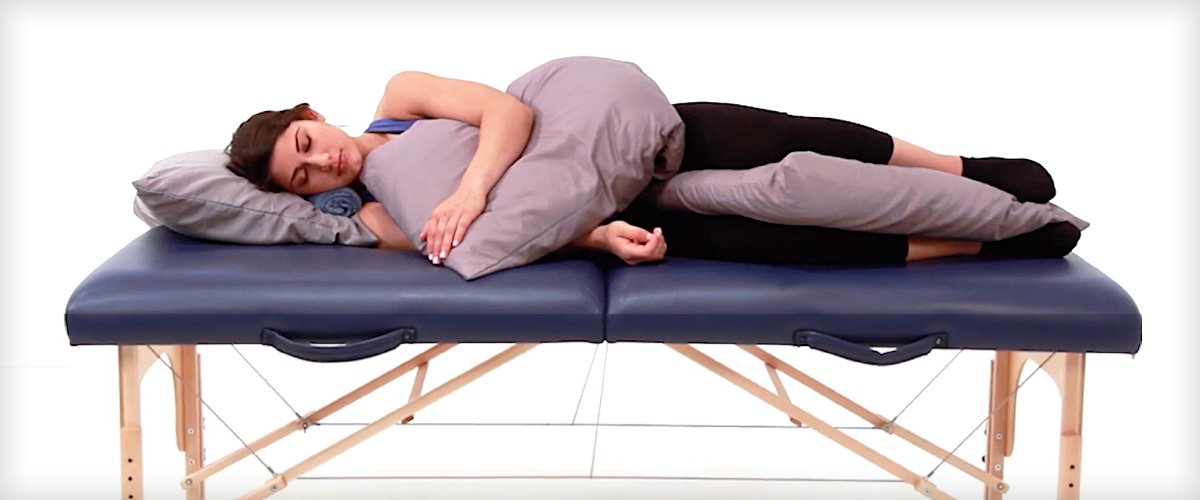
Side Sleeping (Best for Most People)
How to optimize it:
- Place a pillow between your knees.
- Keep knees slightly bent.
- Avoid curling too tightly (fetal position).
Why it works:
The pillow prevents the top leg from pulling your spine out of alignment.
Back Sleeping (Great for Alignment)
How to optimize it:
- Place a small pillow under your knees.
- Use a pillow that keeps your neck neutral (not too high).
Why it works:
The knee pillow reduces lumbar arching and supports natural spinal curvature.
Stomach Sleeping (Worst for Lower Back Pain)
Stomach sleeping forces:
- Neck rotation
- Lumbar compression
- Hip extension strain
If you cannot break the habit:
- Place a thin pillow under your pelvis.
- Use a very thin head pillow—or none.
However, transitioning to side or back sleeping is strongly recommended.
Pillow Support Matters More Than You Think
If your pillow is:
- Too high → pushes neck forward → alters spinal alignment
- Too flat → drops your head → strains shoulders and lower back
Your cervical spine (neck) influences your lumbar alignment. The entire spine works as one chain.
Side sleepers:
Use a thicker pillow to fill shoulder-to-head gap.
Back sleepers:
Use a medium-loft pillow.
Stomach sleepers:
Use the thinnest pillow possible.
Nighttime Habits That Reduce Lower Back Pain
1. Gentle Pre-Bed Stretching
Tight hips and hamstrings pull on your lower spine.
Focus on:
- Hip flexor stretches
- Hamstring stretches
- Child’s pose
- Pelvic tilts
Five minutes before bed can reduce overnight stiffness.
2. Use Heat Before Sleep
Applying heat to the lower back:
- Increases blood flow
- Relaxes muscle tension
- Reduces stiffness
Use a heating pad for 15–20 minutes before bed.
Avoid sleeping directly on it overnight.
3. Strengthen Your Core (Long-Term Fix)
Weak core muscles increase spinal strain during sleep.
Exercises that help:
- Dead bugs
- Bird dogs
- Glute bridges
- Planks
You don’t need heavy lifting—just consistent activation.
When Lower Back Pain at Night Signals Something More?
See a medical professional if you experience:
- Pain radiating down one leg
- Numbness or tingling
- Pain that worsens over time
- Pain that doesn’t improve with mattress changes
- History of spinal injury
Night pain that persists despite posture correction may indicate disc issues, nerve compression, or inflammatory conditions.
Quick Action Plan: Fix Lower Back Pain Tonight
If you want immediate improvement:
- Add a pillow under your knees (back sleepers) or between knees (side sleepers).
- Avoid stomach sleeping.
- Evaluate whether your mattress sags.
- Stretch hip flexors before bed.
- Use short-duration heat therapy.
Small adjustments can produce noticeable results within days.
Final Thoughts
Lower back pain while sleeping isn’t random—it’s usually mechanical.
The combination of:
- Proper mattress firmness
- Neutral spinal alignment
- Strategic pillow placement
- Muscle flexibility
- Core stability
can dramatically reduce or eliminate nighttime pain.
Sleep should restore your body—not strain it. If you’re waking up worse than when you went to bed, it’s time to adjust your sleep system.
Fix the foundation. Support the spine. Protect your recovery hours.
