
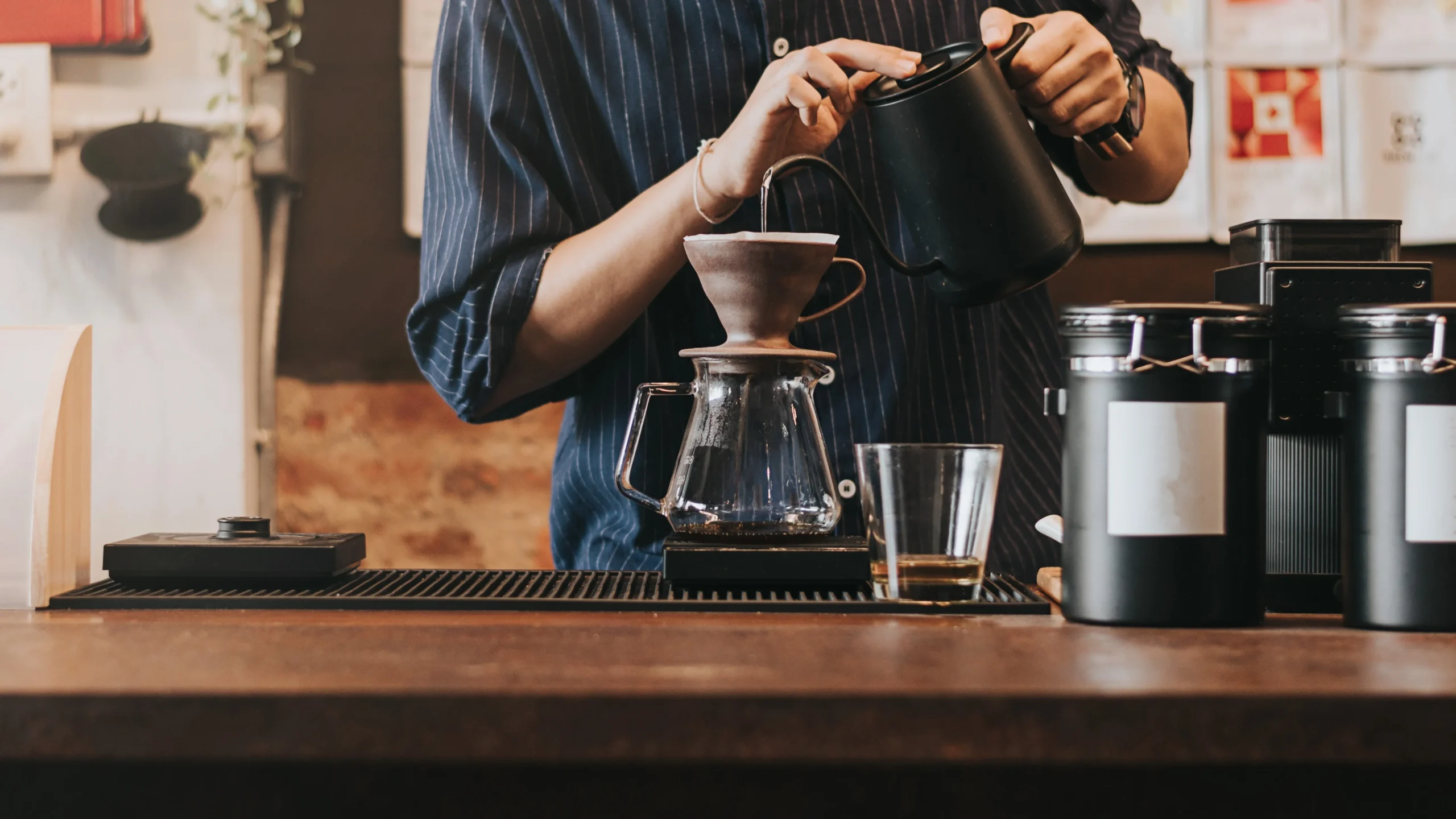
Pour-over coffee looks simple from the outside. You grind coffee, place it in a filter, pour water, and wait. But anyone who brews pour over regularly knows how quickly the cup can change. The same beans can taste bright and sweet one day, then flat, bitter, or hollow the next. One of the biggest reasons is pour over grinder consistency, because particle size directly affects how water moves through the coffee bed and how evenly the coffee extracts.
Unlike immersion brewing, where coffee grounds sit in water for a longer period, pour-over depends on controlled flow. Water passes through the grounds and filter, extracting flavor as it moves. If the grind is uneven, the water will not extract every particle equally. That is where cup quality starts to drift.
Why Pour Over Is Sensitive to Grind Quality
Pour-over brewing gives the user a lot of control. You can adjust grind size, water temperature, pour rate, bloom time, brew ratio, filter type, and agitation. That control is part of the appeal.
But it also means the method is sensitive. Small changes can show up clearly in the cup.
A grinder that produces uneven particles creates two problems at once:
- Fine particles extract quickly and may create bitterness or harshness.
- Coarse particles extract slowly and may create sourness, a thin body, or weak sweetness.
That mix can make one cup taste confused. It may feel bitter and underdeveloped at the same time.
Pro Coffee Gear’s pour over grinder guide explains this clearly: pour over exposes uneven grinds quickly because fines over-extract while larger particles under-extract in the same brew. It also notes that grind uniformity and precise adjustment matter more than brand name or price alone.
Understanding Extraction in Pour-Over Coffee
Extraction is the process of dissolving flavor compounds from ground coffee into water. In pour-over brewing, extraction depends on how the water contacts the coffee bed.
A balanced extraction usually brings out:
- Sweetness
- Clarity
- Pleasant acidity
- Clean finish
- Balanced body
- Defined flavor notes
Poor extraction can create:
- Sourness
- Bitterness
- Astringency
- Muddy flavor
- Weak body
- Dry finish
- Hollow sweetness
The grinder plays a direct role because it determines the surface area of the coffee particles. Smaller particles expose more surface area and extract faster. Larger particles expose less surface area and extract more slowly.
If the particle range is too wide, the brew becomes uneven before you even start pouring.
Grind Size vs Grind Consistency
Many brewers focus only on grind size. They ask whether the grind should be medium, medium-fine, or medium-coarse. That matters, but consistency matters just as much.
Grind size refers to the general setting.
Grind consistency refers to how uniform the particles are at that setting.
A grinder can be set to a medium grind and still produce a wide mix of fines and larger pieces. In that case, the setting may look right, but the brew may still taste unbalanced.
This is why two grinders can produce very different cups at similar-looking settings. One may create a clean, sweet cup. The other may produce a brew that stalls, tastes bitter, or lacks clarity.
How Fines Affect Pour Over Brewing
Fines are very small coffee particles. Every grinder produces some fines, but too many can cause problems.
In pour-over brewing, fines can:
- Slow water flow
- Clog the filter
- Extend brew time
- Increase bitterness
- Create dryness
- Add muddiness
- Reduce clarity
Fines often migrate toward the bottom of the filter during brewing. As they settle, they can restrict flow and create uneven extraction. The brew may start normally, then slow down near the end.
This is why a pour over may taste heavy or harsh even when the recipe seems correct.
A small amount of fines can add body, but too many will reduce clarity.
How Coarse Particles Affect Flavor
Coarse particles, sometimes called boulders, extract more slowly. If there are too many large particles in the grind, they may not release enough soluble material before the brew ends.
This can create:
- Sourness
- Weak sweetness
- Thin body
- Watery texture
- Short finish
- Underdeveloped flavor
The problem becomes worse when fines and coarse particles appear together. The fines over-extract while the larger particles under-extract. The final cup loses balance.
That is why uniformity matters. A more consistent grind gives water a better chance to extract the coffee evenly.
Why Burr Grinders Perform Better Than Blade Grinders
Blade grinders chop beans randomly. Some pieces become powder, while others remain large. This makes them a poor fit for pour-over brewing.
Burr grinders crush beans between two burr surfaces, creating more controlled particle sizes. This gives the brewer better control over extraction.
A burr grinder helps with:
- More even particle size
- Better brew repeatability
- Cleaner flavor
- Easier grind adjustment
- More predictable drawdown
- Less bitterness from excessive fines
Pro Coffee Gear’s guide notes that burr grinders are the better choice for pour over because they produce more uniform particles, while blade grinders chop inconsistently and make balanced extraction harder.
For anyone brewing pour-over regularly, the grinder is often more important than the brewer itself.
Flat Burrs vs Conical Burrs for Pour Over
Both flat and conical burr grinders can work well for pour-over. The right choice depends on flavor preference, budget, workflow, and brew volume.
Flat burrs are often associated with:
- Higher clarity
- More uniform particle distribution
- Cleaner flavor separation
- Better definition in lighter roasts
Conical burrs are often associated with:
- Good consistency in medium ranges
- Lower noise in some models
- Easier workflow
- More forgiving cups
- Stronger body in some brews
The difference is not absolute. A well-designed conical burr grinder can outperform a poorly designed flat burr grinder. Burr quality, alignment, motor stability, and adjustment precision all matter.
For pour over, the main goal is not simply flat or conical. It is a grinder that produces a consistent medium to medium-fine grind and allows precise adjustment.
Why Adjustment Precision Matters
Pour over recipes often need small grind changes. A slightly finer grind can slow flow and increase extraction. A slightly coarser grind can speed flow and reduce bitterness.
If a grinder has large adjustment steps, dialing in becomes difficult.
You may find that:
- One setting tastes sour.
- The next setting tastes bitter.
- There is no useful middle point.
A grinder with finer adjustment control lets you tune the brew more carefully. This is useful when changing beans, roast levels, brewers, filters, or recipes.
Pro Coffee Gear’s guide explains that different pour over brewers, such as V60, Chemex, and Kalita Wave, need slightly different grind sizes because brewer shape, filter thickness, and flow behavior affect extraction. It also notes that fine adjustment helps avoid guesswork during dial-in.
How Different Pour Over Brewers Change Grind Needs
Not every pour over brewer behaves the same way.
A V60 usually drains faster because of its cone shape and large bottom opening. It often benefits from a medium-fine grind and careful pouring.
A Chemex uses a thicker filter and larger brew volume. It often works better with a medium-coarse grind to prevent stalling.
A Kalita Wave has a flat-bottom design and controlled drainage. It often performs well with a medium grind.
These are starting points, not fixed rules. Coffee density, roast level, filter type, water temperature, and pouring style can all change the ideal grind.
Grinder Precision and Brew Time
Brew time is one of the easiest signs that grind precision may need attention.
If the brew drains too quickly, the grind may be too coarse or too uneven. The cup may taste sour, weak, or thin.
If the brew stalls, the grind may be too fine or may be producing too many fines. The cup may taste bitter, heavy, or dry.
But brew time alone does not tell the full story. A brew can finish in the “right” time and still taste poor if the extraction is uneven.
That is why taste should guide the final adjustment. Time is a useful signal, not the final goal.
Grinder Precision and Flavor Clarity
Pour over is popular because it can highlight clarity. A good cup can show floral notes, citrus, stone fruit, chocolate, spice, or tea-like structure depending on the coffee.
Poor grind consistency can blur those flavors.
Instead of tasting distinct notes, the cup may become:
- Muddy
- Flat
- Bitter
- Generic
- Dry
- Confusing
A precise grinder helps preserve separation between flavors. This is especially noticeable with light roasts and high-quality single-origin coffees.
The better the coffee, the more obvious grinder limitations become.
Retention and Freshness in Pour-Over Grinding
Retention refers to coffee that stays inside the grinder after grinding. In pour-over brewing, retention matters because stale particles can mix with the next brew.
This can affect both flavor and dose accuracy.
Low retention supports:
- Fresher grounds
- More accurate dosing
- Cleaner flavor
- Better recipe repeatability
- Easier coffee switching
Single dosing is common among pour over brewers because it keeps the workflow simple. You weigh the beans, grind that amount, and brew immediately.
Pro Coffee Gear’s guide notes that lower retention supports more accurate dosing, fresher grounds, and better consistency from one brew to the next.
Manual vs Electric Grinders for Pour Over
Both manual and electric grinders can produce excellent pour over coffee. The better option depends on how you brew.
Manual grinders are useful if you:
- Brew one or two cups at a time
- Want strong grind quality at a lower price
- Prefer quiet operation
- Travel often
- Enjoy the ritual of hand grinding
- Have limited counter space
Electric grinders are useful if you:
- Brew daily
- Make multiple cups
- Want faster workflow
- Prefer less physical effort
- Need consistent routine
- Switch between brew methods often
Pro Coffee Gear’s guide notes that manual grinders often offer strong consistency at lower price points, while electric grinders provide speed, convenience, and easier handling for larger quantities.
The right grinder is the one that fits the routine, not the one with the most hype.
How Grinder Precision Helps Repeatability
Repeatability is one of the biggest benefits of a good grinder. Once you find a recipe you like, you want to recreate it.
A precise grinder helps you repeat:
- Dose
- Grind setting
- Brew time
- Drawdown behavior
- Flavor balance
- Cup clarity
Without grinder consistency, repeatability becomes frustrating. You may follow the same recipe and still get different results.
This is especially common with entry-level grinders that produce inconsistent particle sizes or drift between settings.
Common Grinder-Related Pour Over Problems
Many pour over issues trace back to the grinder.
| Problem | Possible Grinder Cause | Common Result |
| Brew stalls | Too many fines or too fine a grind | Bitter, dry, heavy cup |
| Brew drains too fast | Too coarse or uneven a grind | Sour, thin, weak cup |
| Flavor tastes muddy | Wide particle distribution | Poor clarity |
| Cup changes daily | Grind inconsistency or retention | Low repeatability |
| Hard to dial in | Adjustment steps too large | Frustrating recipe changes |
| Bitter and sour together | Fines and boulders in the same brew | Uneven extraction |
This table does not replace tasting, but it gives brewers a practical troubleshooting starting point.
Cleaning Affects Grinder Precision
Even a good grinder can perform poorly if it is dirty. Coffee oils and fine particles build up over time. This buildup can affect flavor, retention, and grind behavior.
A simple cleaning routine helps maintain consistency.
Basic grinder care includes:
- Brushing the burr chamber
- Removing old grounds
- Cleaning the chute
- Using grinder cleaning tablets when appropriate
- Avoiding oily buildup
- Checking burr condition
- Keeping the hopper or dosing cup clean
If the coffee starts tasting stale or inconsistent, cleaning should be one of the first troubleshooting steps.
Roast Level Changes Grind Needs
Light, medium, and dark roasts behave differently in pour over brewing.
Light roasts are denser and often need a slightly finer grind or more careful pouring to extract enough sweetness.
Medium roasts are usually more forgiving and can work well across a wider range of settings.
Dark roasts extract more easily and may need a slightly coarser grind to avoid bitterness.
A precise grinder makes these changes easier. Instead of making large jumps, you can adjust gradually and taste the result.
Water Flow and Pouring Technique Still Matter
A good grinder does not remove the need for technique. Pouring over still depends on water distribution and flow control.
Even with a precise grinder, poor pouring can cause uneven extraction.
Important technique factors include:
- Even bloom saturation
- Controlled pour rate
- Spiral pouring
- Avoiding aggressive agitation
- Keeping the coffee bed level
- Managing total brew time
- Using a consistent water temperature
The grinder sets the foundation. The pour controls how that foundation extracts.
When Upgrading the Grinder Makes Sense
Not every brewer needs the most expensive grinder. But upgrading may be worthwhile if your current grinder limits consistency.
Signs your grinder may be holding you back include:
- Cups taste different despite using the same recipe.
- Brew time changes unpredictably.
- The cup often tastes muddy or harsh.
- The grinder creates many fines.
- You cannot make small adjustments.
- Switching beans is difficult.
- Cleaning does not fix inconsistency.
- Better beans do not taste as good as expected.
If these issues happen often, a better grinder may improve your results more than changing brewers or filters.
What to Look for in a Pour Over Grinder
A good pour over grinder should match your brewing routine.
Look for:
- Consistent medium to medium-fine grind quality
- Precise adjustment
- Low retention
- Durable burrs
- Easy cleaning
- Stable settings
- Comfortable workflow
- Good capacity for your brew size
- Reasonable noise level
- Strong performance for your preferred brewer
The goal is not to buy the most expensive grinder. The goal is to buy one that helps you brew better coffee consistently.
Conclusion
Grinder precision affects pour over coffee extraction because it controls how evenly water extracts flavor from the coffee bed. Uneven grounds lead to uneven extraction, which can create bitterness, sourness, muddiness, and poor repeatability.
A precise grinder gives brewers more control. It supports better flow, cleaner flavor, improved sweetness, and more consistent results from one brew to the next.
For pour over drinkers, the grinder is not just an accessory. It is one of the most important parts of the brewing system. The right grinder helps turn technique, beans, water, and recipe into a cup that tastes balanced and repeatable instead of unpredictable.
