
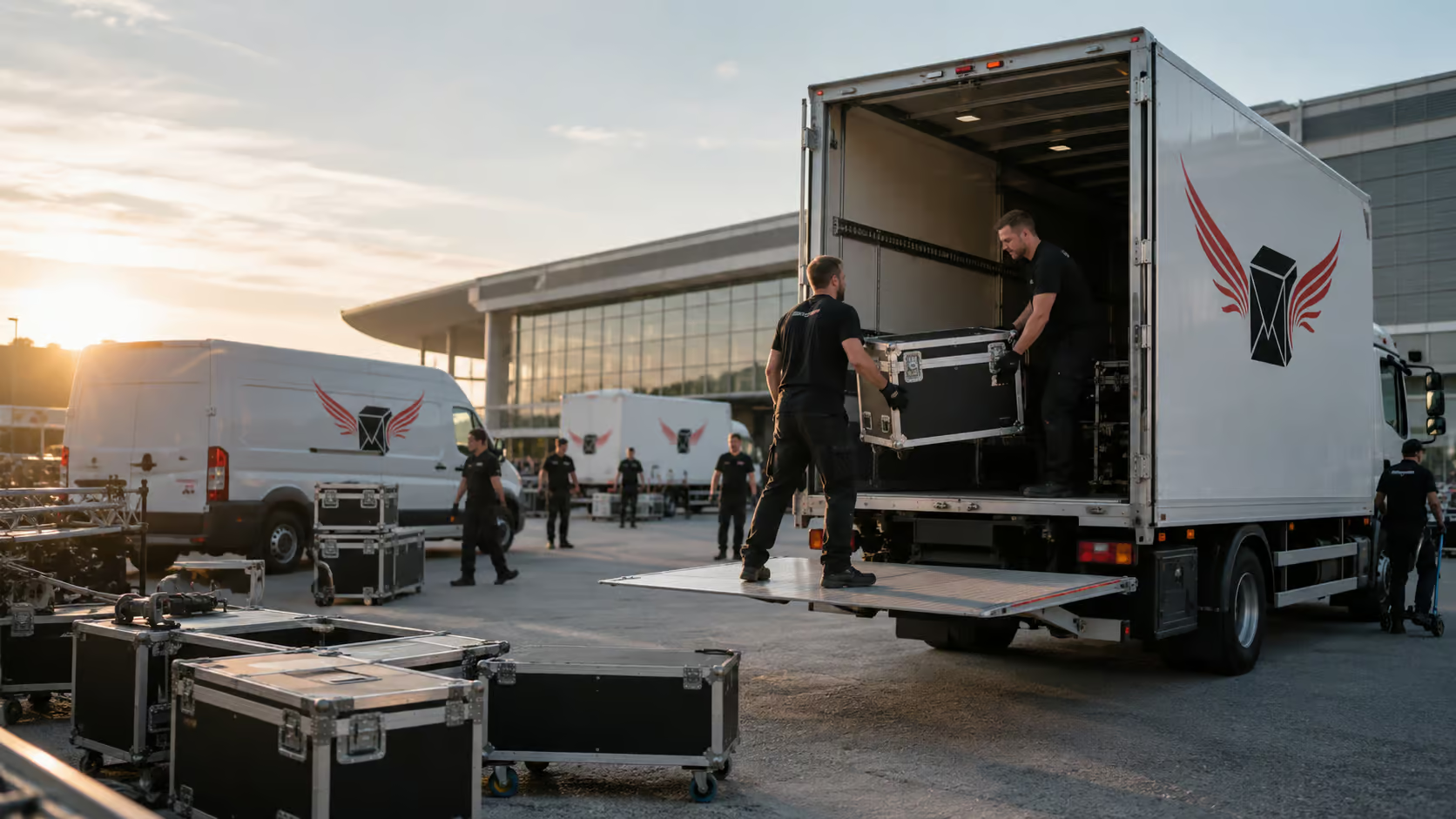
Event logistics represent one of those hidden challenges that become glaringly obvious only when something goes wrong and that’s precisely why forward-thinking organisations invest significant attention in this often-underestimated discipline.
Event Logistics UK operations span everything from venue coordination and supplier management through to technical rehearsals, on-site coordination, and contingency planning, and the difference between seamless execution and chaotic scrambling often comes down to anticipating problems before they occur.
This comprehensive guide explores the logistical challenges UK event organisers routinely encounter, explains why they occur, and most importantly, reveals practical strategies for avoiding them entirely rather than discovering solutions when it’s too late to implement them effectively.
Why UK event logistics deserve particular attention
London and the broader UK present unique logistical challenges that organisations planning events in other locations might underestimate:
- Geographic sprawl – London’s size means venues, suppliers, and attendees spread across significant distances
- Transport unpredictability – The Underground occasionally strikes; major roads face congestion; weather can disrupt plans
- Venue diversity requiring different approaches – Historic buildings, contemporary spaces, and unique locations each present distinct technical requirements
- Supplier concentration with seasonal demand – Preferred caterers, AV providers, and entertainment book up months in advance during peak seasons
- Complex venue relationships – Understanding what each location genuinely allows versus what they market becomes essential knowledge
Challenge 1: Last-minute venue complications
The problem: You’ve booked your venue months ago, confirmed dates, agreed to terms and suddenly encounter unexpected constraints you didn’t anticipate during initial negotiations.
Common surprises:
- Loading access restricted to specific hours or days
- Acoustic challenges making certain room setups problematic
- Power limitations preventing your full technical vision.
- Inflexible room configurations that don’t quite suit your programme flow
- Climate control challenges in certain seasons
- Event day parking availability completely different from what marketing materials suggested
How to avoid it:
| Problem area | Preventative action |
| Technical limitations | Request detailed technical specifications in writing; visit venue at time of day your event will occur |
| Logistical constraints | Confirm load-in/load-out windows early; verify parking, lift access, and delivery protocols |
| Equipment requirements | Test Wi-Fi capacity; identify power outlet locations; measure AV sight lines with actual stage setup |
| Flexibility | Confirm room reconfiguration capabilities; document any restrictions in contracts |
| Staff capability | Meet the actual team who’ll support your event, not just sales representatives |
Challenge 2: Supplier reliability issues
The problem: You’ve coordinated with a caterer, entertainment provider, or technical company, only to discover they either misunderstood requirements or overcommitted themselves to multiple events.
Why it happens:
- Miscommunication about specific needs, dietary requirements, or technical specifications
- Suppliers not fully grasping the importance or scale of your event
- Overbooking leading to reduced attention and resources allocated
- Staff turnover at supplier companies, meaning new people unfamiliar with your requirements
How to avoid it: Communication protocols that work:
- Send comprehensive written briefs covering not just what you need but why it matters
- Schedule regular check-ins at clear intervals—no “radio silence” until weeks before
- Confirm final details in writing; never rely on verbal agreements
- Ensure your contact person will actually be on-site managing your event
- Request supplier backup plans for common failure points
Challenge 3: Technical execution surprises
The problem: You arrive on event day confident your AV, sound, and streaming are properly planned only to discover wifi inadequate, cables insufficient, or sight lines problematic.
Prevention through rigorous testing:
| Technical element | Testing requirement |
| Wi-Fi connectivity | Load test with expected simultaneous users; check signal strength throughout venue |
| Audio system | Sound check with actual speakers; test microphone switching and feedback prevention |
| Video displays | Verify resolution and visibility from all attendee viewing angles |
| Streaming quality | Full technical rehearsal with actual video; test with various internet speeds |
| Power capacity | Confirm adequate circuits for all simultaneous draw; verify cable lengths sufficient |
| Backup systems | Test redundancy what happens if primary fails? Is backup actually functional? |
Challenge 4: Staffing and on-the-day coordination
The problem: You’ve planned brilliantly, but staffing gaps or confused responsibilities mean decisions don’t happen when needed.
Practical staffing solutions:
- Define clear roles and decision-making authority who decides what if something unexpected occurs?
- Brief all staff on the full picture, not just their individual tasks
- Establish a command centre where key team members can communicate and respond quickly
- Create printed run sheets showing everyone their responsibilities and key timing
- Deploy roving coordinators with radios maintaining real-time visibility across all areas
Challenge 6: Contingency planning gaps
The problem: Something unexpected happens transport strike, key speaker cancels, technical failure and you lack predetermined responses.
Building genuine contingencies: Common failure points requiring backup plans:
- Speaker unavailability – Do you have substitute content? Alternative presenter?
- Catering issues – Nearby restaurants as backup? Alternative menu options?
- Technical failures – Spare equipment? Simplified programme if systems fail?
- Transport disruptions – Alternative routes for attendees? Staff accommodation if needed?
- Venue access problems – Alternative room setup? Extended load-in windows?
Rather than hoping these don’t occur, identify your three most critical vulnerabilities and develop specific responses.
Building Logistics Excellence Through Planning
The organisations executing flawless events don’t do so through luck; they do it through meticulous planning, anticipating problems before they occur, and building systems that catch issues early rather than discovering them when it’s too late.
Event Logistics UK excellence comes from viewing logistics as a strategic discipline supporting your event’s success rather than a box to tick once you’ve confirmed venues and caterers.
The best logistics preparation takes time and attention, which is why many successful organisations partner with specialists who bring both expertise and bandwidth to this crucial function. Whether managing in-house or partnering with experienced specialists, the investment in thorough logistical planning invariably pays dividends through smooth execution and genuine peace of mind.
Ready to strengthen your next event’s logistical planning? Get in touch and let’s discuss how strategic preparation ensures your event executes flawlessly.
READ ALSO: The Composability Paradox: Architectural Standards for Modern Enterprise Software
