
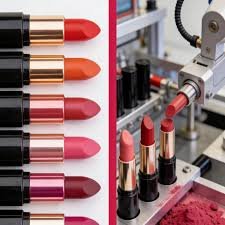
Your lipstick looks perfect in the mold. Glossy. Smooth. Vibrant. Then your filling machine deposits it into the tube. The nozzle drags across the surface as it withdraws. A line appears. A smear. A visible defect. Your luxury lipstick now looks cheap. Customers notice. They do not buy again. The problem is not your formula. It is the nozzle design. A standard filling nozzle has a flat face. It contacts the product. It drags. A cosmetic filling machine with a non-drip, shear-cut nozzle releases cleanly. The nozzle retracts before the product surface is reached. No drag. No smear. No line. Ask your supplier about nozzle retraction timing. If the nozzle withdraws after the fill is complete but while still submerged, your product will smear every time. The nozzle must clear the product before any vertical movement. That is not a minor adjustment. It is a fundamental design requirement for cosmetic filling. Demand it.
The Air Bubble That Turns Clear Gel Milky
Your clear gel formulation is beautiful. Crystal clear. Then it fills into jars. Bubbles appear. Thousands of tiny air pockets. The gel looks milky. Cloudy. Unappealing. Your customer opens the jar and sees a product that looks contaminated. The problem is not your mixing. It is the filling method. A standard filler drops product from a height. The stream splashes. Air incorporates. A cosmetic filling machine with bottom-up filling eliminates this. The nozzle starts at the bottom of the container. It rises as the container fills. Product enters below the surface. No splashing. No bubbles. No cloudiness. Your gel stays crystal clear from the first jar to the last. Ask your supplier about bottom-up filling capability. If they do not offer it, your clear products will look milky. Your customers will choose a competitor whose product looks clean.
The Pigment Separation That Creates A Two-Tone Product
Your foundation contains pigments. Heavy particles. They settle. Your filling machine runs slowly. The pigments settle in the hopper. The first jars get pigment-heavy product. Dark. The last jars get pigment-light product. Pale. Your customer buys two bottles of the same foundation. One is dark. One is light. They return both. The problem is not your formulation. It is the lack of agitation. A cosmetic filling machine for pigmented products must have a slow-speed agitator in the hopper. The agitator keeps pigments suspended without whipping in air. No settling. No separation. Every jar matches the next. Ask your supplier about hopper agitation. If they offer a high-speed mixer, that will whip air into your product. That creates bubbles. You need slow-speed folding or sweeping action. Not mixing. Not whipping. Gentle suspension. Your foundation will look the same in every bottle. Your customers will trust your brand.
The Temperature Sensitivity That Changes Viscosity Mid-Run
Your lotion is thick at 68 degrees. At 72 degrees, it is thin. Your factory temperature drifts throughout the day. Morning is cool. Afternoon is warm. Your cosmetic filling machine runs at the same speed all day. In the morning, the lotion is thick. The fill volume is low because thick product flows slowly. In the afternoon, the lotion is thin. The fill volume is high because thin product flows quickly. Your net weight checks fail. Your batch is rejected. The solution is temperature control. A jacketed hopper circulates warm water to maintain a constant temperature. Or a viscosity feedback system adjusts fill timing based on real-time product behavior. Ask your supplier about thermal management. If their machine has no temperature control, your fill weights will drift with the room temperature. Your batch consistency depends on product temperature. Control it. Your cosmetic filling machine should help, not hinder.
The Scrub Particle Crush That Destroys Your Exfoliant
Your face scrub contains exfoliating beads. Jojoba esters. Polyethylene beads. Sugar crystals. They are delicate. Your filler pumps them. The pump crushes them. Your scrub becomes a smooth paste. No exfoliation. Your customer complains. The problem is the pump type. A peristaltic pump squeezes the product through tubing. It crushes particles. A piston pump shears particles between the piston and cylinder. It crushes particles. A cosmetic filling machine for particulate products needs a rotary lobe pump or a progressive cavity pump. These pumps move particles gently. They do not crush. They do not shear. Your exfoliating beads arrive intact in every jar. Ask your supplier about pump type for particulate products. If they recommend a peristaltic or piston pump, they do not understand your product. Walk away. Your scrub needs gentle handling. Your customers need to feel the beads. Choose the right pump.
The One Test That Confirms Your Filler Respects Your Formula
Fill twenty jars with your most sensitive product. Your clear gel. Your pigmented foundation. Your exfoliating scrub. Mark jar number one and jar number twenty. Set them on a shelf for one week. Compare. Jar one should look exactly like jar twenty. No bubbles. No separation. No color difference. No crushed particles. If jar twenty is different, your cosmetic filling machine changed your product during the run. That change will happen every batch. Your customers will see the difference. They will not complain. They will simply stop buying. Run this test before you commit to any filler. Use your actual product. Use your actual container. Run at your actual production speed. The test takes one hour of filling and one week of waiting. That week is the best investment you will ever make in your brand’s consistency. A filler that respects your formula is a filler that protects your reputation. Choose carefully. Test thoroughly. Your customers are watching.
