
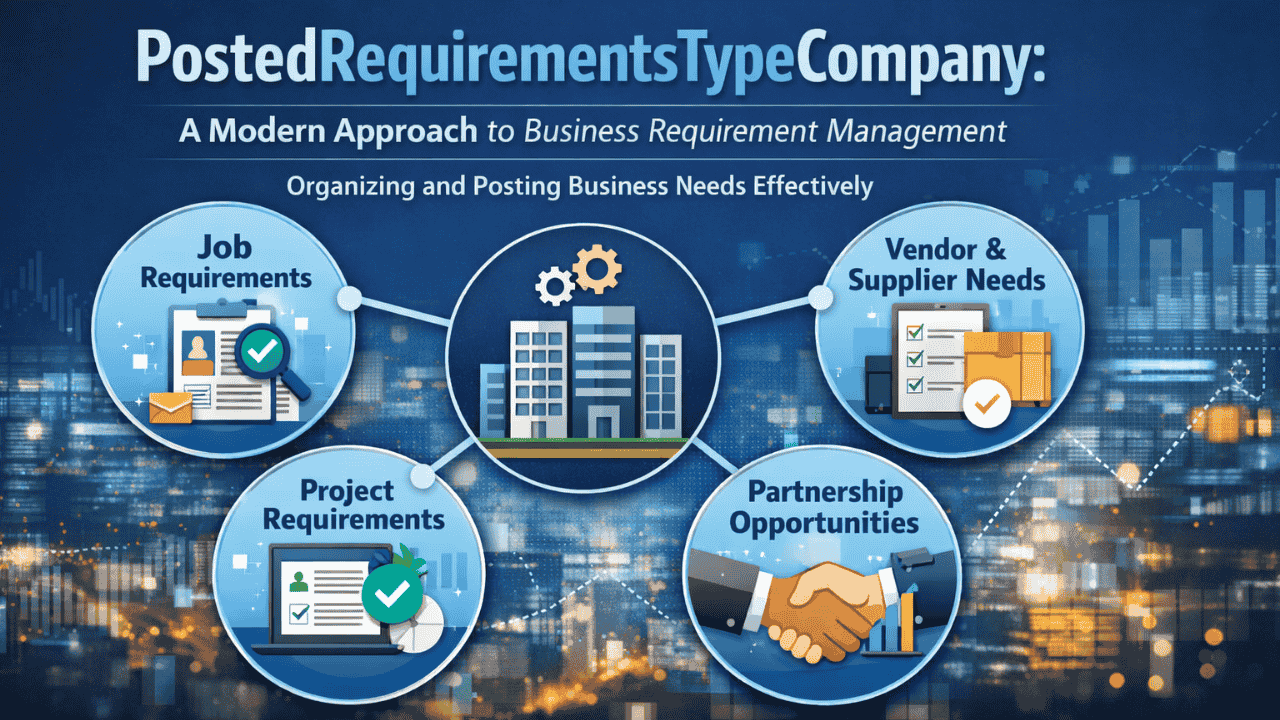
In today’s fast-paced digital economy, businesses rely heavily on structured communication to attract talent, partners, and resources. One emerging keyword that reflects this concept is postedrequirementstypecompany. While it may sound complex at first glance, it represents a powerful idea that is shaping how companies operate online. This comprehensive, SEO-friendly guide will help you understand postedrequirementstypecompany, their meaning, importance, types, benefits, and how businesses can use it effectively.
What is PostedRequirementsTypeCompany?
The postedrequirementstypecompany refers to the different categories of requirements that a company publicly posts for various purposes, such as hiring, procurement, project development, or partnerships.
Breaking down the keyword:
- Posted → Published or shared publicly
- Requirements → Needs, expectations, or demands
- Type → Classification or category
- Company → Organization or business
👉 In simple words:
PostedRequirementsTypeCompany means how a company organizes and publishes its needs into different types.
Why PostedRequirementsTypeCompany Matters
In the modern business landscape, companies must clearly communicate their needs to the right audience. This is where postedrequirementstypecompany becomes crucial.
Key reasons why it matters:
Improves Communication
Clear categorization helps companies explain their needs effectively.
Attracts the Right Audience
Whether it’s job seekers or vendors, structured requirements reach the right people.
Saves Time and Resources
Well-defined requirements reduce misunderstandings and unnecessary communication.
Enhances Professionalism
Companies that organize their requirements appear more credible and reliable.
Main Types of Posted Requirements in Companies
Understanding the types is essential to fully grasp the concept of postedrequirementstypecompany.
Job Requirements
These are the most common types.
Includes:
- Skills and qualifications
- Experience level
- Job responsibilities
- Salary expectations
Example:
A company posts:
“We are hiring a full-stack developer with 3+ years of experience.”
Project Requirements
Companies often post requirements for specific projects.
Includes:
- Scope of work
- Technical specifications
- Timeline
- Budget
Example:
“Looking for a team to develop an e-commerce mobile app.”
Vendor and Supplier Requirements
Businesses need suppliers for raw materials or services.
Includes:
- Product specifications
- Quality standards
- Delivery timelines
- Pricing
Example:
“Seeking a supplier for eco-friendly packaging materials.”
Contract and Tender Requirements
Large organizations and governments often release tenders.
Includes:
- Bid details
- Legal conditions
- Project requirements
- Submission deadlines
Internship and Freelance Requirements
Flexible work arrangements are growing rapidly.
Includes:
- Short-term roles
- Project-based work
- Remote opportunities
Partnership and Collaboration Requirements
Companies may look for strategic partners.
Includes:
- Joint ventures
- Business collaborations
- Investment opportunities
How Companies Post Requirements
The process behind postedrequirementstypecompany is systematic and strategic.
Identify the Need
The company defines what it requires.
Categorize the Requirement
It selects the appropriate type (e.g., job, project, vendor).
Create a Clear Description
Details are written in a structured format.
Publish the Requirement
Requirements are posted on platforms like:
- Company websites
- Job portals
- Freelance marketplaces
- Government tender portals
Evaluate Responses
Applications or bids are reviewed.
Benefits of Using PostedRequirementsTypeCompany Strategy
Companies that implement this approach gain several advantages.
Better Talent Acquisition
Structured job postings attract qualified candidates.
Efficient Project Execution
Clear requirements reduce delays and confusion.
Stronger Supplier Relationships
Vendors understand expectations clearly.
Increased Transparency
Publicly posted requirements build trust.
Improved Decision Making
Organized data helps companies make informed choices.
SEO Importance of PostedRequirementsTypeCompany
From a digital marketing perspective, this keyword has growing value.
Why is it SEO-friendly:
Long-Tail Keyword Advantage
“postedrequirementstypecompany” is a unique long-tail keyword with low competition.
High Intent Search
Users searching this term are likely looking for detailed business insights.
Content Opportunity
Blog posts, guides, and tutorials can rank easily with proper optimization.
Best Practices for Companies
To fully benefit from postedrequirementstypecompany, companies should follow best practices.
Be Clear and Specific
Avoid vague descriptions.
Use Structured Formats
Use bullet points, headings, and sections.
Include Relevant Keywords
Helps with SEO and visibility.
Update Requirements Regularly
Remove outdated postings.
Use Multiple Platforms
Reach a wider audience.
Common Mistakes to Avoid
Even though the concept is simple, companies often make mistakes.
Lack of Clarity
Unclear requirements lead to poor responses.
Incorrect Categorization
Posting a job as a project requirement can confuse applicants.
Missing Details
Incomplete information reduces engagement.
Ignoring SEO
Not optimizing content reduces visibility online.
Future of PostedRequirementsTypeCompany
The future of postedrequirementstypecompany is closely tied to digital transformation.
Trends to watch:
AI-Based Requirement Matching
Platforms will automatically match requirements with candidates or vendors.
Automation in Posting
Companies will automate the posting of requirements across platforms.
Data-Driven Decisions
Analytics will help improve requirement quality.
Integration with HR and ERP Systems
Seamless requirement management will become standard.
Real-World Example
Let’s consider a simple example:
A tech company needs:
- A developer (job requirement)
- A UI designer (freelance requirement)
- A cloud service provider (vendor requirement)
Instead of mixing everything, the company:
- Post each requirement separately
- Categorizes them clearly
- Publish them on relevant platforms
👉 This is a perfect example of postedrequirementstypecompany in action.
Conclusion
The concept of postedrequirementstypecompany may not be widely recognized as a formal term, but it plays a vital role in modern business operations. It represents the structured way companies communicate their needs to the world.
By understanding and applying this concept, businesses can:
- Improve efficiency
- Attract the right audience
- Enhance transparency
- Boost their online presence
For digital marketers, recruiters, and business owners, mastering postedrequirementstypecompany can provide a significant competitive advantage.
Final Thoughts
As enterprises continue to evolve in a digital-first world, the importance of clear and categorized requirement posting will only grow. Whether you are a startup or a large enterprise, adopting the postedrequirementstypecompany strategy can transform how you connect with opportunities and resources.
You May Like: Team Disquantified: The Future of Human-Centered Workplaces
