
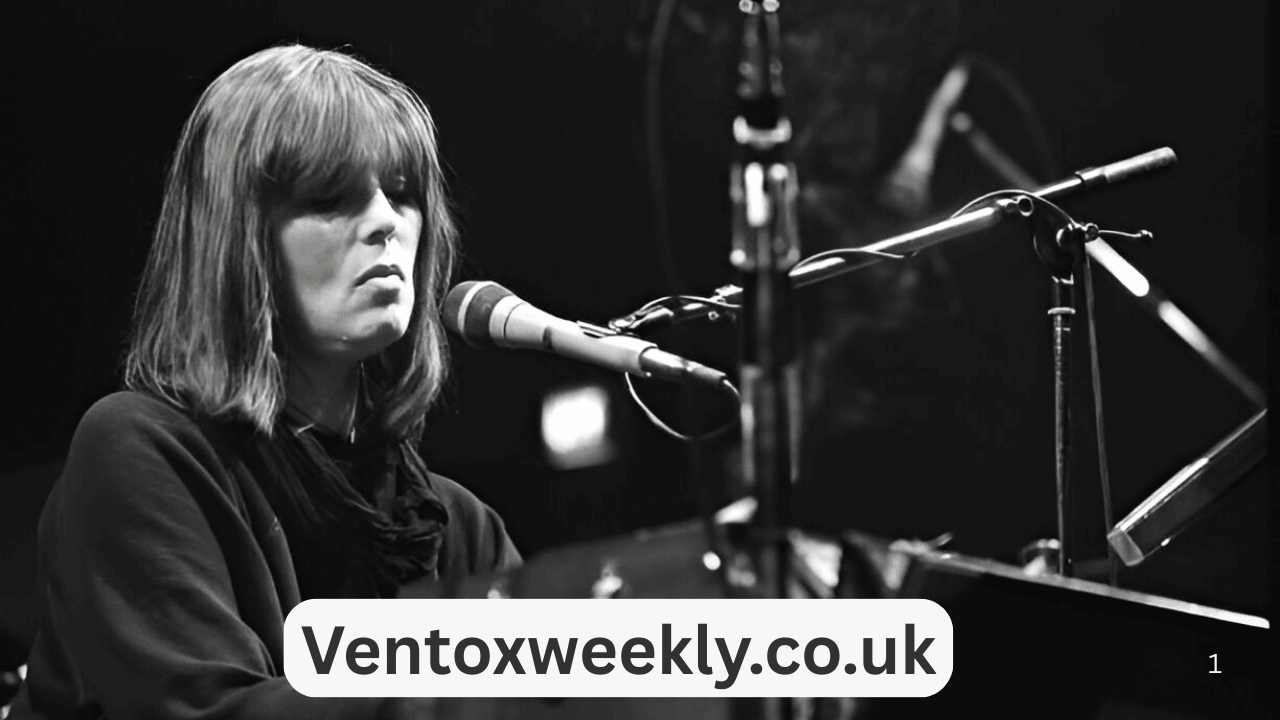
Christa Paffgen is a name that resonates deeply across music, film, fashion, and avant-garde art. Although she is better known by her stage name, Nico, Christa Paffgen remains one of the most enigmatic and influential figures of 20th-century counterculture. Her life story is one of reinvention, artistic courage, and haunting beauty—marked by innovation and personal struggle. This article offers a comprehensive exploration of Christa Paffgen’s life, career, and legacy, tracing her journey from post-war Germany to the heart of New York’s underground art scene, and ultimately to her lasting influence on music and culture today.
Early Life of Christa Paffgen
Christa Paffgen was born on October 16, 1938, in Cologne, Germany, during a period of political tension that would soon erupt into World War II. Her childhood was shaped by the devastation of war and displacement. After her father’s death during the conflict, Paffgen and her mother relocated several times, eventually settling in Berlin.
Growing up in post-war Germany, Christa Paffgen experienced scarcity, instability, and emotional distance—factors that would later shape the stark, melancholic tone of her artistic work. Her striking appearance, tall stature, pale features, and deep voice set her apart from an early age, foreshadowing her later career as a model and performer.
Christa Paffgen and the World of Fashion
Before becoming a musician, Christa Paffgen first gained international attention as a fashion model in the mid-1950s. Discovered while still a teenager, she quickly rose to prominence in European fashion circles.
She worked under the name “Nico,” a nickname given to her by photographer Herbert Tobias. As a model, Christa Paffgen appeared in major fashion magazines such as Vogue, Elle, and Harper’s Bazaar. She worked with legendary designers and photographers, becoming a symbol of cool, aloof elegance.
Her modeling career introduced her to elite artistic and cultural circles in Paris, Rome, and eventually New York, laying the groundwork for her transition into film and music.
Film Career and Early Acting Roles
Christa Paffgen’s entry into cinema came naturally through her modeling work. Her most famous early appearance was a small but memorable role in Federico Fellini’s La Dolce Vita (1960), one of the most iconic films in European cinema history.
Although her acting roles were often limited, her presence on screen was unmistakable. She later appeared in experimental and underground films, including projects connected to artist Andy Warhol, who would play a pivotal role in her career.
Christa Paffgen was less interested in traditional stardom than in artistic experimentation, a theme that would define her life.
Christa Paffgen, Andy Warhol, and The Velvet Underground
The most transformative chapter in Christa Paffgen’s life began in the mid-1960s when she became part of Andy Warhol’s Factory in New York City. Warhol was fascinated by her detached persona and European mystique, and he encouraged her musical ambitions.
Through Warhol, Christa Paffgen was introduced to The Velvet Underground, a band led by Lou Reed and John Cale. Warhol insisted that Nico sing with the group, despite internal resistance from some band members.
The result was the legendary 1967 album:
The Velvet Underground & Nico
On this album, Christa Paffgen (as Nico) sang lead vocals on tracks such as:
- Femme Fatale
- All Tomorrow’s Parties
- I’ll Be Your Mirror
Her deep, emotionless vocal delivery contrasted sharply with contemporary pop, helping redefine what a female voice in rock could sound like.
Although her collaboration with The Velvet Underground was brief, it became one of the most influential moments in modern music history.
Christa Paffgen’s Solo Music Career
After parting ways with The Velvet Underground, Christa Paffgen pursued a solo career that would become increasingly experimental and uncompromising.
Chelsea Girl (1967)
Her first solo album, Chelsea Girl, featured contributions from Lou Reed, Bob Dylan, and John Cale. However, Christa Paffgen later expressed dissatisfaction with the album’s polished folk sound, feeling it did not represent her true artistic vision.
A Radical Shift in Sound
Determined to create music on her own terms, Christa Paffgen reinvented herself completely. Beginning with The Marble Index (1968), she adopted a stark, minimalist style featuring:
- Harmonium-based compositions
- Droning arrangements
- Apocalyptic, poetic lyrics
- A cold, gothic atmosphere
Key albums from this period include:
- The Marble Index (1968)
- Desertshore (1970)
- The End… (1974)
Produced largely in collaboration with John Cale, these records were commercially unsuccessful at the time but later came to be regarded as foundational works in goth, dark wave, and experimental music.
Artistic Themes and Musical Influence
Christa Paffgen’s work explored themes that were rare—especially for women in popular music at the time. Her lyrics often addressed:
- Isolation and exile
- European history and mythology
- Death and decay
- Identity and alienation
Her voice—monotone, deep, and almost expressionless—became her signature. Rather than emotional excess, Christa Paffgen embraced emotional restraint, which many later artists would cite as a major influence.
Artists Influenced by Christa Paffgen
- Siouxsie Sioux
- Björk
- Patti Smith
- PJ Harvey
- Nick Cave
- Dead Can Dance
Her legacy is especially strong in alternative, post-punk, gothic, and experimental genres.
Personal Life and Struggles
Despite her artistic brilliance, Christa Paffgen’s personal life was marked by hardship. She struggled for many years with heroin addiction, financial instability, and health problems.
She had a son, Ari Boulogne, whose paternity has often been linked to actor Alain Delon, though this was never legally acknowledged. Christa Paffgen’s relationship with her son was complex, shaped by her nomadic lifestyle and personal struggles.
In later years, she continued touring and recording, often performing under difficult conditions, yet remained fiercely dedicated to her art.
Death of Christa Paffgen
Christa Paffgen died on July 18, 1988, in Ibiza, Spain, at the age of 49. She suffered a cerebral hemorrhage following a bicycle accident while riding with her son.
Her death marked the end of a life that defied convention, but it also sparked renewed interest in her work. In the decades since, her influence has only grown stronger.
Christa Paffgen’s Cultural Legacy
Today, Christa Paffgen is widely regarded as one of the most important and unconventional artists of her era. Once misunderstood and marginalized, her work has been reassessed by critics, scholars, and musicians worldwide.
Her music is frequently included in:
- “Most influential albums of all time” lists
- Academic studies of avant-garde and feminist art
- Film soundtracks and contemporary reinterpretations
Documentaries, biographies, and reissues of her albums have introduced Christa Paffgen to new generations, ensuring that her legacy continues to evolve.
Why Christa Paffgen Still Matters
Christa Paffgen matters because she refused to conform. At a time when women in music were expected to be palatable, expressive, and commercially viable, she chose darkness, abstraction, and artistic truth.
Her career demonstrated that success is not always measured by sales or charts, but by influence, originality, and the courage to pursue one’s vision regardless of the consequences.
Conclusion
Christa Paffgen was far more than a muse, model, or collaborator. She was a pioneering artist whose work reshaped the boundaries of music and performance. Through her haunting voice, uncompromising creativity, and fearless individuality, she left behind a body of work that continues to inspire artists across genres and generations.
You May Like: Gwendolyn Lee Byrd: Life, Family, and the Quiet Legacy Behind a Country Music Icon
