
Most first‑time buyers focus on cutting thickness, amperage, or price. They indeed matter. However, the duty cycle is just as important, as it determines how smooth a plasma cutter works and whether it is reliable for complex tasks. It tells you how long the machine can cut before it needs a break to cool down. It is not that critical for quick processes, but it has a big impact when there is a big workload that should be completed shortly.
A typical duty cycle is measured over a 10‑minute window. For example, a “60% at 40A” rating means the cutter can run for six minutes at 40 amps, then must cool for four. Thus, this is the perfect balance between power and running time that separates plasma cutters for amateurs from professional equipment.
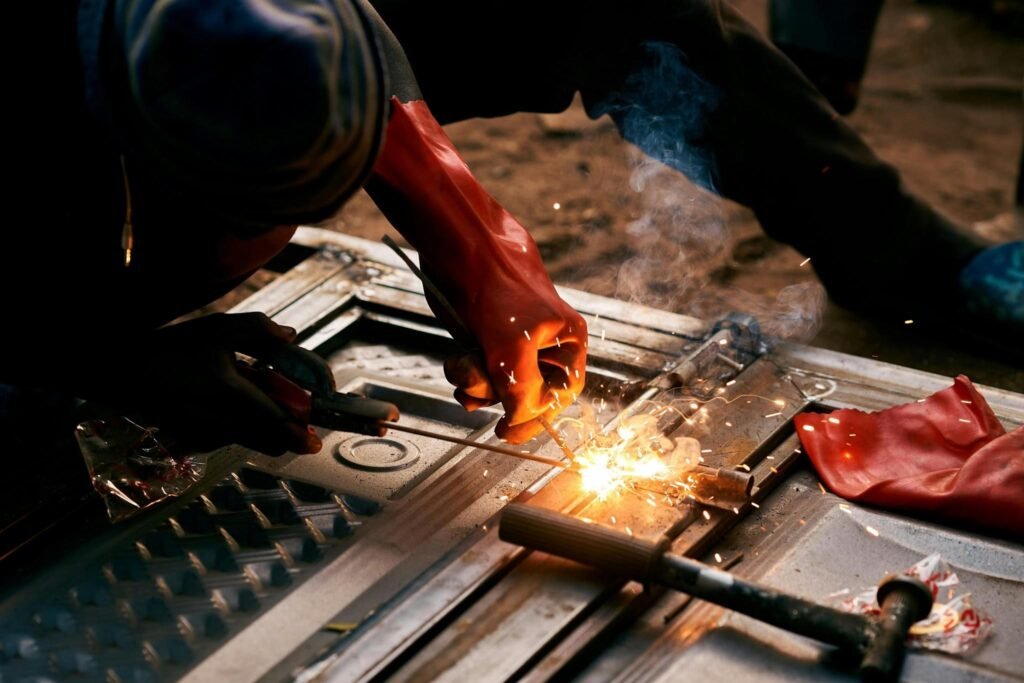
How Duty Cycle Affects Real‑World Cutting
If you ignore this parameter when buying a plasma cutter, there is a high probability that your work will be affected. A weak duty cycle leads to:
- slower operations;
- interrupted rhythm;
- poor cut quality on long metal panels.
At the same time, stability keeps heat output predictable, which means cleaner edges and fewer touch‑ups.
Choosing the Right Duty Cycle for Your Needs
Do you need to buy the most powerful plasma cutter for smooth and high-quality work? It depends on how often and how intensely you plan to cut. Beginners often underestimate this and end up with a cutter that feels underpowered simply because it needs constant breaks. Therefore, it is always worth estimating your expected workload and choosing equipment that goes slightly beyond it.
While professionals undoubtedly need plasma cutters with a 60–100% duty cycle to secure work with no or few cool-down periods, amateur users have more options. They can opt for a 30–40% or 50–60% duty cycle. The final decision between them should be made based on how often you are going to use the tool and for how long.
Still, it is worth noting that the duty cycle drops as the amp rating rises. If you plan to cut thicker steel at higher amps, you will want a machine that maintains a strong performance even under load. Thus, the metal thickness and environmental factors (e.g., heat) impact the time needed for the cutter to cool down.
Spotting a Reliable Duty Cycle in Real Products
Some brands publish clear, honest duty cycle charts, and that’s a good sign. PATON provides clear information about the duty cycle and other characteristics that let customers see product capabilities clearly. Their machines maintain stable performance at higher amp ratings, have advanced cooling systems, and feature high-quality components.
Aside from the information on the brand’s website, it is also worth reading customer reviews. They can reveal a lot. Frequent mentions of overheating or shutdowns are red flags, while feedback about a solid, transparent duty cycle means that a machine is more reliable.
As a result, the duty cycle is one of those characteristics that cannot be ignored if you are looking for a reliable plasma cutter. Always check the information provided by the manufacturer, and assess your workload to choose the most suitable model for your needs.
