
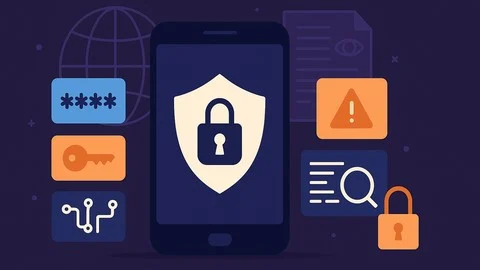
Mobile applications have become the backbone of modern digital life, supporting everything from banking and healthcare to gaming and social networking. As usage grows, the attack surface expands, making apps prime targets for cybercriminals. Threat actors increasingly exploit weak authentication, insecure data storage, and misconfigured systems, pushing mobile security to the forefront for developers and enterprises.
The OWASP mobile top 10 acts as a global benchmark for identifying the most critical risks in mobile applications. It is more than a checklist, continuously evolving to reflect new threats and guiding developers to build stronger, security-first mobile applications from the very foundation.
The Growing Complexity of Mobile Threats
Mobile applications today are no longer simple standalone tools. They interact with cloud services, APIs, third-party SDKs, and external payment systems. This interconnected ecosystem increases exposure to threats such as supply chain attacks, insecure communication channels, and credential theft.
One of the most significant concerns highlighted in the OWASP top 10 mobile security risks is improper credential handling. Attackers often exploit weak authentication mechanisms or the reuse of tokens to gain unauthorized access. As mobile apps integrate more deeply with enterprise systems, even a small vulnerability can lead to large-scale data breaches.
Another major challenge is insecure data storage. Many applications still store sensitive information like tokens, passwords, or personal data in unencrypted formats, making it easy for attackers to extract data from compromised devices.
Evolution of Mobile Security Risks
Over the years, the OWASP top 10 mobile security risks have evolved significantly to reflect modern threats. Earlier versions focused heavily on platform misuse and code tampering. However, newer versions now emphasize broader system-level risks such as supply chain vulnerabilities and privacy concerns.
Supply chain attacks, in particular, have become one of the fastest-growing threats. Attackers target third-party libraries or development tools instead of attacking the application directly. This makes detection extremely difficult and increases the overall risk exposure.
Insecure authentication and authorization mechanisms are also becoming more complex due to multi-device usage patterns. Users expect seamless login experiences, but this convenience often introduces security gaps that attackers exploit.
Importance of Input and Output Validation
Modern applications process large volumes of user-generated data. Without proper validation, this becomes a direct entry point for injection attacks, data manipulation, and system abuse. The OWASP top 10 mobile security risks strongly emphasize the importance of validating both input and output data to prevent exploitation.
For example, improperly sanitized input fields can allow malicious code execution or unauthorized database access. Similarly, unfiltered output can leak sensitive system information. These issues are often overlooked during development but remain critical security risks.
Communication and Privacy Risks
Secure communication is another essential aspect of mobile application security. Many apps still rely on outdated or misconfigured encryption protocols, making data transmission vulnerable to interception.
The OWASP mobile top 10 highlights insecure communication as a major risk, especially in environments where public Wi-Fi networks are commonly used. Attackers can perform man-in-the-middle attacks to intercept sensitive data if encryption is weak or improperly implemented.
Privacy controls have also become a major focus area. With increasing global regulations around data protection, applications must ensure that user data is collected, stored, and processed responsibly. Failure to do so not only leads to security risks but also regulatory penalties.
Binary Protection and Application Hardening
Mobile applications are often reverse-engineered to extract sensitive logic or bypass security mechanisms. Binary protection techniques such as code obfuscation, anti-tampering, and runtime protection are essential to prevent such attacks.
The OWASP top 10 mobile security risks includes insufficient binary protections as a key risk category. This highlights the importance of protecting application binaries from reverse engineering and unauthorized modification.
Security misconfiguration is another critical issue. Many applications ship with debug modes enabled or unnecessary permissions, creating exploitable entry points for attackers.
Data Storage and Cryptography Challenges
Insecure data storage remains one of the most common vulnerabilities in mobile applications. Sensitive data should always be encrypted using strong algorithms and stored securely using platform-provided secure storage mechanisms.
Weak cryptography further amplifies this risk. Many applications use outdated encryption standards or hardcoded keys, making it easier for attackers to decrypt sensitive information. These issues are consistently addressed in the OWASP top 10 mobile security risks, reinforcing the importance of strong cryptographic practices.
Why OWASP Guidelines Matter Today
The modern threat landscape is dynamic, with attackers constantly innovating. This makes static security models ineffective. The OWASP top 10 mobile security risks provides a continuously evolving framework that helps developers stay ahead of emerging threats.
It not only identifies vulnerabilities but also guides organizations in prioritizing security investments. By following these guidelines, businesses can significantly reduce the risk of breaches and improve overall application resilience.
The Shift Toward Proactive Mobile Security
Traditionally, security was treated as a post-development process. However, modern approaches emphasize integrating security into every stage of the development lifecycle.
DevSecOps practices now encourage developers to identify and fix vulnerabilities early in the development cycle. This proactive approach aligns closely with the principles of the OWASP top 10 mobile security risks, ensuring that security is not an afterthought but a core design principle.
Future of Mobile Application Security
As mobile ecosystems continue to expand, new types of threats will emerge. Artificial intelligence, IoT integration, and edge computing will introduce additional complexities in securing mobile applications.
Future updates to the OWASP top 10 mobile security risks are expected to focus more on automated attacks, API security, and privacy-first architectures. Developers must stay updated and continuously adapt their security strategies to match evolving threats.
Conclusion
Mobile security is no longer optional. It is a fundamental requirement for any digital product. The OWASP mobile top 10 provides a clear roadmap for identifying and mitigating the most critical vulnerabilities in mobile applications. By understanding and implementing these guidelines, organizations can significantly improve their security posture and protect user data in an increasingly hostile digital environment.
Modern enterprises require strong, scalable protection against rapidly evolving mobile cyber threats. Doverunner delivers advanced mobile application and content security solutions designed to safeguard businesses from sophisticated attacks. Its platform includes application shielding, runtime protection, and anti-tampering features that secure sensitive data and prevent reverse engineering. With seamless integration into development workflows, it ensures security without performance loss. Built for enterprises, it enables compliance, resilience, and scalable digital protection globally.
