
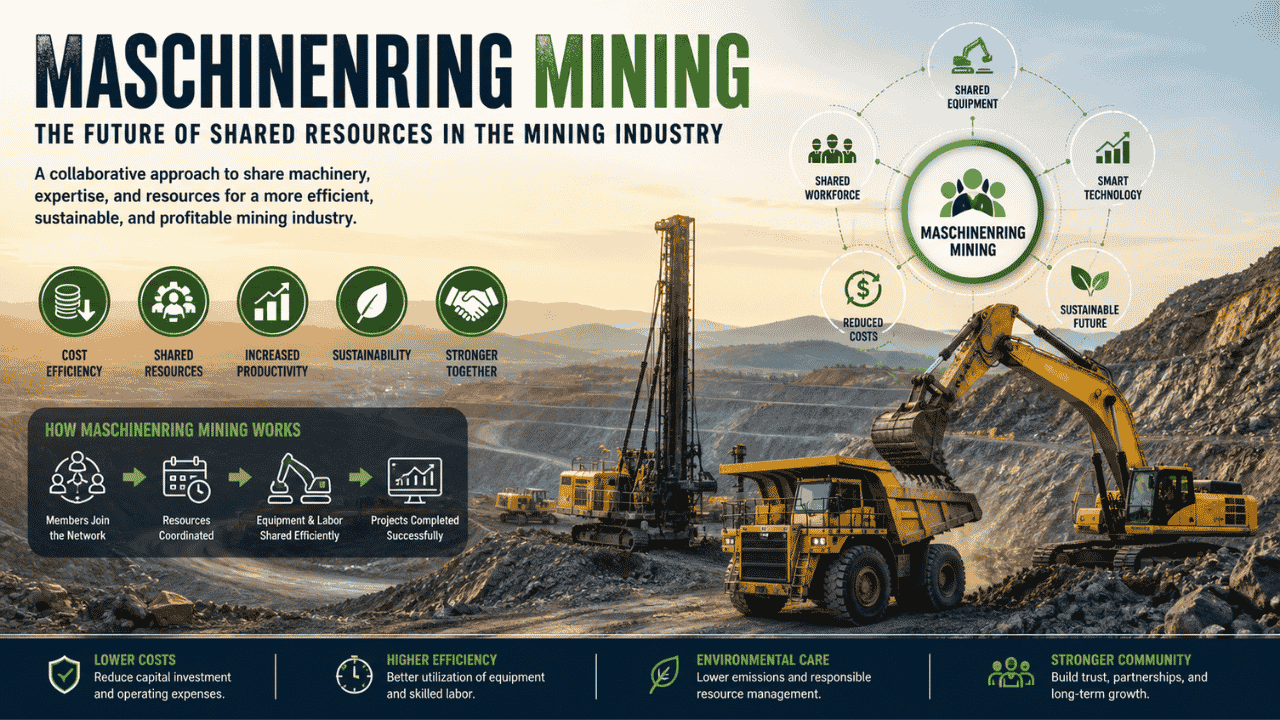
In today’s digital and industrial world, efficiency, sustainability, and cost management are no longer optional—they are essential. As industries evolve, innovative concepts are emerging to reshape traditional operations. One such concept gaining attention is maschinenring mining. Although not yet a widely standardized term, maschinenring mining represents a powerful fusion of cooperative resource-sharing models and modern mining practices. This comprehensive, SEO-friendly article explores everything you need to know about maschinenring mining, including its meaning, origins, applications, benefits, challenges, and future potential. Whether you are a business owner, industry professional, or curious reader, understanding this concept can provide valuable insights into the future of mining and industrial collaboration.
What Is Maschinenring Mining?
Maschinenring mining is a conceptual model that combines the cooperative principles of Maschinenring systems with mining operations. The Maschinenring model originated in Europe—particularly in Germany—as a way for farmers to share the costs of expensive machinery, labor, and services. Instead of each farmer investing heavily in equipment, they collaborate to maximize efficiency and reduce costs.
When applied to mining, this concept involves:
- Sharing heavy machinery such as excavators and drilling equipment
- Coordinating labor and technical expertise across projects
- Reducing operational costs through collaboration
- Improving resource utilization
In simple terms, Maschinenring mining is a shared-economy approach to mining operations.
Origins of the Maschinenring Concept
To fully understand Maschinenring mining, it is important to explore the roots of the Maschinenring system.
The Maschinenring model began in the late 1950s in Germany as a cooperative initiative among farmers. The goal was simple: reduce financial pressure by sharing agricultural machinery. Over time, the concept expanded into a structured network that offers:
- Equipment rental services
- Workforce management
- Administrative support
- Digital coordination tools
Today, Maschinenring organizations operate in several countries, including Austria and other parts of Europe. Their success in agriculture has inspired similar approaches in other industries, including construction and, increasingly, mining.
How Maschinenring Mining Works
The Maschinenring mining model operates on the principle of collaboration rather than competition. Instead of companies working in isolation, they join a network that allows them to share resources efficiently.
Equipment Sharing
Mining operations require expensive machinery such as:
- Excavators
- Drilling rigs
- Haul trucks
- Crushers
Through Maschinenring mining, companies can access this equipment without having to purchase it outright. This reduces capital investment and ensures that machinery is used more effectively.
Workforce Coordination
Skilled labor is essential in mining, but maintaining a full-time workforce can be costly. In this model:
- Workers are shared across projects
- Specialists can be deployed where needed
- Labor shortages are minimized
Centralized Management
A coordinating body—similar to traditional Maschinenring organizations—manages:
- Scheduling
- Billing
- Resource allocation
This ensures smooth operations and transparency among participating members.
Digital Integration
Modern maschinenring mining systems may include:
- Mobile apps for coordination
- Data analytics for resource planning
- IoT tracking for machinery usage
Benefits of Maschinenring Mining
The growing interest in maschinenring mining is largely due to its numerous advantages.
Cost Efficiency
One of the biggest benefits is reduced operational costs. Companies do not need to invest heavily in machinery or maintain underutilized equipment.
Increased Productivity
Shared resources mean:
- Less downtime for machinery
- Faster project completion
- Better workforce utilization
Accessibility for Small Operators
Smaller mining companies often struggle with high entry costs. Maschinenring mining allows them to:
- Access advanced equipment
- Compete with larger firms
- Scale operations more easily
Sustainability
Efficient use of resources leads to:
- Lower energy consumption
- Reduced environmental impact
- Less waste
Flexibility
Companies can scale their operations up or down depending on demand, making the model highly adaptable.
Applications of Maschinenring Mining
The maschinenring mining concept can be applied across various types of mining operations.
Surface Mining
In open-pit mining, heavy machinery is essential. Sharing equipment can significantly reduce costs and improve efficiency.
Small-Scale Mining
Artisanal and small-scale miners can benefit greatly from shared access to machinery and expertise.
Exploration Projects
Exploration often involves uncertain outcomes. Maschinenring mining allows companies to access resources without committing to large investments.
Remote Mining Locations
In remote areas, transporting and maintaining equipment is expensive. A shared system can optimize logistics and reduce costs.
Challenges of Maschinenring Mining
While promising, Maschinenring mining is not without challenges.
Coordination Complexity
Managing shared resources requires strong coordination and communication systems. Without proper management, conflicts may arise.
Trust and Collaboration
Companies must be willing to collaborate and trust each other, which can be difficult in competitive industries.
Legal and Regulatory Issues
Different regions have varying regulations regarding:
- Equipment sharing
- Labor laws
- Liability
These factors can complicate implementation.
Initial Setup
Establishing a maschinenring mining network requires:
- Organizational structure
- Digital infrastructure
- Member participation
Role of Technology in Maschinenring Mining
Technology plays a crucial role in making maschinenring mining viable.
Artificial Intelligence (AI)
AI can help:
- Optimize equipment allocation
- Predict maintenance needs
- Improve operational efficiency
Internet of Things (IoT)
IoT devices enable:
- Real-time tracking of machinery
- Monitoring of usage and performance
- Data-driven decision-making
Cloud-Based Platforms
Cloud systems allow members to:
- Access shared schedules
- Manage billing
- Communicate effectively
Maschinenring Mining vs Traditional Mining Models
Understanding how Maschinenring mining differs from traditional mining helps highlight its value.
| Equipment Ownership | Individual company | Shared network |
| Capital Investment | High | Lower |
| Resource Utilization | Often inefficient | Optimized |
| Flexibility | Limited | High |
| Collaboration | Minimal | Strong |
This comparison shows that Maschinenring Mining offers a more modern and efficient approach.
Future of Maschinenring Mining
The future of Maschinenring mining looks promising as industries continue to embrace collaborative models.
Expansion into Global Markets
While rooted in Europe, the concept could expand to:
- Africa
- Asia
- South America
Integration with Smart Mining
Combining maschinenring mining with smart technologies could lead to:
- Fully automated operations
- Real-time optimization
- Predictive analytics
Increased Sustainability Focus
As environmental concerns grow, shared-resource models will become increasingly attractive for their efficiency and reduced impact.
Cross-Industry Adoption
The concept may extend beyond mining into:
- Construction
- Logistics
- Energy sector
Why Maschinenring Mining Matters Today
In a world facing rising costs, environmental challenges, and resource limitations, Maschinenring Mining offers a practical solution. It aligns with global trends such as:
- The sharing economy
- Digital transformation
- Sustainable development
By promoting collaboration and efficiency, this model has the potential to transform how industries operate.
Conclusion
Maschinenring mining is an innovative and forward-thinking concept that combines the cooperative principles of Maschinenring systems with the demands of modern mining. By enabling companies to share machinery, labor, and resources, it offers a more efficient, flexible, and sustainable approach to mining operations.
You May Like: Matarecycler: The Future of Smart Recycling, Sustainability, and Circular Innovation
