
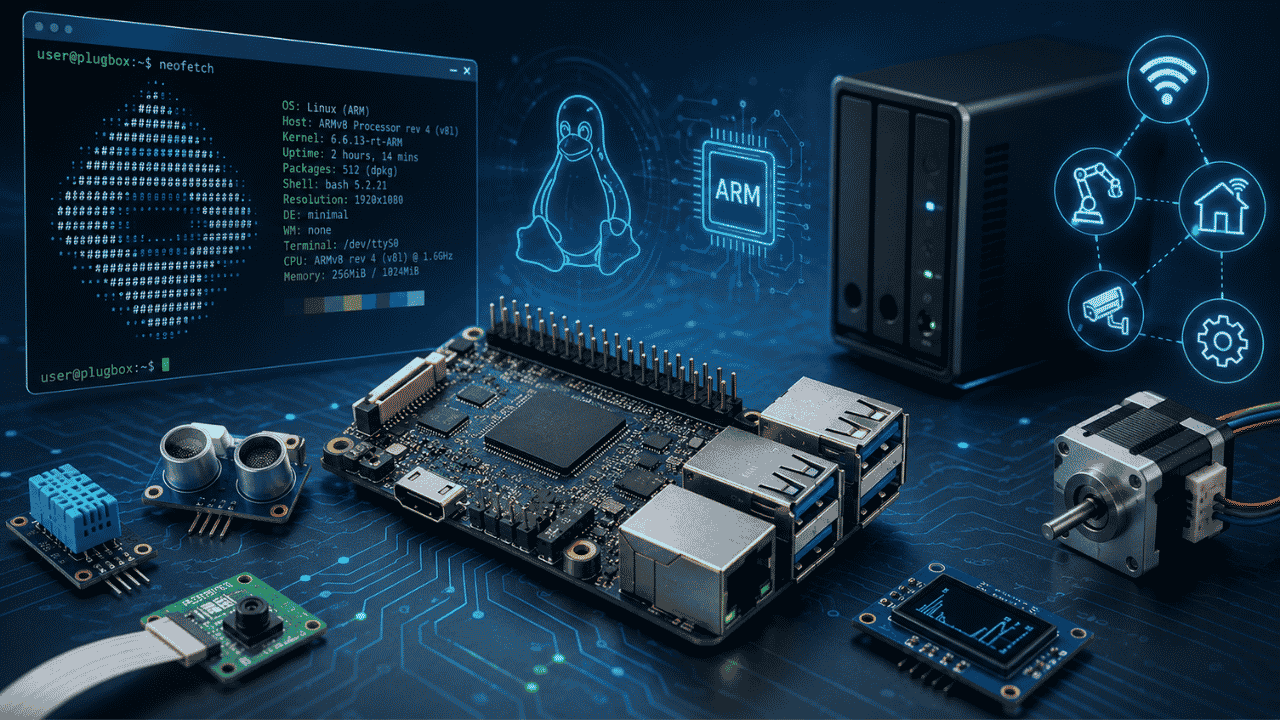
Microcomputing has transformed the way developers, hobbyists, educators, and businesses approach computing. Compact, energy-efficient devices are now capable of handling everything from home automation and web hosting to robotics and software development. One search term attracting growing interest is plugboxlinux microcomputing, a keyword associated with lightweight Linux operating systems and ARM-based computing platforms. Historically, PlugboxLinux was an Arch Linux-based distribution created for plug computers and ARM devices. Although the original project has largely been succeeded by Arch Linux ARM, the keyword plugboxlinux microcomputing continues to appear in discussions about embedded systems, single-board computers (SBCs), and efficient Linux environments. In recent years, the PlugboxLinux name has also been used by technology websites that publish articles on Linux, gaming, and open-source software, making it important to distinguish between the historical operating system and the modern content platform. This comprehensive guide explains everything you need to know about plugboxlinux microcomputing, including its history, features, benefits, practical applications, and why lightweight Linux systems remain popular in today’s technology landscape.
What is PlugboxLinux Microcomputing?
PlugboxLinux microcomputing refers to the use of lightweight Linux systems on compact computing hardware such as:
- Plug computers
- Raspberry Pi devices
- ARM development boards
- Single-board computers (SBCs)
- Embedded systems
- Internet of Things (IoT) devices
Historically, PlugboxLinux was designed specifically for ARM-powered plug computers. Its goal was to provide a minimal, fast, and customizable Linux environment that allowed users to build specialized computing solutions without the overhead of traditional desktop operating systems.
Although the original PlugboxLinux project is no longer actively maintained, its philosophy lives on in Arch Linux ARM and similar lightweight Linux distributions.
The History of PlugboxLinux
PlugboxLinux emerged during the early growth of ARM-based computing when plug computers became popular among developers.
These compact devices offered:
- Low power consumption
- Always-on operation
- Affordable hardware
- Small physical size
- Reliable Linux compatibility
PlugboxLinux adopted many of the design principles of Arch Linux, including:
- Simplicity
- Rolling-release updates
- Pacman package management
- User customization
- Minimal default installation
As ARM hardware evolved, development shifted toward Arch Linux ARM, which continues to support a wide variety of ARM devices today.
Understanding Microcomputing
Microcomputing refers to computing systems built around compact processors capable of performing many tasks traditionally handled by larger desktop computers.
Modern microcomputers include:
- Raspberry Pi
- Orange Pi
- Banana Pi
- RockPro64
- BeagleBone Black
- ASUS Tinker Board
- ODROID systems
These computers are small in size but powerful enough for:
- Programming
- Networking
- Media streaming
- Robotics
- AI experimentation
- Home automation
- Server hosting
Their affordability has made Linux-based microcomputing increasingly popular among students and professionals alike.
Why Linux Is Ideal for Microcomputing
Linux has become the preferred operating system for many microcomputers because of its flexibility and efficiency.
Some major advantages include:
Lightweight Performance
Linux distributions consume fewer system resources than many commercial operating systems.
This leaves more processing power available for applications.
Open-Source Development
Users have complete control over:
- Source code
- Configuration
- Security
- Software installation
This makes Linux especially attractive for developers.
Excellent ARM Support
Most modern Linux distributions offer optimized versions for ARM processors.
This allows small devices to run efficiently without sacrificing stability.
Strong Community Support
Open-source communities contribute:
- Tutorials
- Documentation
- Software packages
- Security updates
- Development tools
This extensive ecosystem makes troubleshooting much easier.
Key Features Associated with PlugboxLinux Microcomputing
Although the original PlugboxLinux project is no longer active, its design philosophy still represents several important features.
Lightweight Installation
By default, only the most critical components of the system are implemented.
Users add software based on their individual needs.
Rolling Release Updates
Instead of waiting for major operating system versions, software remains continuously updated.
This ensures:
- New features
- Bug fixes
- Security improvements
Pacman Package Manager
Pacman provides efficient software installation through simple commands.
Examples include:
- Installing applications
- Updating packages
- Removing unused software
- Managing dependencies
High Customization
Users can build:
- Minimal servers
- Development systems
- IoT gateways
- Robotics controllers
- Media centers
without unnecessary software.
Excellent Resource Efficiency
PlugboxLinux-style systems are designed to operate smoothly on hardware with limited RAM and storage.
This makes them suitable for compact embedded devices.
Popular Applications of PlugboxLinux Microcomputing
Lightweight Linux systems support countless real-world applications.
Home Servers
Many users create:
- Personal cloud storage
- File servers
- Backup systems
- Media streaming servers
using inexpensive ARM hardware.
Internet of Things (IoT)
Microcomputers frequently control:
- Smart lighting
- Home security
- Environmental sensors
- Industrial monitoring
- Connected appliances
Linux provides stability and flexibility for these applications.
Robotics
Robotics enthusiasts often rely on Linux because it supports:
- Sensor integration
- Motor control
- Computer vision
- Machine learning frameworks
Small ARM computers are powerful enough for many robotic projects.
Software Development
Developers use Linux microcomputers for:
- Testing applications
- Learning Linux administration
- Web development
- Python programming
- Embedded software development
Educational Projects
Schools and universities increasingly introduce Linux-based microcomputing to teach:
- Programming
- Networking
- Operating systems
- Cybersecurity
- Embedded engineering
Affordable hardware lowers the barrier to entry for students.
Advantages of PlugboxLinux Microcomputing
Several factors contribute to its continuing popularity.
Low Power Consumption
Many ARM devices consume only a few watts of electricity.
This reduces energy costs while allowing continuous operation.
Cost-Effective Computing
Microcomputers typically cost far less than desktop computers while supporting numerous professional tasks.
Silent Operation
Most ARM devices operate without cooling fans.
This makes them ideal for:
- Offices
- Bedrooms
- Laboratories
- Libraries
Compact Size
Their small footprint allows installation almost anywhere.
Many devices are no larger than a smartphone.
Reliable Performance
Linux systems are known for:
- Stability
- Long uptime
- Efficient memory usage
- Secure operation
These characteristics are particularly valuable for servers and embedded systems.
Common Hardware Used for Linux Microcomputing
Several devices are commonly associated with lightweight Linux environments.
Raspberry Pi
Perhaps the most popular single-board computer available today.
Suitable for beginners and professionals alike.
Orange Pi
Offers competitive performance at affordable prices.
BeagleBone Black
Widely used in industrial and embedded development.
ODROID
Provides more powerful hardware for advanced projects.
RockPro64
Popular among developers needing additional processing capability.
Challenges of PlugboxLinux Microcomputing
While highly capable, microcomputing also presents some limitations.
Limited Hardware Resources
Some projects require:
- Additional RAM
- Faster processors
- Larger storage
Desktop systems may still outperform compact ARM hardware for demanding workloads.
Learning Curve
Linux administration requires familiarity with:
- Command-line tools
- Package management
- System configuration
- Networking
Beginners may need time to become comfortable.
Hardware Compatibility
Not every peripheral works equally well across all ARM platforms.
Users should verify compatibility before purchasing accessories.
Best Practices for Successful Microcomputing
To maximize performance:
- Choose hardware appropriate for your project.
- Keep the operating system updated.
- Use reliable power supplies.
- Monitor system temperatures.
- Perform regular backups.
- Install only required software.
- Secure remote access using SSH keys.
- Enable firewalls when exposing services to the internet.
These practices improve both reliability and security.
Who Should Explore PlugboxLinux Microcomputing?
This technology is well suited for:
- Linux beginners
- Software developers
- Embedded engineers
- Robotics enthusiasts
- IoT developers
- Network administrators
- Students
- Educators
- Hobbyists
- Home server builders
Its flexibility makes it useful for people at many skill levels.
The Future of Linux Microcomputing
The popularity of microcomputing continues to grow as hardware becomes more powerful and affordable.
Emerging technologies such as:
- Edge computing
- Artificial intelligence
- Smart homes
- Industrial automation
- Machine learning
- IoT infrastructure
all rely heavily on compact Linux-powered systems.
Although PlugboxLinux itself has become part of Linux history, its minimalist philosophy continues through modern distributions like Arch Linux ARM and other lightweight Linux platforms. As ARM processors become increasingly capable, microcomputing will remain an important part of education, innovation, and open-source development.
Conclusion
PlugboxLinux microcomputing represents the intersection of lightweight Linux operating systems and compact ARM-based hardware. Originally developed as an Arch Linux-based distribution for plug computers, PlugboxLinux introduced a minimalist, highly customizable approach that influenced many modern ARM Linux environments. While the original project has largely transitioned to Arch Linux ARM, the concepts behind PlugboxLinux remain highly relevant for developers, students, hobbyists, and businesses seeking efficient computing solutions.
You May Like: FKBar: Features, Benefits, and Practical Applications
