
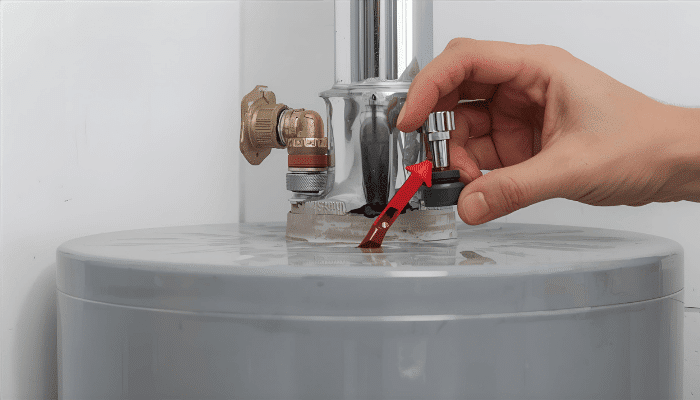
A dripping safety valve almost always means system pressure has gone too high, or the valve itself has worn out and won’t seal properly anymore. Check your pressure gauge first. If it reads above 2.5 bar, bleed some pressure off. If the gauge looks normal and it’s still dripping, the valve needs replacing by a Gas Safe registered engineer.
That steady drip coming from the little copper or plastic pipe outside your house is your boiler’s pressure relief valve doing exactly what it was designed to do, or failing at it. Either way, it’s not something to walk past and ignore.
Some dripping after the heating runs hard is normal and stops within a minute or two. Constant dripping, especially when the boiler is sitting idle, points to a fault that needs sorting before it gets worse.
It helps to know the difference between the two before you start checking anything. One is a normal safety response. The other is a system telling you it needs attention.
We see this one a lot. A boiler pressure relief valve dripping outside the house is one of the most common heating call outs, and in most cases the cause turns out to be straightforward once you know what to check on the pressure gauge and the filling loop.
A pressure relief valve, often called a PRV or safety valve, is a spring loaded device fitted to your boiler. It opens automatically and releases water through an outside pipe if system pressure climbs above a set limit, usually around 3 bar on domestic boilers. Once pressure drops back down, the valve closes and the dripping stops.
Why Is My Boiler’s Safety Valve Dripping?
Continuous dripping comes down to one of four things in almost every case: too much pressure in the system, a stuck filling loop, a worn out expansion vessel, or a valve that’s simply failed with age. Checking the pressure gauge first tells you which direction to look.
1. The System Pressure Is Too High
Normal pressure on a cold system sits between 1 and 1.5 bar. If your gauge needle is sitting above 2.5 bar, the valve is opening because it’s supposed to, releasing water to bring pressure back into a safe range.
This usually traces back to overfilling the system through the filling loop, or a filling loop that hasn’t been closed off properly and is letting mains water trickle in continuously.
2. The Filling Loop Is Stuck Open
The filling loop is the flexible braided hose used to top up pressure. If the valve on it hasn’t seated properly closed, or has worn internally, water keeps feeding into the system and pressure climbs steadily until the safety valve has no choice but to discharge it.
Check both ends of the loop are turned fully off. A faint hiss or a loop that feels warm can be a sign it’s still passing water even when the handle looks closed.
3. The Expansion Vessel Has Lost Its Charge
Inside the boiler sits a sealed vessel with a rubber diaphragm and a pocket of air, designed to absorb the natural expansion of water as it heats up. If that air charge leaks away over time, the vessel can no longer cushion the expansion, and pressure spikes each time the heating fires, pushing water out through the safety valve.
This one isn’t something to fix yourself. Recharging or replacing an expansion vessel means draining part of the system and working inside the boiler casing.
4. The Valve Itself Has Worn Out
If pressure on the gauge looks completely normal but the valve is still dripping, the valve has likely failed. Sediment or limescale under the seat stops it sealing fully, or the spring mechanism has simply worn out after years of opening and closing.
A short, sharp lift of the test lever can sometimes flush debris clear of the seat. If dripping continues afterwards, the valve needs replacing rather than repeatedly tested.
Pressure Gauge Quick Reference
| Pressure Gauge Reading | What It Means | Next Step |
| Above 2.5 to 3 bar | System is overpressurised, valve is doing its job | Bleed pressure down, find why it’s high |
| Normal, 1 to 1.5 bar | Pressure is fine, valve is faulty or fouled | Engineer should inspect or replace the valve |
| Climbing on its own | Filling loop stuck open or expansion vessel failed | Check filling loop, book an engineer |
| Drops after each drip then rises again | Expansion vessel has lost its air charge | Engineer needs to recharge or replace vessel |
What Can You Safely Check Yourself?
You can safely check the pressure gauge reading, confirm the filling loop is fully closed at both ends, and briefly lift the valve’s test lever to clear debris. Anything involving the expansion vessel, valve replacement, or opening the boiler casing should be left to a Gas Safe registered engineer.
Step by Step: First Checks
1. Look at the pressure gauge while the boiler is cold and note the reading.
2. If it reads above 2.5 bar, locate the filling loop and confirm both valves are fully shut.
3. Bleed a radiator slightly if pressure stays high, which lowers system pressure a little.
4. Wait an hour and check the gauge again to see if pressure has stabilised.
5. If dripping continues with normal pressure, stop testing and call an engineer.
When to Call an Engineer
Book someone out if pressure keeps climbing on its own, if the valve drips with the gauge reading normal, or if you’ve checked the filling loop and nothing’s changed after 24 hours. A proper leaking boiler repair at this stage usually means replacing the valve, and sometimes the expansion vessel alongside it, rather than just topping up pressure again and hoping it holds.
Frequently Asked Questions
1. Why is water dripping from the pipe outside my boiler?
That pipe is the discharge route for the pressure relief valve. Dripping means the valve has opened to release excess pressure, either because the system pressure is genuinely too high or because the valve itself isn’t sealing properly anymore.
2. Is it normal for a boiler’s pressure relief valve to drip occasionally?
A short drip right after the heating has run hard, lasting a minute or two, can be normal. Anything ongoing or repeated, particularly when the boiler is idle, is not normal and needs checking.
3. How do I stop my boiler’s safety valve from dripping?
Check the pressure gauge first. If it’s high, confirm the filling loop is fully closed and bleed a little pressure off. If the gauge reads normal and dripping continues, the valve has likely failed and needs replacing by an engineer.
4. What pressure should my boiler be at?
Most domestic boilers should sit between 1 and 1.5 bar when the system is cold. The safety valve typically opens once pressure reaches around 3 bar to protect the system from damage.
5. Can I replace a pressure relief valve myself?
It’s not recommended. The job involves isolating the system, draining water, and working with a component designed to handle high pressure safely. A Gas Safe registered engineer has the training and tools to do it without creating a new leak.
6. Why does my filling loop keep letting water into the system?
This usually means the valve inside the loop hasn’t seated properly, often from a worn washer or debris caught in the seal. Closing it firmly at both ends sometimes solves it, but a loop that won’t hold closed should be replaced.
Final Thoughts
A dripping safety valve is your boiler being honest with you about a pressure problem somewhere in the system. Sometimes it’s as simple as a filling loop that doesn’t close properly. Other times it’s a worn valve or a failed expansion vessel that needs a proper repair.
Either way, the fix is rarely complicated once an engineer has eyes on the actual cause rather than guessing from the gauge reading alone.
A boiler pressure relief valve leaking on and off can feel like something you can put off dealing with, but it rarely fixes itself. If you’re not confident going further than the basic checks, 0800 Homefix sends Gas Safe registered engineers who diagnose the real cause and sort it properly, rather than just resetting the pressure and hoping it doesn’t come back.
