
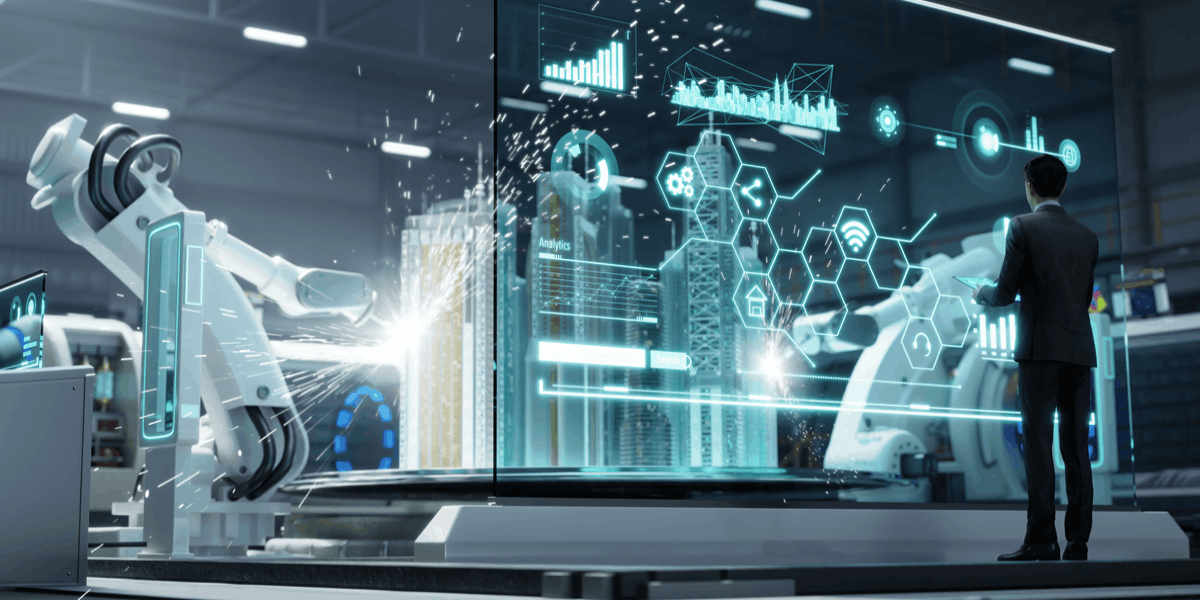
Smart industries are moving from automation to connected intelligence. Manufacturers, logistics companies, energy firms, and healthcare enterprises want platforms that show what is happening now, predict what may happen next, and guide faster decisions with less waste, downtime, risk, and uncertainty across complex operations today clearly.
That is why digital twin vs simulation has become a timely B2B conversation. Both technologies reduce risk, improve planning, and support innovation. Yet they solve different business problems. For leaders backing AI, IoT, cloud, and predictive analytics, understanding the difference can help build stronger industrial roadmaps.
Why Smart Industries Are Revisiting Technology Models
Simulation has supported engineering and operations for decades. It helps teams test products, processes, layouts, and scenarios before changes. A simulation usually works with defined inputs, controlled assumptions, and expected outcomes.
A digital twin goes further. It creates a virtual model of a physical asset, product, process, or facility, then connects it with live or near real-time data. Sensors, IoT devices, cloud platforms, and analytics tools keep it updated.
This is where Pattem Digital sees a major shift. Businesses are asking for operational visibility, predictive control, and continuous improvement.
Understanding the Core Difference in Practical Terms
A simulation helps answer, “What could happen?” A digital twin helps answer, “What is happening now, why is it happening, and what should happen next?”
That makes the digital twin vs simulation discussion less about competition and more about business fit. Simulation is often project-based. Digital twins are usually lifecycle-based. Simulation supports testing, while digital twins support monitoring, prediction, and optimization.
Key differences include:
- Simulation uses planned inputs; digital twins use connected data.
- Simulation reduces design risk; digital twins reduce operational uncertainty.
- Simulation supports scenario testing; digital twins support continuous decisions.
- Simulation is useful before deployment; digital twins are useful during operations.
This simulation vs digital twin comparison helps enterprises invest wisely.
Where Simulation Still Creates Strong Industrial Value
Simulation is not outdated. It remains essential for design, testing, and validation. Engineering teams use it to study machine behavior, product performance, safety, layouts, material stress, and supply chain scenarios.
A manufacturer can try out a new production line before spending on equipment. An automotive team can examine crash behavior before prototype development. A logistics company can assess demand spikes before changing inventory strategies.
Simulation works best when:
- The asset is still in design.
- Real-time data is not available.
- Teams need controlled test conditions.
- Physical trials are expensive or risky.
- Compliance and safety reviews are required.
Simulation remains a strong foundation for smarter industrial planning.
Why Digital Twins Are Becoming Enterprise Infrastructure
A digital twin works like a live copy of a real process, asset, or facility. It helps teams compare what was planned with what is actually happening. In manufacturing, this can mean better machine checks, fewer sudden stoppages, and smoother production. In logistics, it can mean better control over warehouses, routes, and vehicles. In healthcare, it can support asset tracking and facility decisions.
The real benefit comes when the twin is linked to real-time data. IoT devices bring in updates from the field, AI helps read the patterns, and cloud access makes the information available to the people who need it.
Pattem Digital helps businesses identify where this connected intelligence can deliver measurable results instead of another technology experiment.
How Leaders Can Choose the Right Technology Path
The right choice depends on data maturity, complexity, and goals. A company designing a product may need simulation first. A company running connected assets may benefit from a digital twin. Many enterprises will eventually need both.
A practical roadmap includes:
- Use simulation to validate concepts and reduce design risk.
- Build reliable IoT connectivity across critical assets.
- Create virtual models that reflect real operations.
- Add analytics and AI for prediction and recommendation.
- Scale successful models across sites, products, or workflows.
This digital twin technology vs simulation tools approach gives leaders a phased path.
Why Service Partners Matter in Smart Industry Adoption
Businesses need clean data, secure integrations, scalable architecture, and usable applications.
Businesses looking at digital twin services usually need support across data collection, dashboards, cloud platforms, analytics, and enterprise systems. Pattem Digital brings strong product engineering experience to help B2B teams build and launch practical solutions.
At another level, IoT app development services help companies turn connected data into usable workflows for operators, managers, and decision-makers.
Building an Intelligent and Resilient Industrial Future
No single model will define smart industries. Simulation will continue to support design, testing, and planning. Digital twins will become more useful for real-time decisions, maintenance planning, automation, and sustainable operations.
So, when enterprises assess digital twin vs simulation, the better question is not which technology takes the other’s place. The better question is how both can work together to create safer, faster, and more resilient operations.
Pattem Digital believes winners will start with clear business problems, build strong data foundations, and scale intelligence step by step. In that future, digital twin vs simulation will become a partnership, not a debate. Industrial systems will not simply react to change. They will gain better clarity, prepare for what is ahead, and act with confidence.
