
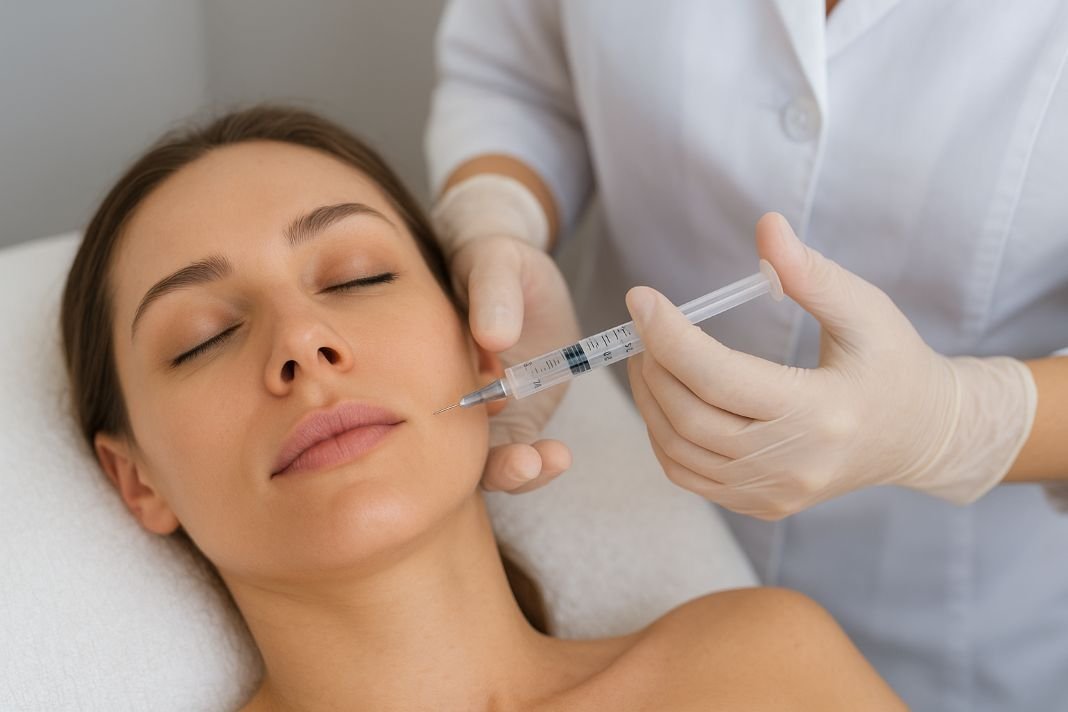
My neighbor showed me her before-and-after photos last summer, and I genuinely couldn’t spot the difference at first. She laughed at my confusion. “That’s the whole point,” she said. She’d had a small amount of a neurotoxin injected around her eyes six weeks earlier, and she looked… rested. Not frozen. Not “done.” Just like herself, but on a good sleep schedule. I’ve thought about that conversation more times than I probably should have.
Because it captures something most people get badly wrong about injectable treatments. They assume the goal is transformation — some dramatic before-and-after that belongs on a clinic’s Instagram grid. For a lot of people, it’s actually the opposite. The whole point is that nobody notices.
What “subtle” actually looks like in practice
Let me back up a little, because I think it helps to get concrete about this before wading into product comparisons and red-flag checklists.
People who want natural results generally share a handful of overlapping goals:
- Softening lines without making them disappear entirely
- Keeping full range of expression, especially around the eyes and mouth
- Looking like they got better sleep, not like they got work done
- Feeling comfortable that no one in the office will notice on Monday
These are genuinely achievable outcomes. But they require a provider who actually listens — not one running through a standard protocol they apply to every face that walks through the door, regardless of structure, age, or what the person sitting in the chair actually said they wanted.
Finding that kind of provider isn’t always easy. But it starts with knowing what to ask.
The “overdone” fear is real, and worth taking seriously
Here’s what genuinely frustrates me about how injectable treatments get discussed: the frozen foreheads and startled expressions people associate with bad Botox aren’t some inherent flaw of the treatment. They’re accidents of dose, or provider judgment, or both. The neurotoxin itself is agnostic about whether you end up looking like yourself or like a wax figure. That outcome is almost entirely determined by decisions made before the needle ever touches your skin.
Which means the fear of looking overdone is really a fear of the wrong approach. And that’s a much more solvable problem than a fear of the treatment itself.
Neurotoxins like Botox and Dysport work by temporarily relaxing specific muscles that cause repeated creasing. Think of it less like erasing a drawing and more like turning down the volume on a sound that’s been slowly wearing a groove into a record. You’re not eliminating expression. Done conservatively, you’re just reducing the repetitive mechanical stress that’s been carving lines into your skin for years. The face still moves. Still reads. Still looks like you.
Comparing your main injectable options
If you’re new to this world, the menu can feel disorienting. A quick breakdown of the neurotoxins you’re most likely to encounter:
| Product | Onset time | Duration | Best known for |
| Botox | 5-7 days | 3-4 months | The original, widely studied neurotoxin |
| Dysport | 2-5 days | 3-5 months | Spreads slightly more, good for larger areas like foreheads |
| Xeomin | 3-7 days | 3-4 months | “Naked” formula without added proteins |
None of these is categorically better than the others. They’re instruments, not answers. A skilled injector knows which one suits your particular face, your concerns, your muscle activity. People who find themselves searching for Dysport injections near me and land with an experienced provider at a reputable medical spa will usually find that the product question becomes part of a larger conversation, not a decision that was already made before they walked in the door.
(That said: if a clinic leads with which product they use before they’ve asked anything about your face or your goals, that’s worth noticing.)
How to avoid going too far
The most counterintuitive advice I can offer: start with less than you think you need. Genuinely. You can always add more at a follow-up. You cannot un-inject something that’s already in there, and waiting out three or four months of a result you hate is a specific kind of misery I’d like you to avoid.
- Book a consultation first, and pay attention to whether the injector asks more questions than they answer
- Tell them explicitly that you want a natural result, then watch how they respond, not just what they say
- Start conservative, reassess at two weeks, and adjust from there
Red flags worth watching for:
- Anyone who quotes you a unit count before seeing your face in motion
- Providers who seem impatient with questions, or worse, vaguely condescending about them
- Clinics where you never speak to the actual injector before treatment begins
Not great signs, any of them.
So is it actually right for you?
What I keep coming back to is this: the fear people carry into these conversations is almost never about the treatment itself. It’s about loss of control. About handing your face to a stranger and hoping they understand what you mean when you say “natural.” That’s a legitimate anxiety, and it doesn’t deserve to be waved away with a stack of before-and-after photos.
But if you want to look like yourself, just with slightly less evidence of every late night and stressful deadline written across your forehead, and you’re willing to do some homework on who holds the syringe? Then yes. Injectable treatments can deliver that. Reliably, when done well.
The goal was never to look like someone else. It was always just to look like you, on your best day, more often than the universe currently allows. That’s a reasonable thing to want. And it’s more achievable than most people walking into their first consultation actually believe.
