
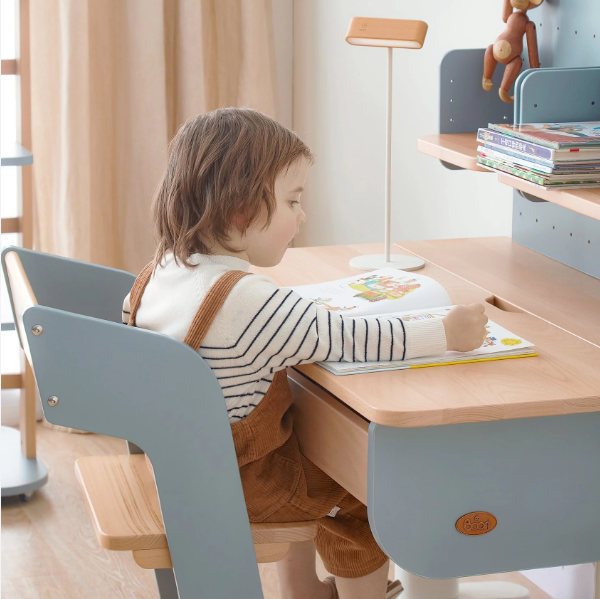
The choice between an adjustable-height and a fixed-height children’s desk is one of the most practically significant decisions in an Australian primary school study space setup. It determines not only whether the desk is ergonomically correct for the Australian child today, but whether it will remain ergonomically correct in three, four, and five years’ time as the child grows through the Australian primary school years. For Australian families purchasing a study desk at the start of primary school with the expectation of it serving through Year 6, the adjustable versus fixed height decision has direct consequences for both the quality of the study environment across those years and the total cost of the desk investment.
Key Takeaways
- The physical setup of an Australian child’s study space is the most controllable factor in the quality of the daily homework experience.
- Height specification between the desk and chair is the most critical ergonomic criterion, producing the correct elbow angle for sustained, comfortable study.
- Surface area must accommodate the actual materials the Australian child uses during homework, growing from early primary to upper primary school requirements.
- Safety specifications including non-toxic finishes certified to Australian standards, stable construction, and rounded edges are non-negotiable baseline requirements.
- Visual integration of the study furniture with the Australian bedroom’s existing furniture creates the organised aesthetic that makes the space one the child wants to study in.
What Matters Most in an Australian Children’s Study Setup
| Factor | What to Specify | Why It Matters |
| Desk height | Australian child’s seated elbow height confirmed by measurement | Prevents postural compensation during homework |
| Chair height | Feet flat, elbows at 90 degrees on desk surface | Sustains correct posture for the session duration |
| Surface width | Minimum 80 cm, 90 cm or wider for Year 3 and above | Accommodates all Australian homework materials simultaneously |
| Back support | Lumbar contact for Year 2 and above | Prevents fatigue and slumping in extended sessions |
| Storage | Stationery within reach, surface kept clear | Removes pre-study setup time; keeps surface functional |
| Lighting | Warm lamp on non-dominant side of desk | Reduces eye strain; supports longer effective sessions |
How to Choose and Set Up Correctly
The Case for Adjustable Height in Australian Bedrooms
For an Australian family purchasing a kids desk at Foundation or Year 1 with the desk intended to serve through Year 6, an adjustable-height desk covering the full Australian primary school height range is the more economical and ergonomically superior choice across the six to seven year primary school span. The Australian child’s seated elbow height increases by approximately 10 to 15 centimetres across this period. An adjustable desk that spans this range in a single piece eliminates the replacement purchase that a fixed desk would require mid-primary school and maintains correct ergonomics at every year group rather than only at the year group for which the fixed desk was purchased. The higher upfront cost of a quality adjustable desk is typically recovered within the Australian primary school span when the replacement cost of a mid-primary fixed desk replacement is factored into the calculation.
When a Fixed Height Desk Is the Right Choice for Australian Families
A fixed-height desk is the more appropriate and economical choice for Australian families purchasing later in primary school, typically from Year 4 or Year 5, when the remaining primary school years cover a smaller growth span than the full primary school period. At this stage, a fixed-height desk at the child’s current correct seated elbow height serves adequately through the remaining primary years and potentially into early secondary school before the child’s proportions move substantially beyond it. The quality of construction, specifically the desk surface stability and the durability of the drawer mechanism, remains as important in a fixed-height desk as in an adjustable one. A quality fixed-height desk purchased at the correct current height for a Year 4 or Year 5 Australian child is a better study environment than a low-quality adjustable desk that develops wobble in its adjustment mechanism within the first year of use.
For a quality range of children’s study desks and chairs suited to Australian bedrooms and primary school homework demands, visithttps://boori.com.au/collections/kids-desk-chairand browse the full desk, table, and chair collection.
Frequently Asked Questions
How much height adjustment does an Australian primary school child need?
From Foundation at age four or five to Year 6 at age ten or eleven, the average Australian child’s seated elbow height increases by approximately 10 to 15 centimetres. An adjustable desk whose surface height range spans at least 15 centimetres covers the full primary school growth span for most Australian children.
How often should an adjustable desk be height-adjusted for an Australian child?
Checking the ergonomic correctness of the desk and chair height annually is sufficient for most Australian primary school children, as seated proportions change gradually. The start of each Australian school year is a natural prompt for this check.
Does an adjustable desk cost significantly more than a fixed one in Australia?
Quality adjustable-height desks typically cost 20 to 40 per cent more than fixed-height alternatives at comparable quality levels in the Australian market. When the cost of a mid-primary replacement desk is factored into the comparison for Australian families purchasing at Foundation or Year 1, the adjustable option is frequently the lower total expenditure across the primary school span.
Can the chair also be adjustable in an Australian kids study setup?
Yes, and for Australian families purchasing an adjustable desk, an adjustable chair is the recommended companion piece. The Boori Australia desk and chair range includes adjustable desk and chair combinations with compatible height ranges for the full Australian primary school span.
Final Thoughts
The quality of an Australian child’s daily homework experience is shaped more by the physical conditions of the study space than by any other single factor within a parent’s control. A correctly specified desk and chair, organised storage established from day one, and a desk position that minimises distraction and maximises light quality create the conditions where the study habit forms and holds across the Australian primary school years. To explore quality children’s study furniture available in Australia, visithttps://boori.com.au/collections/kids-desk-chairand compare the current desk, table, and chair options.
