
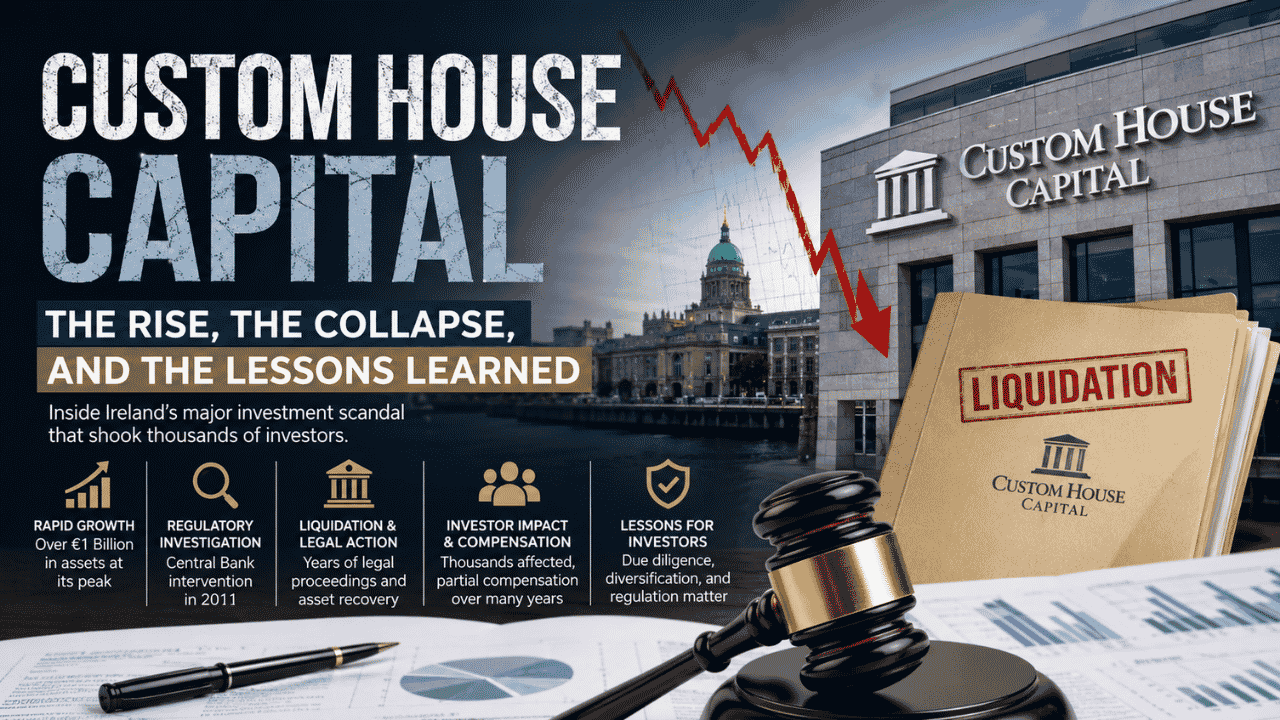
Custom House Capital was once one of Ireland’s best-known independent investment and wealth management firms, serving thousands of investors with pension planning, wealth management, and property investment services. Founded in Dublin in 1997, the company experienced rapid growth and managed assets worth more than €1 billion at its peak. However, what appeared to be a successful financial institution ultimately became one of Ireland’s most significant investment scandals. The collapse of Custom House Capital in 2011 resulted in years of legal proceedings, regulatory investigations, and compensation efforts for affected investors. Even today, people continue searching for information about the company, what caused its downfall, and what lessons investors can learn from the case. This comprehensive guide explores the history of Custom House Capital, its services, the events leading to its collapse, the liquidation process, investor compensation, and the broader impact on Ireland’s financial sector.
What Was Custom House Capital?
Custom House Capital (CHC) was an Irish investment management and financial advisory firm headquartered in Dublin. The company specialises in providing investment solutions for private individuals, pension funds, charities, and institutional clients.
Its services included:
- Wealth management
- Pension planning
- Investment portfolio management
- Property investment syndicates
- Retirement planning
- Financial advisory services
The firm’s business model focused on helping clients build long-term wealth through diversified investment strategies. Over time, it expanded rapidly and gained a strong reputation within Ireland’s financial services industry.
The History of Custom House Capital
Custom House Capital was established in 1997 during a period of significant economic growth in Ireland. As the country’s financial markets expanded, more individuals sought professional investment advice.
The company capitalised on this demand by offering personalised financial planning and investment management services.
During the 2000s, Custom House Capital experienced substantial growth. It expanded its client base throughout Ireland and developed a reputation for offering sophisticated investment opportunities, particularly in commercial property and pension-related investments.
At its height, the company reportedly managed more than €1 billion in assets on behalf of thousands of clients.
Services Offered by Custom House Capital
One reason for the company’s rapid expansion was its broad range of financial products and advisory services.
Wealth Management
Clients received customised investment strategies based on their financial goals, risk tolerance, and retirement plans.
Pension Planning
Custom House Capital advised individuals and businesses on pension investments designed to provide long-term financial security after retirement.
Property Investment
The company became particularly known for organising syndicated property investments, enabling multiple investors to pool capital to invest in commercial real estate projects.
Investment Portfolio Management
Professional fund managers monitored and adjusted investment portfolios to maximise long-term returns while managing investment risk.
Financial Planning
Clients also received advice on estate planning, tax-efficient investing, savings strategies, and broader financial planning needs.
Rapid Growth and Industry Recognition
During Ireland’s economic boom, Custom House Capital attracted thousands of investors seeking experienced financial management.
Several factors contributed to its popularity:
- Personalised investment advice
- Broad investment options
- Strong property investment market
- Growing pension industry
- Expanding Irish economy
For many years, the company was viewed as a respected participant within Ireland’s financial services sector.
The Beginning of Trouble
The company’s fortunes changed dramatically following the 2008 global financial crisis.
As property values declined and financial markets became increasingly unstable, investment firms across Ireland faced growing challenges.
Questions began emerging regarding the management of certain client assets.
Regulatory scrutiny intensified, eventually leading authorities to investigate whether client investments had been managed appropriately.
Central Bank Intervention
In 2011, the Central Bank of Ireland intervened in the operations of Custom House Capital.
The regulator raised serious concerns regarding the handling of client assets and appointed inspectors to review the firm’s activities.
Among the issues investigated were allegations involving:
- Misuse of client funds
- Improper transfers between investment accounts
- Governance failures
- Weak internal controls
- Breaches of regulatory obligations
The intervention marked the beginning of the firm’s collapse.
Liquidation of Custom House Capital
Following the regulatory investigation, the company entered liquidation.
Liquidators were appointed to:
- Secure company assets
- Recover available funds
- Investigate financial transactions
- Distribute recovered assets to investors
- Cooperate with ongoing legal investigations
The liquidation process proved highly complex because of the large number of affected investors and the extensive documentation involved.
It continued for many years.
The Fraud Investigation
Subsequent investigations uncovered evidence suggesting that certain client funds had been improperly used.
Authorities alleged that money belonging to some investors had been redirected without proper authorisation.
This resulted in criminal investigations involving several former executives and employees.
The legal proceedings lasted years and attracted significant media attention throughout Ireland.
The case highlighted the importance of regulatory oversight within the investment management industry.
Impact on Investors
Thousands of clients were affected by the collapse.
Many investors experienced:
- Financial uncertainty
- Delays accessing investments
- Reduced retirement savings
- Legal complications
- Emotional stress
While some investors eventually recovered a significant portion of their assets through liquidation and compensation schemes, others faced prolonged financial hardship.
The case became one of Ireland’s largest investment recovery efforts.
Investor Compensation
To assist eligible investors, compensation mechanisms were established through Ireland’s investor protection framework.
The compensation process involved:
- Reviewing individual claims
- Verifying investment records
- Recovering available assets
- Calculating eligible compensation
- Distributing payments over several years
Although compensation helped many investors reduce their losses, not every investor recovered the full value of their original investments.
The claims process took considerable time due to the case’s complexity.
Legal Proceedings
The collapse resulted in extensive litigation involving regulators, liquidators, former executives, and investors.
Court proceedings examined:
- Financial records
- Corporate governance
- Client account management
- Fiduciary responsibilities
- Alleged fraudulent activities
The legal outcomes reinforced the importance of accountability within financial institutions.
Lessons Investors Can Learn
The Custom House Capital case provides valuable lessons for both individual and institutional investors.
Research Investment Firms
Before investing, investors should examine:
- Regulatory authorization
- Company history
- Financial stability
- Independent reviews
- Management experience
Diversify Investments
Avoid placing all investments into a single firm, sector, or asset class.
Diversification helps reduce overall investment risk.
Understand Investment Products
Investors should fully understand:
- Risks
- Fees
- Expected returns
- Liquidity
- Investment objectives
If something appears unclear, ask questions before investing.
Review Statements Regularly
Monitoring account statements can help identify irregularities early.
Unexpected transactions should be reported immediately.
Work with Regulated Firms
Always verify that investment firms are supervised by recognised financial regulators.
Regulation provides additional investor protections, although it cannot eliminate all investment risks.
How the Case Changed Ireland’s Financial Industry
The collapse of Custom House Capital prompted increased attention toward:
- Investor protection
- Regulatory supervision
- Corporate governance
- Financial reporting
- Risk management
- Compliance procedures
Irish financial regulators strengthened oversight in several areas to improve transparency and reduce the likelihood of similar incidents.
The case also increased public awareness of the importance of due diligence before investing.
Frequently Asked Questions
Is Custom House Capital still operating?
No. The company ceased operations after regulatory intervention and entered liquidation in 2011.
Why did Custom House Capital collapse?
The company collapsed following investigations into the handling of client funds, governance issues, and regulatory concerns, leading to intervention by the Central Bank of Ireland.
Were investors compensated?
Many eligible investors received compensation through liquidation recoveries and Ireland’s investor compensation framework, although recoveries varied depending on individual circumstances.
How many investors were affected?
Thousands of investors were impacted by the firm’s collapse, making it one of Ireland’s largest investment-related failures.
What services did Custom House Capital provide?
Its primary services included wealth management, pension advice, investment portfolio management, retirement planning, and syndicated property investments.
Conclusion
The story of Custom House Capital serves as an important reminder of the opportunities and risks of investment management. What began as a respected Irish wealth management firm ultimately became one of the country’s most significant financial scandals, affecting thousands of investors and leading to years of investigations, litigation, and compensation efforts.
You May Like: Make1m.com Millionaire Life: How to Build Wealth, Mindset, and a Lifestyle of Financial Freedom
