
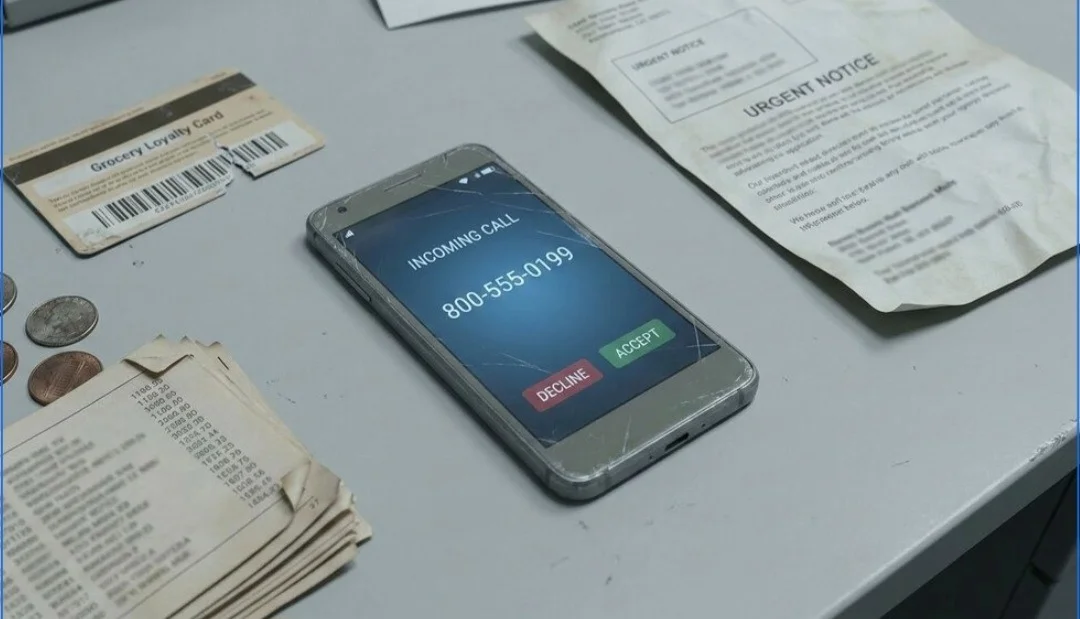
You sign up for a grocery store loyalty card to save a few dollars on your weekly shop. In the fine print, which almost nobody reads, your name, phone number, and address are licensed to a marketing data aggregator, then resold to a commercial list provider, then purchased by a robocall campaign operator running several billion calls a month. You didn’t agree to any of that by name. Registering with the Do Not Call Registry, updating your carrier settings, or downloading a call-blocking app won’t undo it after it happens. The problem is upstream, not at the point of delivery. A professional data removal service provides the only viable way to address this at the source.
Understanding why spam calls persist despite years of enforcement, technical fixes, and consumer protections starts with the data broker network that feeds calling lists. This infrastructure creates a permanent supply of consumer leads that bypasses traditional blocking tools.
The Robocall Economy
Americans received more than 52.5 billion robocalls in 2025—roughly 4.7 billion per month, or approximately 1,627 calls per second. That volume represents a 20% year-over-year increase, and 31% of American adults now report receiving at least one scam call daily. The financial damage is documented: money lost to phone-initiated scams rose 16% from the first half of 2024 to the first half of 2025, with the average loss per victim reaching $3,690. These reflect a system where calling lists are cheap to acquire and campaigns are cheap to run.
Regulatory pressure hasn’t resolved the problem. The FCC shut down 1,388 non-compliant phone carriers in August 2025 alone, yet robocall volume still climbed that year. The National Do Not Call Registry now holds 258.5 million active registrations, and FTC data shows complaint volumes rose in FY2025 despite remaining below their 2021 peak. The gap between enforcement effort and outcome is explained by the fact that compliant companies aren’t the source of most illegal calls. Criminal operators buy their calling lists from the same commercial data brokers that supply legitimate marketing firms.The U.S. PIRG Education Fund’s 2025 robocall analysis documents that lead generators and data broker networks supply phone number lists to robocall operators regardless of carrier-level enforcement. The report attributes the continued volume increase partly to the persistent commercial availability of consumer phone data and the low cost of list acquisition for campaign operators. As long as these records remain accessible, an internet scrubbing service is the only way to proactively reduce exposure.
How Your Phone Number Travels from Signup to Scam List
The journey from a simple signup to a daily nuisance involves several distinct commercial layers:
- First-Party Collectors: Retailers or apps you interact with directly who capture your contact info.
- Aggregators: Large-scale firms that license data from collectors to build massive consumer profiles.
- List Providers: Specialized brokers who segment data into “hot leads” for telemarketing campaigns.
First-party data collection happens at any company you interact with directly. Your phone number, name, and behavioral data enter commercial records at this stage. From there, the data moves to third-party brokers who have no direct relationship with you and aren’t governed by the same regulatory frameworks that cover credit bureaus. The packages they sell include current and previous phone numbers, address history, and behavioral classifications. A robocall campaign operator purchasing one of these packages doesn’t just get your number; they get enough contextual data to make the call sound personally relevant. Use of data scrubbing services allows an individual to strike their details from these catalogs before they are auctioned off.
Information newly made available under California law has shed light on exactly what categories these businesses trade in. Data brokers admit to selling information on precise location, kids, and reproductive healthcare. The analysis of the California Privacy Protection Agency (CPPA) registry shows that dozens of firms specifically trade in the data of minors, who are often the most vulnerable to predatory marketing. Because these aggregators hold thousands of data points per person, companies that clean up your online presence are essential for protecting family privacy. Utilizing professional data removal services ensures your number is removed from the broker databases where it is held before it enters the next campaign list.
Why Call-Blocking Has a Ceiling
Call-blocking and call-labeling tools intercept individual numbers or flag suspicious area codes after a call has been dispatched. They are reactive by design. These tools often fail to address five key categories:
- Spoofed Numbers: Operators display any number they choose, including valid local digits.
- Number Rotation: When one number is flagged, operators simply rotate to a new one.
- Exempt Categories: Political and nonprofit organizations are often exempt from standard rules.
- International Infrastructure: Many campaigns operate outside of domestic jurisdiction.
- Consent Loopholes: Generalized consent given to partners can extend to third-party firms.
Proactive digital hygiene requires a move toward persistent monitoring rather than relying on one-time interventions that quickly become obsolete. Most automated tools only scrape surface-level directories, yet technical architectures used by platforms such as Incogni, iolo, and Aura are specifically designed to counter broker tactics by identifying and bypassing hidden barriers to deletion. Success in this area involves verifying that a provider performs deep-web searches consistently to address the records that standard search engines ignore. This rigorous data privacy services approach targets the underlying people-search and marketing analytics databases that robocall operators draw from to build their campaign lists. By focusing on the source of the information, a dedicated data broker removal services strategy prevents “zombie data” from being re-scraped and sold months after the initial cleanup.
Building a Layered Defense
Broker removal handles the upstream supply. These steps address what still reaches you during and after the removal cycle:
- Carrier Tools: Activate free call-labeling tools from AT&T, Verizon, or T-Mobile.
- Registry: Register your number at donotcall.gov to eliminate compliant telemarketers.
- Secondary Numbers: Use a virtual number for online forms to prevent your real number from entering pipelines.
- Reporting: Forward spam texts to 7726 to help carriers update their filtering databases.
The reduction in spam call volume after a personal info removal services provider processes your phone number isn’t instantaneous. Existing campaign lists continue running from prior purchases. What changes over the following weeks is that your number stops entering new lists. The daily disruption drops from constant to manageable, and the calls that do arrive are more likely to be from pre-existing lists with a natural expiry than from newly assembled campaigns.
===
