
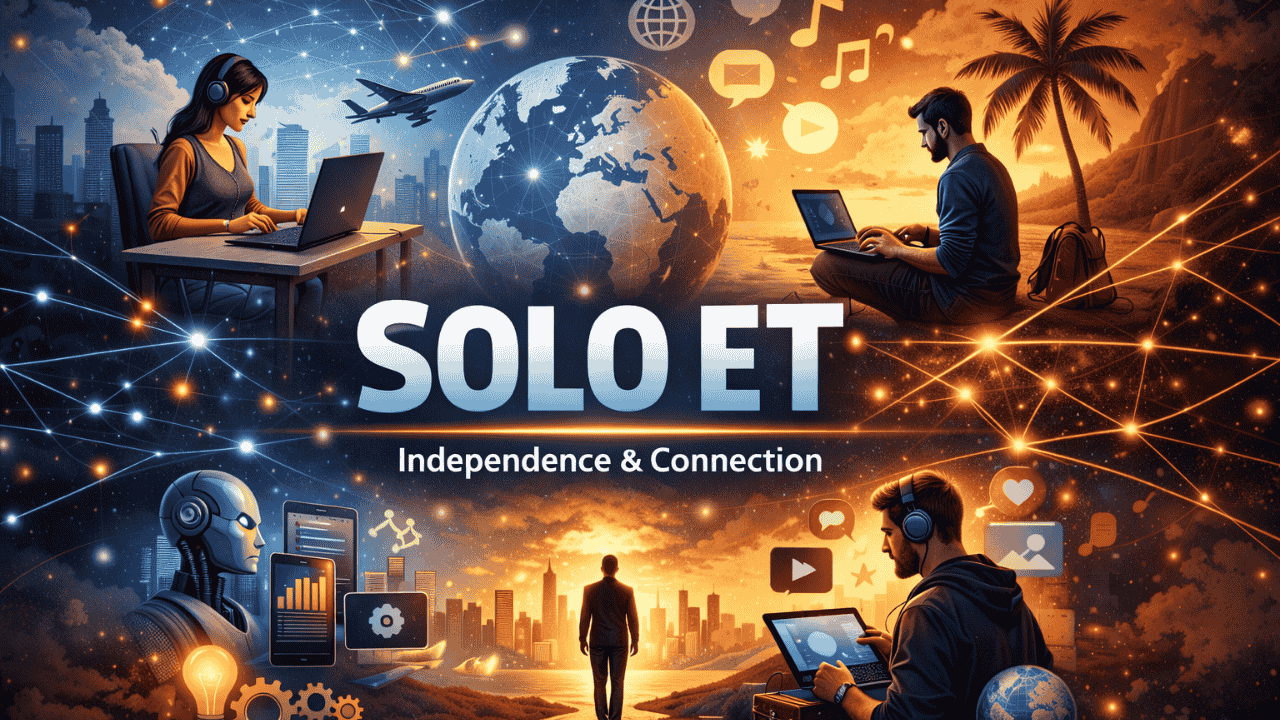
The solo et may look simple at first glance, but it carries a surprisingly wide range of meanings and applications depending on context. From language and culture to technology, creativity, and modern lifestyles, solo et has emerged as a flexible expression that reflects how individuals operate independently while still remaining connected to broader systems, ideas, or communities. In this article, we will explore what solo et means, how it is used in different fields, why it has gained attention in recent years, and how it connects to broader trends such as independence, personalization, and individual empowerment.
Understanding the Meaning of Solo ET
At its core, solo et combines two ideas:
- Solo – meaning alone, individual, or independent
- Et – a conjunction meaning “and” (commonly used in French and Latin)
Together, solo et can be understood as “solo and…”, implying independence that exists alongside something else—technology, collaboration, creativity, or structure.
This dual meaning is what makes solo et so versatile. It does not describe isolation; instead, it suggests individual action in the context of connection.
Solo ET in Language and Cultural Usage
Linguistic Roots of Solo ET
In many European languages, especially French and Latin-based expressions, “et” simply means “and.” As a result, solo often appears as part of a longer phrase rather than a standalone term.
Examples include:
- Working en solo et en équipe (solo and in a team)
- Living solo et libre (solo and free)
- Creating solo et indépendant (solo and independent)
Here, solo et emphasizes balance: personal autonomy combined with collaboration or shared purpose.
Cultural Interpretations
Culturally, Solo et al align with modern values:
- Independence without disconnection
- Self-reliance with optional collaboration
- Individual identity within collective systems
This reflects how people today navigate work, learning, and creativity—often alone, but never truly isolated.
Solo ET as a Concept in Technology and Digital Work
The Rise of Solo-Centered Technology
In recent years, solo has increasingly been associated with technology designed for individual users. Tools, platforms, and systems are now built around the idea that one person can accomplish what once required teams.
Examples include:
- Solo creators using AI tools
- Independent developers deploying full applications
- Freelancers managing entire businesses alone
In this sense, solo et represents solo work enhanced by technology.
Solo ET and Automation
Automation plays a major role in the solo et mindset. A single person can:
- Automate workflows
- Analyze data
- Manage clients
- Create content at scale
This combination of solo effort and technological support captures the essence of solo et in the digital era.
Solo ET in Creative Fields
Artists, Writers, and Musicians
Creative professionals often embody the solo et philosophy. They may work alone, yet rely on:
- Digital platforms
- Online audiences
- Distribution networks
- Creative tools
A musician recording alone but distributing globally, or a writer publishing independently online, represents solo et creativity—solo creation and shared consumption.
Content Creation and Personal Brands
The rise of personal branding is another strong example of solo et in action. One individual can:
- Build an audience
- Run marketing campaigns
- Monetize content
- Engage with communities
Here, solo et means being a one-person operation while participating in a massive ecosystem.
Solo ET in Work and Career Models
Freelancing and Independent Work
Modern careers increasingly reflect the solo et model. Freelancers, consultants, and solopreneurs often work alone but collaborate digitally with:
- Clients
- Teams
- Platforms
- Marketplaces
This hybrid structure is neither traditional employment nor total isolation—it is solo et professional life.
Remote Work and Digital Nomadism
Remote workers frequently operate solo while remaining part of distributed organizations. They manage their time independently but stay connected through digital tools.
This balance between autonomy and structure fits perfectly within the solo et framework.
Solo ET as a Lifestyle Philosophy
Independence Without Isolation
As a lifestyle concept, solo et encourages people to:
- Be comfortable alone
- Maintain meaningful connections
- Choose independence without rejecting community
This mindset resonates with people who value self-growth while recognizing the importance of relationships.
Personal Development and Self-Mastery
Many self-improvement approaches align with solo et:
- Self-directed learning
- Individual goal-setting
- Personal accountability supported by external resources
The idea is simple: you are responsible for your journey, but you are not alone in the world
Why Solo ET Is Gaining Popularity
Societal Shifts
Several major trends explain the growing relevance of solo et:
- Rise of gig and creator economies
- Access to powerful digital tools
- Desire for flexible lifestyles
- Decline of rigid institutional structures
People increasingly want control over their work and lives while still benefiting from shared systems.
Psychological Appeal
Solo et al make appeals on a psychological level. It offers:
- A sense of autonomy
- Reduced dependency
- Increased confidence
- Freedom with safety nets
This balance makes the concept attractive in uncertain times.
Challenges of the Solo ET Approach
While solo et offers many benefits, it also comes with challenges.
Overload and Burnout
Working solo can lead to:
- Decision fatigue
- Overwork
- Lack of support
Without boundaries, the solo aspect can become overwhelming.
Need for Balance
The “et” in “solo et” is essential. Without connection, collaboration, or structure, solo work can become isolating. Successful solo practitioners actively design support systems.
The Future of Solo ET
Looking ahead, solo et is likely to become even more relevant. Advances in AI, automation, and digital infrastructure will continue to empower individuals while connecting them globally.
Future trends may include:
- One-person companies powered by AI
- Personalized education paths
- Independent creators competing with large organizations
- Flexible career identities
Solo et is not a temporary trend—it reflects a long-term shift in how people live and work.
Conclusion: Why Solo ET Matters Today
Solo et is more than a phrase; it is a reflection of modern life. It captures the balance between independence and connection, individuality and collaboration, autonomy and support.
You May Like: Potnovzascut Works: The Emerging Framework Revolutionizing System Resilience
