
Most organizations think of network security hardware in terms of server rooms and data centers, controlled and climate-managed environments where equipment can be expected to operate within stable temperatures and without physical interference. For a large portion of the world’s critical industries, that assumption does not hold. Manufacturing floors, energy substations, oil and gas pipelines, transportation hubs, and military installations all share one characteristic that sets them apart from conventional IT environments: the conditions are hostile, unpredictable, and unforgiving. The security hardware deployed in these settings must meet demands that standard enterprise firewalls were never designed to handle.
This is where ruggedized firewalls enter the picture. Understanding what they are, how they differ from standard network security appliances, and why they have become indispensable to operational technology environments helps organizations in demanding sectors make informed decisions about their security posture.
Defining a Ruggedized Firewall
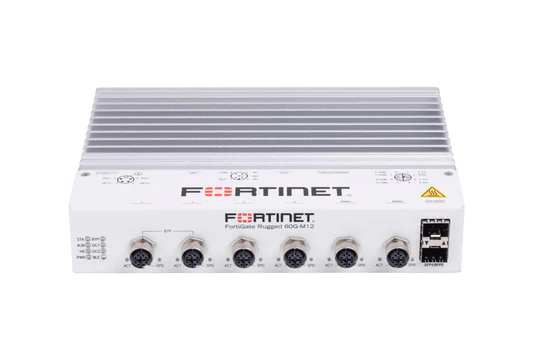
A ruggedized firewall is a network security device built to perform reliably under physical and environmental conditions that would cause standard enterprise hardware to fail or malfunction. The term “ruggedized” refers not to the software or inspection capabilities of the device, but to the physical engineering behind it. These appliances are designed to operate across wide temperature ranges, resist dust, moisture, vibration, and electrical interference, and continue functioning without fans or spinning drives that can fail in dusty or particle-heavy atmospheres.
Organizations operating in energy, manufacturing, transportation, and defense sectors that require this level of protection can evaluate ruggedized firewall for harsh industrial environments purpose-built to sustain continuous operation under exactly these conditions.
The underlying security functions of a ruggedized firewall parallel those of its data center counterpart. It performs stateful packet inspection, enforces access control policies, segments networks, filters traffic based on protocol and application, and provides visibility into what is passing between connected systems. What distinguishes it is the form factor and construction: hardened enclosures, fanless cooling, extended temperature tolerance, and certifications for deployment in industrial-grade environments.
Ruggedized firewalls commonly conform to standards such as IEC 61850 for electrical substations or EN 50155 for railway applications, depending on the vertical. These certifications confirm that the hardware has been tested and validated for the conditions it will face in deployment, not just for functionality in controlled laboratory settings.
The Gap Between Standard IT Environments and Industrial Deployments
Standard enterprise firewalls are tested for performance in server rooms that maintain specific temperature and humidity ranges, are protected from vibration, and kept free of contaminants. Remove those assumptions, and the failure rate of conventional hardware rises sharply. Moving parts, such as fans, hard drives, and mechanical relays, are the first to go in dusty or high-vibration settings. Temperature extremes cause solder joint failures and component degradation that accumulate over time, even when no immediate failure is observable.
Industrial sites routinely exceed the tolerance envelope of enterprise equipment. Oil refineries operate with ambient heat and airborne hydrocarbons. Wind turbine nacelles experience constant vibration and temperature swings from below freezing to well above 60 degrees Celsius. Outdoor power distribution equipment faces rain, humidity, and in some regions, salt air corrosion. Mining operations combine dust, shock, and vibration in proportions that render conventional hardware unsuitable within months.
The gap is not simply physical. Operational technology environments also impose constraints on how security hardware can be installed, maintained, and updated. Many industrial systems run continuously with no acceptable downtime window. The expectation in a substation or water treatment plant is that the network device will operate without interruption for years, not quarters. Ruggedized firewalls are designed with this operational reality in mind, prioritizing long mean time between failure and passive cooling architectures that remove the primary mechanical failure point.
Why Industries Are Deploying Ruggedized Firewalls Now
The convergence of information technology and operational technology has fundamentally altered the risk profile of industrial networks. For decades, operational systems were largely air-gapped, physically separated from corporate networks and the internet. That separation provided a passive form of security. As organizations have integrated OT systems with enterprise networks to enable remote monitoring, predictive maintenance, and centralized management, those implicit protections have dissolved.
The operational technology security program maintained by the National Institute of Standards and Technology documents the scope of cybersecurity risk management for OT environments, providing frameworks and guidance that industrial operators use to identify and address vulnerabilities in connected control systems. The growing complexity of these environments and the connectivity that enables efficiency also creates new exposure that demands active security controls at the network boundary.
Threat actors have recognized the shift. Ransomware groups, nation-state actors, and opportunistic intruders now actively target industrial environments because the consequences of disruption and the corresponding leverage are significant. A firewall placed at the boundary between an enterprise network and a plant floor or field site is a critical enforcement point, but only if it can survive the conditions of that site.
Key Industries Driving Demand
Energy production and distribution was among the first sectors to formally adopt ruggedized network security hardware, driven by regulatory requirements and the high-profile targeting of power grid infrastructure. Substations and generating facilities need security devices that can tolerate the electromagnetic interference generated by high-voltage equipment while maintaining continuous operation.
Manufacturing environments present a different set of challenges. Production lines run around the clock and cannot be paused for routine hardware servicing. The presence of metallic particles, coolants, and cutting fluids creates a hostile environment for any device with moving parts. Ruggedized firewalls installed in these settings operate in sealed enclosures that keep contaminants out while dissipating heat through conduction rather than forced airflow.
Oil and gas infrastructure spans some of the most demanding physical environments on the planet. Offshore platforms, desert pipelines, and Arctic extraction sites all require security hardware that performs regardless of ambient conditions. Latency and reliability are particularly critical in these contexts because control system communications must arrive intact and on time.
Transportation networks, including rail, ports, and aviation ground systems, have integrated digital control systems that depend on network security for both operational integrity and regulatory compliance. The vibration profiles of these environments are particularly challenging for conventional hardware.
How Ruggedized Firewalls Address OT-Specific Requirements
Beyond physical durability, ruggedized firewalls designed for industrial deployment offer protocol awareness that standard enterprise devices often lack. Operational technology environments communicate using protocols such as Modbus, DNP3, EtherNet/IP, and IEC 61850. Standard firewalls cannot inspect or understand these at the application layer. Deep packet inspection for industrial protocols allows security teams to identify anomalous commands and enforce policies based on what systems are actually doing, not just which ports are open.
Security research tracking the current OT threat landscape reveals a consistent pattern: attackers exploit weak boundary enforcement between IT and OT layers, then leverage industrial protocols to issue unauthorized commands once inside the network. A report covering recent industrial cybersecurity threats documents how threat actors use standard IT entry points to reach operational environments before shifting to industrial protocol abuse once initial access is achieved. Ruggedized firewalls with OT-aware deep packet inspection provide the enforcement point that interrupts this progression before commands reach field devices.
Centralized management is another critical capability. Organizations operating multiple industrial sites need to apply and monitor security policies consistently across geographically dispersed deployments. A ruggedized firewall that integrates with a centralized management platform allows security teams to push policy updates, review logs, and respond to alerts without requiring on-site access at each location.
Frequently Asked Questions
What makes a firewall “ruggedized”?
A ruggedized firewall is purpose-built to operate in physically demanding environments where standard enterprise hardware would fail. The key differences lie in the construction: fanless cooling through passive heat dissipation, sealed enclosures that resist dust and moisture, extended temperature tolerances, and the absence of mechanical components that wear out under vibration. These devices carry industrial certifications confirming they have been validated for environments such as electrical substations, manufacturing floors, and outdoor field sites.
Can a standard enterprise firewall be used in an industrial setting?
Standard enterprise firewalls are engineered for controlled environments with stable temperature, humidity, and cleanliness conditions. Deploying them in industrial settings typically leads to premature failure from overheating, mechanical degradation, or contamination. Beyond the physical risk, they also lack the industrial protocol awareness that OT environments require for meaningful traffic inspection. For sustained, reliable security in industrial deployments, ruggedized hardware designed for those conditions is the appropriate choice.
Do ruggedized firewalls support the same security features as enterprise models?
Yes. Modern ruggedized firewalls offer the same core security capabilities as enterprise appliances, including stateful inspection, application-layer filtering, intrusion prevention, VPN, and network segmentation, with the addition of industrial protocol support. The security functions are not diminished by the ruggedized form factor. The hardware is engineered to deliver those capabilities under conditions that enterprise equipment cannot withstand, making the ruggedized variant suitable for environments where both physical durability and network security enforcement are required simultaneously.
