
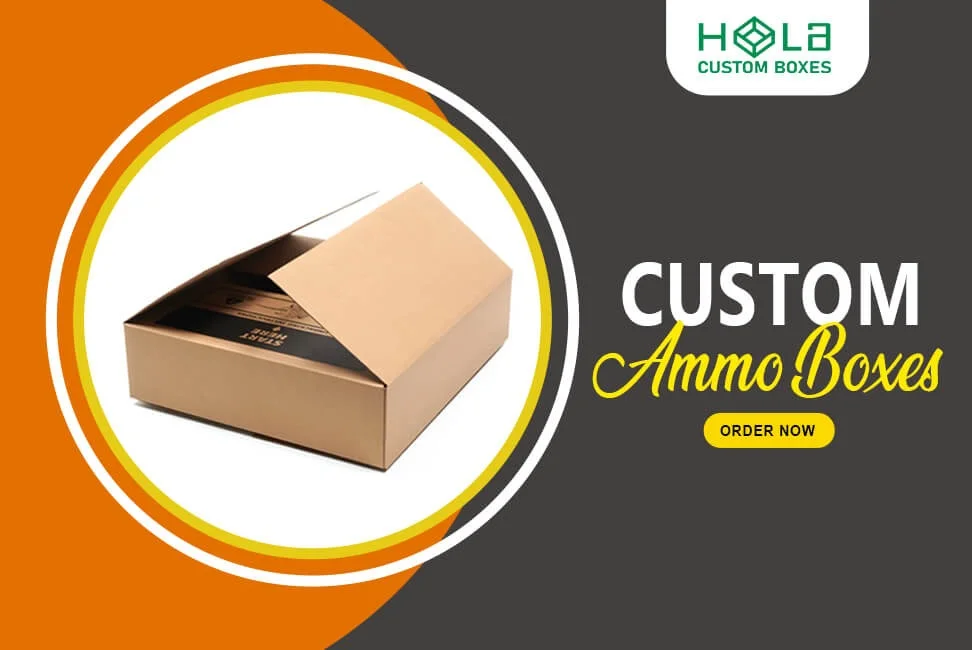
The .308 Winchester is trusted for consistency, stopping power, and versatility — from hunting fields to long-range steel. Whether you’re loading 168gr HPBT match rounds or 150gr hunting soft points, every cartridge deserves packaging that protects performance from the bench to the firing line.
Generic cartons leave space for movement. Movement leads to tip damage, neck stress, primer contact, and lost organization.
Custom cardboard ammo boxes built specifically for .308 Winchester eliminate those risks.
At Hola Custom Boxes, packaging is engineered around real cartridge dimensions, real transport conditions, and real shooter workflows — not one-size-fits-all templates.
Why .308 Winchester Requires Heavy-Duty Packaging
The .308 is a longer, heavier cartridge than many common calibers. That extra mass means greater internal stress when boxes are dropped, stacked, or transported. Thin paperboard flexes. Corners collapse. Lids spring open.
Heavy-duty 18–24 pt SBS or kraft stock provides rigidity for most range and retail applications. For high-volume stacking or shipping, stepping up to 28–32 pt chipboard dramatically improves crush resistance. The difference is noticeable immediately: clean edges, square corners, and consistent lid closure.
When packaging holds its shape, your cartridges stay aligned.
The board grade should match how the ammunition will be stored — inside range bags, stacked in safes, shipped to customers, or displayed at retail.
Engineering the Right Internal Fit for .308
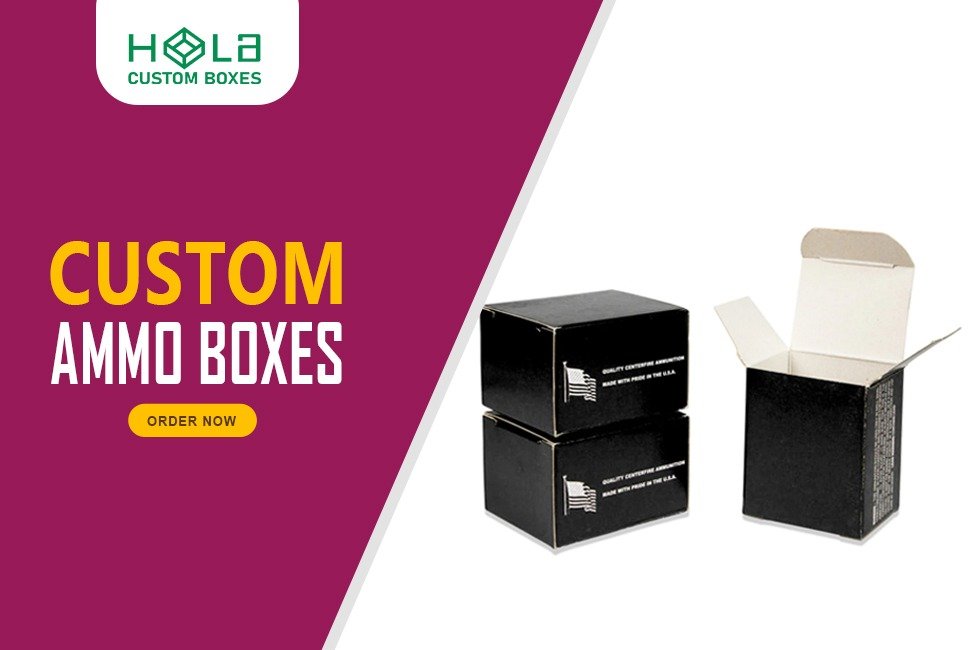
Protection starts inside the box.
Every .308 Winchester round varies slightly depending on bullet profile, brass brand, and overall length. Custom packaging begins by measuring actual COAL (Cartridge Overall Length) and building internal dimensions around that measurement.
Adding 1–2 mm of clearance prevents dragging or wedging during loading while still minimizing internal movement. Too tight, and you risk scuffing necks. Too loose, and cartridges rattle under vibration.
Height must allow upright seating without rocking. Width must match insert pitch so primers remain centered and isolated.
Before full production, structural prototypes allow real-world fit testing. This eliminates guesswork and prevents costly reprints.
Precision inside the box preserves precision downrange.
Choosing the Right Round Capacity
Capacity should reflect workflow — not just quantity.
A 20-round box works well for hunting trips, sight-in sessions, or separating match batches. It stays compact in a range bag and makes lot tracking simple.
Fifty-round boxes reduce loose handling during longer practice sessions. They streamline counting and storage while maintaining portability.
For bulk loaders or training environments, 100-round cartons minimize repacking and maximize stacking efficiency.
The goal isn’t just to hold ammunition — it’s to simplify organization and transport.
Insert Systems That Eliminate Rattle
Even rigid walls won’t stop internal damage if cartridges collide inside the box.
Custom inserts prevent movement and tip contact.
Die-cut grid inserts create individual wells for each round, ideal for match ammunition requiring consistent spacing. Folded tray systems guide case bodies while reducing material weight. For heavier loads or longer boxes, layered chipboard platforms provide additional stiffness and stability.
Adding an interleaf pad protects bullet tips from lid contact, particularly when mixed bullet profiles are packaged together.
When inserts are engineered correctly, cartridges remain upright, separated, and quiet — even during transport.
You can explore structural options and insert configurations directly on our cardboard ammo box manufacturer page to see how custom builds protect every round.
Closures Built for Real Handling
Closures define durability in daily use.
Standard tuck-top lids provide cost-effective performance and quick assembly. Locking friction lids improve repeat open-close cycles for load development and range sessions. For premium presentation or retail environments, reinforced magnetic lids add smooth access without compromising strength.
Dust flaps and tight scoring prevent lid lift. Thumb notches allow quick access without forcing cartridges against box edges.
A closure system should match how often the box will be opened — and how it will be transported.
Moisture, Oil & Abrasion Protection
Paperboard alone isn’t enough in environments where humidity and oil exposure are common.
Aqueous coatings reduce moisture absorption and edge swell. Varnish or PE linings resist oil migration from hands or rifle cases. Matte protective finishes reduce scuffs and surface wear.
Tight lid tolerances limit dust intrusion. Reinforced corners resist abrasion when boxes are stacked or transported in hard cases.
Proper finishing extends the lifespan of both packaging and ammunition.
Printing for Identification & Inventory Control
Clear labeling turns packaging into a working system.
The top panel should display caliber and bullet weight prominently:
“.308 Winchester – 168gr HPBT.”
Side panels can list powder type, charge weight, primer, COAL, and brass brand for reloaders. Lot numbers and production dates enable traceability. Barcodes or QR codes can link to load data, velocity logs, or inventory systems.
Using high-contrast typography (black on white or light backgrounds) ensures readability under range lighting. Laminated labels prevent smearing from oil or handling.
Consistent templates across SKUs streamline storage and rotation.
Built for the Range
A well-designed .308 box should stack cleanly without sliding, resist crushing under hand pressure, and stay quiet during transport.
Consistent footprints allow multiple boxes to align neatly inside ammo cans or safe drawers. Reinforced corners prevent deformation in range bags. Snug inserts eliminate rattle.
When packaging performs seamlessly, shooters focus on performance — not on reorganizing loose rounds.
Ordering Custom .308 Winchester Boxes
Ordering begins with specifications: round count, internal dimensions, board weight, insert style, and finish.
Typical minimum order quantities start around 500 units, with tiered pricing available for higher volumes. Production timelines generally range from two to four weeks after proof approval.
Providing accurate cartridge measurements and reviewing dielines before printing prevents delays and ensures proper fit.
At Hola Custom Boxes, structural accuracy and print precision are reviewed before production begins — because precision matters in both packaging and shooting.
Final Thoughts
The .308 Winchester is known for reliability and performance. Its packaging should reflect the same standards.
Custom cardboard ammo boxes built with heavy-duty cardstock, precision inserts, moisture protection, and clear labeling protect both cartridge integrity and organization. From 20-round hunting cartons to 100-round bulk storage boxes, structure and fit determine long-term durability.
When your ammunition stays protected, organized, and traceable, performance remains consistent from storage to shot.
Explore professional-grade packaging solutions at Hola Custom Boxes and build .308 ammo boxes designed to protect every round with confidence.
