
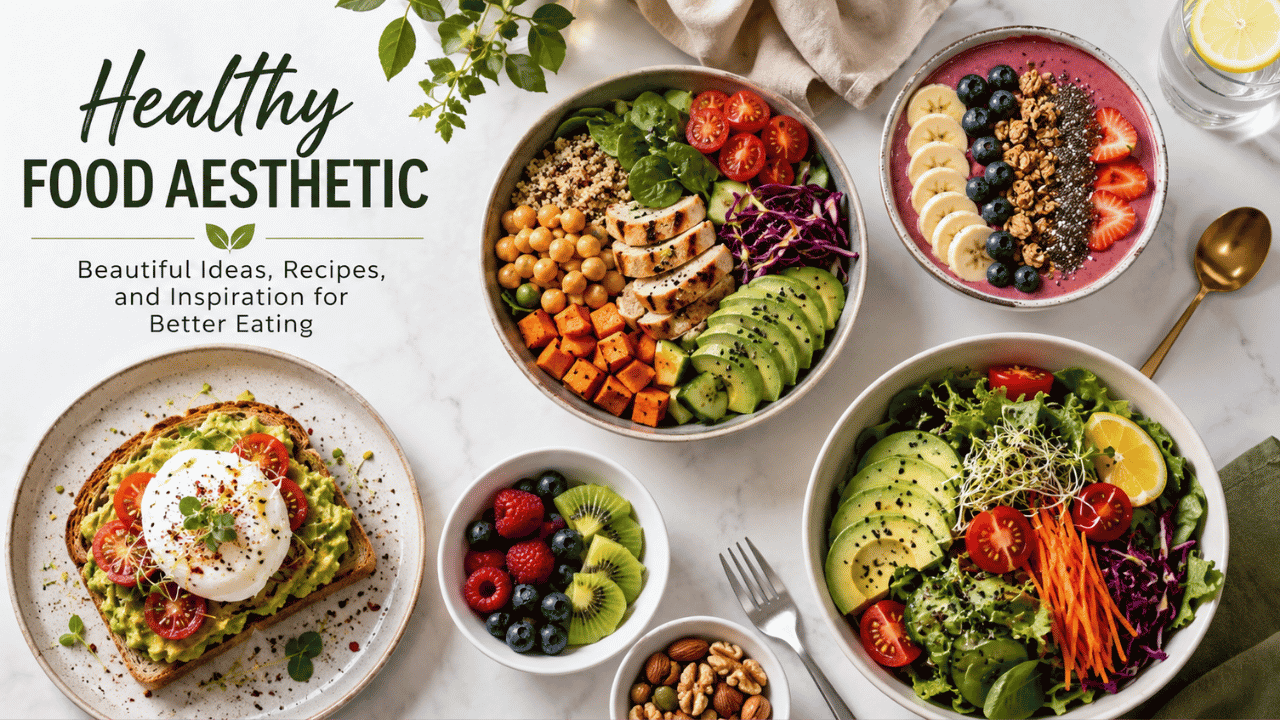
The healthy food aesthetic has become increasingly popular as people look for ways to make nutritious eating more enjoyable, colorful, and visually appealing. From beautifully arranged smoothie bowls and fresh salads to avocado toast, fruit platters, grain bowls, and homemade snacks, healthy food can be both nourishing and attractive.
Social media platforms have played a major role in this trend. Carefully arranged meals, colorful ingredients, minimalist plates, natural lighting, and clean backgrounds are commonly used to create an appealing food aesthetic. However, the idea is about more than simply taking attractive pictures. A good healthy food aesthetic can also encourage people to prepare balanced meals, experiment with fresh ingredients, and develop a more positive relationship with everyday food.
This guide explores what the healthy food aesthetic means, the foods commonly associated with it, how to create attractive healthy meals, photography tips, and practical ideas for incorporating the aesthetic into everyday eating.
What Is a Healthy Food Aesthetic?
A healthy food aesthetic refers to the visual presentation and overall appearance of nutritious food. It combines healthy eating with attractive colors, thoughtful plating, appealing textures, and simple presentation.
The concept can include everything from a colorful breakfast bowl to a neatly arranged lunch or an elegant dinner plate. Foods commonly associated with this style tend to include fresh fruits, vegetables, whole grains, lean proteins, nuts, seeds, yogurt, eggs, and other minimally processed ingredients.
The visual style can vary significantly. Some people prefer a minimalist aesthetic with neutral plates and simple ingredients, while others prefer bright, colorful meals featuring multiple fruits and vegetables.
Ultimately, the goal is to make healthy food look inviting without losing sight of nutrition and practicality.
Why Is the Healthy Food Aesthetic So Popular?
Food has always had a visual component, but social media has made food presentation more influential than ever. Platforms such as Instagram, Pinterest, TikTok, and other visual networks allow people to share meals and discover new ideas instantly.
A colorful plate can make an ordinary meal appear more exciting. For someone trying to eat more vegetables or prepare meals at home, seeing attractive food ideas can inspire.
The healthy food aesthetic is also popular because it connects food with broader lifestyle interests. People may associate attractive healthy meals with organization, wellness, fitness, self-care, and mindful living.
Another reason for its popularity is accessibility. Creating a visually appealing meal does not necessarily require expensive ingredients. Simple foods such as bananas, berries, oats, eggs, tomatoes, cucumbers, spinach, and whole-grain bread can create a colorful presentation.
Key Elements of a Healthy Food Aesthetic
Several characteristics appear repeatedly in healthy food photography and meal presentation.
Fresh and Colorful Ingredients
Color is one of the easiest ways to improve the appearance of a meal. Fruits and vegetables naturally provide a wide range of colors.
For example, a bowl could combine:
- Strawberries
- Blueberries
- Mango
- Spinach
- Cucumber
- Tomatoes
- Carrots
- Avocado
- Bell peppers
Using different colors can make a meal look more vibrant while also encouraging variety in food choices.
Simple Plating
Healthy food does not have to be arranged elaborately. Simple plating can often look more elegant.
Instead of placing everything randomly on a plate, separate ingredients into distinct sections. Keep portions visually balanced and avoid overcrowding the plate.
A simple white or neutral-colored plate can also make colorful ingredients stand out.
Natural Textures
Texture contributes to the visual appeal of food. Creamy yogurt, crunchy nuts, fresh berries, crisp vegetables, and toasted grains can create contrast.
Combining several textures can make a meal look more interesting while also creating a more satisfying eating experience.
Natural Lighting
Lighting is particularly important for people interested in food photography. Natural daylight can reveal the true colors and textures of ingredients.
A meal photographed near a window can often look more appealing than one photographed under harsh artificial lighting.
Clean Backgrounds
A simple background helps keep attention on the food. Wooden tables, neutral countertops, linen fabrics, ceramic plates, and plain surfaces are frequently used in food photography.
The background should complement the meal rather than distract from it.
Healthy Breakfast Aesthetic Ideas
Breakfast is one of the easiest meals to make visually appealing.
Smoothie Bowls
Smoothie bowls are popular because they provide a blank canvas for colorful toppings. A basic smoothie can be topped with sliced banana, berries, chia seeds, nuts, coconut, or oats.
Arrange the toppings in lines, sections, or simple patterns for a polished appearance.
Avocado Toast
Avocado toast can be made more visually interesting by adding tomato slices, boiled eggs, microgreens, sesame seeds, or chili flakes.
Whole-grain bread provides a practical base while the toppings add color and texture.
Yogurt and Fruit Bowls
Greek yogurt topped with berries, sliced fruit, granola, and seeds is another easy option. The contrast between the creamy yogurt and colorful fruit creates an attractive presentation.
Overnight Oats
Overnight oats can be prepared in a transparent jar or bowl. Layers of oats, yogurt, fruit, and seeds can create an appealing appearance while making breakfast convenient.
Healthy Lunch Aesthetic Ideas
Lunch can also be both nutritious and visually appealing.
Colorful Grain Bowls
A grain bowl can combine brown rice, quinoa, roasted vegetables, leafy greens, beans, chicken, tofu, avocado, or other ingredients.
Instead of mixing everything immediately, arrange the components separately. This creates a colorful presentation and allows individual ingredients to remain visible.
Fresh Salad Bowls
Salads are naturally suited to a healthy food aesthetic because vegetables offer different colors, shapes, and textures.
Try combining leafy greens with tomatoes, cucumber, carrots, red cabbage, corn, avocado, chickpeas, or grilled protein.
A simple dressing can be added just before eating.
Healthy Wraps
Whole-grain wraps filled with vegetables and a protein source can be cut diagonally and arranged neatly on a plate.
Adding a small side salad or fresh fruit can complete the presentation.
Healthy Dinner Aesthetic Ideas
Dinner does not have to be complicated to look attractive.
A balanced dinner might include a protein source, vegetables, and a whole-grain or other carbohydrate source. Grilled chicken with roasted vegetables and brown rice, for example, can create a simple but attractive plate.
Other ideas include:
- Salmon with vegetables and quinoa
- Tofu with roasted vegetables and rice
- Lentil bowls with fresh greens
- Grilled chicken with sweet potatoes
- Vegetable pasta with a side salad
- Bean and vegetable bowls
Using different colors and keeping the plate organized can instantly improve its appearance.
Healthy Snack Aesthetic Ideas
Snacks are another opportunity to create an attractive healthy food presentation.
A small snack board can include fresh fruit, nuts, seeds, yogurt, whole-grain crackers, and vegetables.
Apple slices with nut butter can be arranged in a circular pattern. Berries and yogurt can be served in a small glass. Carrot and cucumber sticks can be paired with hummus.
These simple combinations can look appealing without requiring complicated preparation.
How to Make Healthy Food Look Aesthetic
Creating an aesthetic meal is mostly about presentation rather than expensive ingredients.
Use a Variety of Colors
Try to include several naturally colorful ingredients. Greens, reds, oranges, yellows, purples, and blues can create visual contrast.
For example, spinach, tomatoes, carrots, purple cabbage, corn, and blueberries can produce a colorful meal.
Arrange Food Intentionally
Instead of simply placing food on a plate, think about where each ingredient should go.
You can group similar foods or create layers and patterns. However, avoid making the arrangement so complicated that it becomes impractical.
Add Small Toppings
Seeds, fresh herbs, nuts, fruit slices, or spices can act as finishing touches.
A small amount of garnish can change the appearance of an otherwise ordinary meal.
Choose Attractive Serving Ware
Simple bowls and plates can make a significant difference. Neutral colors often allow colorful ingredients to become the main visual focus.
Glass jars are particularly useful for layered foods such as overnight oats, yogurt, and salads.
Keep the Presentation Clean
Wipe away spills and food residue from the edge of the plate before serving or photographing the meal.
A clean presentation usually looks more polished.
Healthy Food Aesthetic Photography Tips
The visual side of this trend is closely connected to food photography.
If you want to photograph your meals, start with natural light. Position the food near a window and avoid strong direct sunlight if it creates harsh shadows.
Experiment with different camera angles. A top-down photograph can work well for bowls, salads, and arranged plates. A lower angle may be more effective for layered foods.
Use the camera to emphasize texture. Close-up images can highlight berries, seeds, vegetables, grains, and other details.
It is also useful to avoid excessive editing. Food should still look natural and recognizable. Overly strong filters can make colors look unrealistic.
Best Foods for a Colorful Healthy Plate
Some ingredients are particularly useful for creating visually attractive meals.
Fruits
Berries, oranges, kiwi, mango, pineapple, apples, grapes, and pomegranate seeds can add natural color.
Vegetables
Spinach, kale, broccoli, carrots, tomatoes, peppers, cucumber, beetroot, and purple cabbage provide different colors and textures.
Proteins
Eggs, chicken, fish, tofu, beans, lentils, chickpeas, yogurt, and other protein-rich foods can be incorporated into colorful meals.
Whole Grains
Oats, quinoa, brown rice, whole-grain bread, and other grains can provide a neutral foundation for colorful toppings and vegetables.
Healthy Fats
Avocado, nuts, seeds, and nut butters can contribute texture and flavor while complementing colorful fruits and vegetables.
Is Aesthetic Food Always Healthy?
One important point is that attractive food is not automatically nutritious.
A meal can look healthy while containing excessive amounts of added sugar, salt, saturated fat, or highly processed ingredients. Likewise, a simple-looking meal can be extremely nutritious.
This is why the healthy food aesthetic should be viewed as a source of inspiration rather than a strict definition of what healthy eating must look like.
Nutrition depends on the overall dietary pattern, portion sizes, individual nutritional needs, and the types of foods being consumed.
A visually beautiful smoothie bowl, for example, can contain nutritious ingredients, but adding large quantities of sweeteners or toppings can significantly change its nutritional profile.
The most useful approach is to combine visual appeal with balanced food choices.
Healthy Food Aesthetic and Balanced Eating
A healthy food aesthetic can be beneficial when it encourages people to cook, try new ingredients, and eat more fruits and vegetables.
However, people should not feel pressured to make every meal look perfect.
Real-life healthy eating is often simple. A bowl of oatmeal, a piece of fruit, a basic sandwich, or leftover vegetables may not look like a social-media photograph, but these foods can still be part of a balanced diet.
The aesthetic should make healthy eating more enjoyable rather than create unrealistic expectations.
How to Create a Healthy Food Aesthetic on a Budget
You do not need expensive superfoods or specialized kitchen equipment.
Start with inexpensive seasonal fruits and vegetables. Beans, lentils, oats, eggs, rice, potatoes, whole-grain products, and frozen vegetables can also be useful.
Buy ingredients that can be used in multiple meals. For example, roasted vegetables can be added to salads, grain bowls, wraps, or dinner plates.
You can also improve presentation without buying new dishes. Carefully rearranging food, using natural light, and adding colorful ingredients can make a significant difference.
Healthy Food Aesthetic Meal Planning
Meal planning can make it easier to maintain both nutrition and presentation.
Choose a few base ingredients for the week, such as rice, quinoa, oats, roasted vegetables, or leafy greens. Then prepare different protein and topping combinations.
For example, the same roasted vegetables could be used in a grain bowl one day, a wrap another day, and a dinner plate later in the week.
Keeping fresh fruit, vegetables, nuts, seeds, and yogurt available also makes it easier to create attractive snacks and breakfasts.
Common Mistakes to Avoid
While creating beautiful healthy meals can be enjoyable, several mistakes are worth avoiding.
Focusing Only on Appearance
A meal should be enjoyable to eat, not just attractive in a photograph.
Using Too Many Ingredients
Adding too many ingredients can make the plate look crowded and unnecessarily complicate meal preparation.
Following Every Social Media Trend
Not every viral food trend is nutritionally balanced. Consider the actual ingredients and preparation methods rather than judging a meal by its appearance.
Wasting Food for Photography
Food styling should not require unnecessary waste. Use ingredients that you genuinely plan to eat.
Creating Unrealistic Expectations
Perfectly styled meals shown online often involve careful photography and editing. Everyday meals do not need to look identical.
Healthy Food Aesthetic Ideas for Different Lifestyles
The concept can be adapted to different schedules and eating preferences.
For busy professionals, overnight oats, pre-prepared grain bowls, wraps, and fruit-and-yogurt combinations can provide convenient options.
For students, affordable ingredients such as eggs, oats, rice, beans, bananas, seasonal vegetables, and whole-grain bread can form the foundation of attractive meals.
For families, colorful vegetable plates, homemade wraps, fruit bowls, and build-your-own grain bowls can make meals more interactive.
The key is flexibility. A healthy food aesthetic should fit your lifestyle rather than make everyday eating more difficult.
Frequently Asked Questions About Healthy Food Aesthetic
What is a healthy food aesthetic?
A healthy food aesthetic is the visual style of presenting nutritious food in an attractive, colorful, and organized way. It commonly involves fresh ingredients, appealing plating, natural colors, and clean photography.
What foods look the most aesthetic?
Colorful fruits, vegetables, smoothie bowls, salads, grain bowls, avocado toast, yogurt bowls, and neatly arranged snacks are among the foods that are commonly used for an aesthetic presentation.
How can I make healthy food look better?
Use colorful ingredients, arrange foods intentionally, add simple toppings, choose clean serving dishes, and photograph meals in natural light.
Is aesthetic food actually healthy?
Not necessarily. Appearance does not determine nutritional quality. A food can look healthy but still contain large amounts of sugar, salt, or other ingredients that may not fit everyone’s dietary needs.
Can healthy food be aesthetic on a budget?
Yes. Affordable foods such as seasonal produce, oats, eggs, beans, lentils, rice, potatoes, and homemade meals can be arranged attractively without expensive ingredients.
Conclusion
The healthy food aesthetic combines nutritious eating with creativity, color, and attractive presentation. It has become popular because visually appealing meals can inspire people to cook at home, experiment with ingredients, and make everyday eating more enjoyable.
You May Like: Food Trends FHTHopeFood: The Future of Healthy, Sustainable, and Smart Eating
