
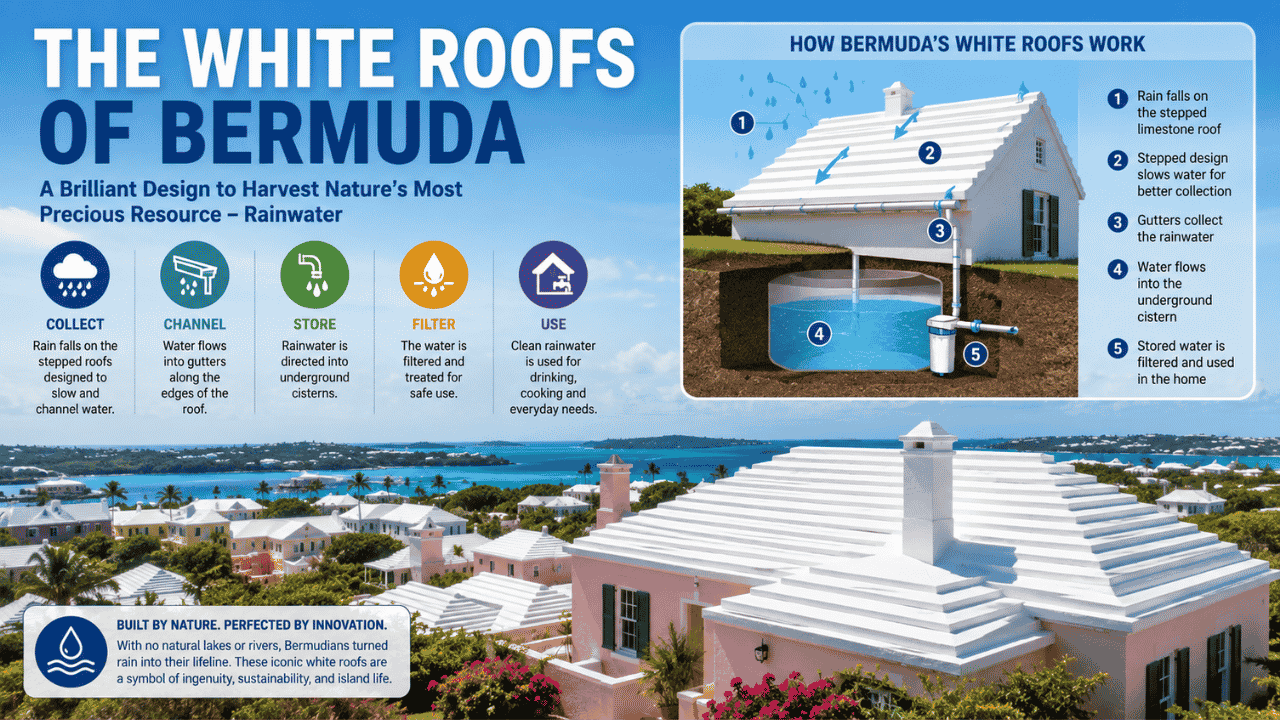
The white roofs in Bermuda are one of the island’s most recognisable features. Whether viewed from the air or while walking through its charming neighbourhoods, the bright white stepped rooftops create a unique landscape unlike anywhere else in the world. While many visitors admire these roofs for their beauty, they are much more than an architectural trademark. They represent centuries of innovation, environmental adaptation, and sustainable living. Unlike many countries that rely on rivers, lakes, or reservoirs for fresh water, Bermuda has no natural freshwater lakes or rivers. This geographical challenge inspired a roofing system that has supplied drinking water to residents for generations. Every traditional white roof is carefully designed to collect rainwater, channel it through gutters, and store it in underground cisterns for household use. In this comprehensive guide, you’ll learn why the white roofs in Bermuda exist, how they work, their fascinating history, the materials used to build them, and why they continue to play a vital role in Bermuda’s modern infrastructure.
What Are White Roofs in Bermuda?
The white roofs in Bermuda are specially designed stepped limestone roofs coated with a white lime-based finish. Unlike ordinary roofs that simply protect homes from rain and sunlight, these roofs perform several important functions.
Their primary purpose is to collect rainwater, which serves as one of Bermuda’s main sources of fresh water. Rainwater flows across the stepped surface into gutters before entering underground storage tanks known as cisterns. This water is then filtered and used for everyday household needs.
These roofs are carefully engineered to maximise water collection while reducing contamination and improving water quality. Their distinctive appearance has become a symbol of Bermuda’s commitment to sustainable living.
Why Are the White Roofs in Bermuda White?
Many visitors assume the white colour is purely decorative, but it serves several practical purposes.
Reflecting Heat
The white coating reflects sunlight rather than absorbing it. This helps keep homes cooler during Bermuda’s warm subtropical summers, naturally reducing indoor temperatures.
Improving Water Quality
Historically, the roofs were coated with lime-based whitewash. Lime has natural antibacterial properties that helped disinfect rainwater before it entered household cisterns.
Although modern coatings have evolved, maintaining a clean white finish remains an important part of roof maintenance.
Easier Inspection
The bright white surface makes it easier for homeowners to identify dirt, algae, cracks, and areas requiring repair. Keeping the roof clean is essential because it directly impacts the quality of the drinking water collected.
Why Does Bermuda Need Rainwater Collection?
One of the biggest reasons behind the white roofs in Bermuda is geography.
Bermuda is a small island located in the Atlantic Ocean. Unlike many countries, it has:
- No freshwater rivers
- No natural lakes
- Very limited groundwater
- Highly porous limestone geology
Because fresh water is scarce, rainwater harvesting has been the island’s most practical solution for centuries.
Every significant rainfall replenishes underground cisterns connected to homes, businesses, schools, and public buildings. Many residents continue to rely heavily on this collected rainwater today.
How Do White Roofs in Bermuda Work?
The roofing system is remarkably simple yet highly effective.
Step 1: Rain Falls on the Roof
Rain lands on the smooth white limestone surface.
Step 2: Stepped Design Slows Water
The roof’s stepped construction slows water movement. This prevents excessive runoff while improving collection efficiency.
Step 3: Gutters Capture Water
Rainwater flows into gutters positioned along the roof’s edge.
Step 4: Water Enters Underground Cisterns
The gutters direct water into underground concrete or limestone cisterns beneath the property.
Step 5: Filtration
The stored water is filtered and often treated before household use.
This entire system operates naturally without requiring large municipal reservoirs.
The History of White Roofs in Bermuda
The origins of Bermuda’s roofing system date back to the island’s early settlement in the 1600s.
Early settlers quickly realised the lack of freshwater resources posed a major challenge. Instead of depending on imported water, they developed an innovative method of harvesting rainfall.
Over time, Bermudian builders refined roof construction by:
- Using local limestone
- Adding stepped ridges
- Applying white lime coatings
- Expanding underground cistern capacity
As the island grew, rainwater harvesting became standard practice.
Eventually, building regulations required new homes to include properly designed rainwater collection systems, ensuring the entire community could maintain a dependable water supply.
Why Are Bermuda Roofs Stepped?
The stepped appearance is perhaps the most distinctive characteristic of the white roofs in Bermuda.
These steps are not decorative.
Instead, they provide several engineering advantages.
Better Water Control
The steps reduce the speed of flowing rainwater, allowing more efficient collection.
Improved Water Quality
Slower-moving water reduces splashing and helps minimise contamination before water enters the gutters.
Structural Strength
The stepped construction also improves the roof’s durability and resistance to heavy tropical storms.
Easier Maintenance
The design allows easier inspection and repair while preserving the roof’s functionality.
Materials Used to Build Bermuda Roofs
Traditional Bermuda roofs use durable local materials chosen specifically for their environmental benefits.
Limestone
Locally quarried limestone forms the foundation of most traditional roofs.
Benefits include:
- Excellent durability
- Natural filtration properties
- Weather resistance
- Long lifespan
Mortar
Strong mortar secures limestone slabs together while preventing leaks.
White Lime Coating
The signature white finish historically consisted of lime wash.
Modern coatings may include improved weather-resistant materials while maintaining the traditional appearance.
Building Regulations for White Roofs in Bermuda
Bermuda has long recognised the importance of rainwater collection.
Because freshwater resources remain limited, building codes generally require residential buildings to include:
- Properly constructed rainwater collection roofs
- Adequate gutter systems
- Underground storage cisterns
- Roofing materials suitable for potable water collection
These regulations help ensure every property contributes to the island’s sustainable water supply.
Benefits of White Roofs in Bermuda
The famous roofs provide numerous environmental and practical advantages.
Sustainable Water Supply
Rainwater harvesting reduces dependence on imported water and large treatment facilities.
Lower Energy Costs
Reflective white surfaces reduce indoor temperatures, lowering cooling requirements during hot weather.
Environmentally Friendly
Collecting rainwater conserves natural resources while reducing pressure on groundwater supplies.
Hurricane Resistance
Traditional limestone roofs are built to withstand powerful Atlantic storms.
Long-Term Durability
Properly maintained Bermuda roofs can last for decades.
Cultural Identity
The white roofs have become one of Bermuda’s defining architectural characteristics, attracting photographers and tourists from around the world.
Challenges of Maintaining White Roofs
Although highly effective, these roofs require regular maintenance.
Homeowners must:
- Wash roof surfaces periodically
- Reapply protective white coatings
- Repair cracks promptly
- Keep gutters clean
- Inspect cisterns regularly
- Prevent algae and mould growth
Proper maintenance ensures collected rainwater remains safe for household use.
White Roofs and Sustainable Living
Long before sustainability became a global priority, Bermuda had already embraced environmentally responsible building practices.
The white roofs in Bermuda demonstrate how architecture can address environmental challenges without advanced technology.
Their design naturally:
- Conserves water
- Reduces energy consumption
- Minimizes waste
- Supports self-sufficiency
- Protects limited natural resources
Today, many architects worldwide study Bermuda’s rainwater-harvesting system as an example of resilient, sustainable design.
White Roofs in Bermuda and Tourism
Visitors often describe Bermuda’s white rooftops as one of the island’s most memorable sights.
From scenic viewpoints and aeroplane windows, thousands of gleaming white roofs contrast beautifully with:
- Pink sand beaches
- Turquoise Atlantic waters
- Colorful gardens
- Colonial architecture
Many guided tours explain how these roofs function, helping tourists appreciate that they represent far more than a beautiful design choice.
Photographers frequently capture the rooftops because they create one of the Caribbean’s most distinctive architectural landscapes.
Interesting Facts About White Roofs in Bermuda
- Nearly every traditional home in Bermuda has a white stepped roof.
- The roof system has been used for centuries.
- Bermuda lacks permanent freshwater rivers and lakes.
- Underground cisterns are standard features beneath many homes.
- White roofs help cool buildings naturally by reflecting sunlight.
- The stepped design improves the efficiency of rainwater collection.
- Traditional lime coatings historically helped disinfect collected water.
- Roofs are among the world’s most recognisable examples of functional architecture.
- Bermuda’s roofing system is considered an early model of sustainable water management.
- These iconic rooftops continue to inspire architects and environmental planners worldwide.
Frequently Asked Questions
Why are the white roofs in Bermuda so famous?
They are famous for collecting rainwater, providing drinking water, reflecting heat, and representing one of the world’s most distinctive architectural traditions.
Can people drink the rainwater collected from these roofs?
Yes. After proper storage, filtration, and treatment, the collected rainwater is commonly used for household purposes, including drinking.
Why are Bermuda roofs stepped instead of flat?
The stepped design slows rainwater, improves collection efficiency, reduces runoff, and increases structural durability.
Are all roofs in Bermuda white?
Most traditional residential buildings feature white roofs because they are designed for rainwater harvesting, though some modern structures may incorporate updated materials while maintaining the classic appearance.
Do the roofs help keep homes cool?
Yes. The reflective white finish reduces heat absorption, helping maintain cooler indoor temperatures.
Conclusion
The white roofs in Bermuda are far more than an attractive architectural feature—they are a remarkable example of how necessity can inspire lasting innovation. Designed to harvest rainwater in a place without natural freshwater rivers or lakes, these iconic stepped limestone roofs have sustained Bermudian communities for centuries.
You May Like: TheHometrotters .com: Home Improvement, Interior Design, and Smart Living
