
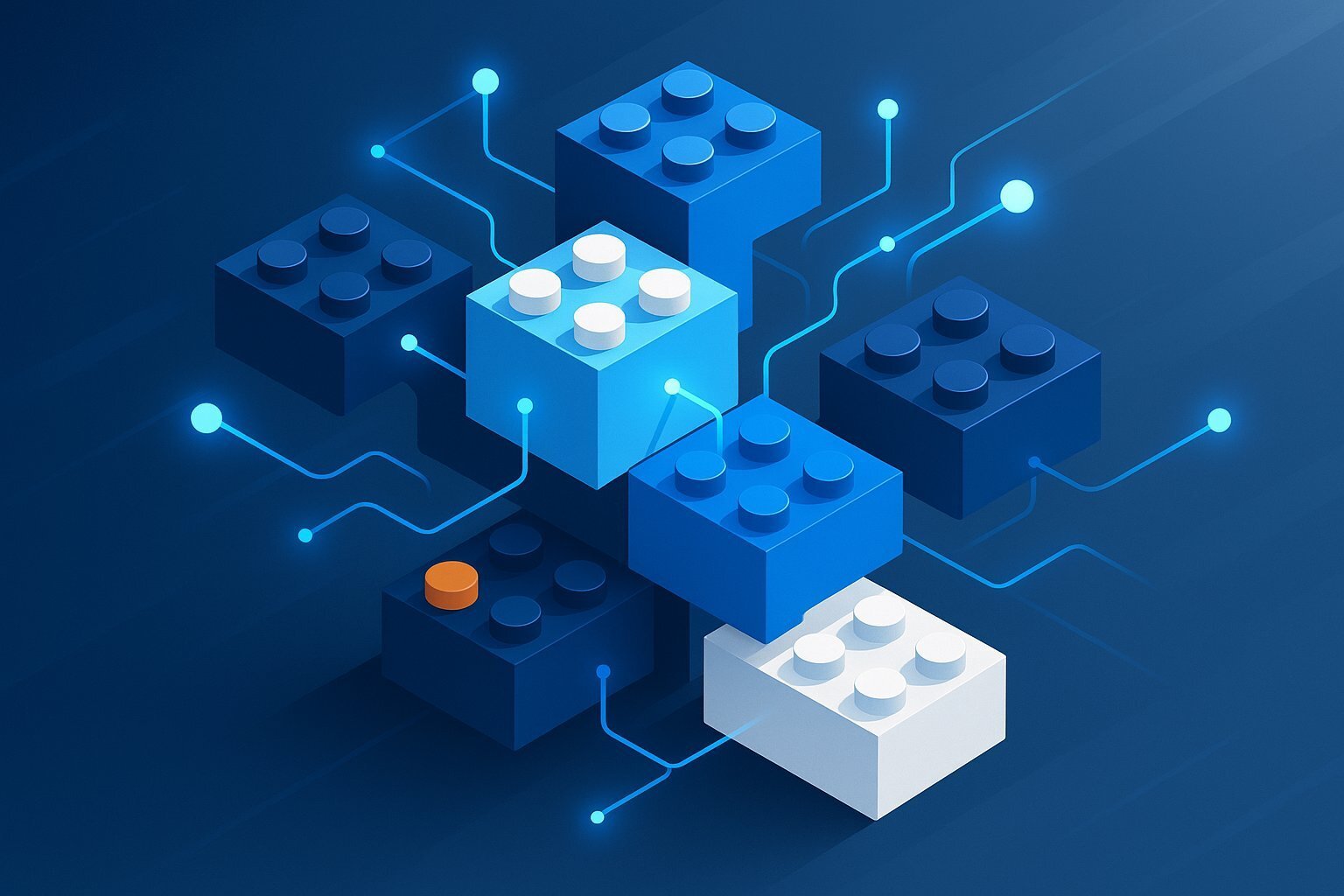
The modern corporate technology stack has reached a point of critical saturation. For over a decade, enterprise software acquisition has been dominated by a single philosophy: look for specialized, best-of-breed software solutions to solve immediate operational bottlenecks. While this approach has provided teams with highly customized tools, it has inadvertently fragmented the core corporate architecture. Organizations now find themselves managing dozens of isolated platforms, each trapping vital information inside its own system. This fragmentation creates significant operational overhead, as teams spend more time bridging data gaps between software programs than executing their core business strategies.
To overcome this friction, a major architectural shift is underway toward composability. Truly modern enterprise software is no longer designed as a closed system. Instead, it is built to function as a modular platform that seamlessly integrates data and automated workflows across different departments. True operational efficiency requires building unified systems where data moves freely, allowing companies to accurately measure performance and optimize their core internal processes. Achieving this level of integration requires examining how advanced technologies, analytical engines, and scientific validation methods work together to establish a highly scalable corporate operational model.
Establishing the Central Framework for Corporate Systems
When organizations attempt to modernize their core infrastructure, they frequently begin by focusing on advanced intelligence platforms. The challenge is that traditional corporate systems are often buried under decades of legacy code and unorganized data lakes. Without a solid foundational layer, introducing automated intelligence tools simply results in generating faster, more complex errors. Building a robust modern system requires a clean, structured environment where information flows naturally from everyday operations into an analytics framework.
When organizations deploy comprehensive enterprise ai solutions, the underlying architecture must support real-time data cleansing, secure processing, and deep cross-departmental compatibility. This foundation ensures that advanced analytics tools do not operate in a vacuum. Instead, they actively draw insights from the entire business ecosystem, turning fragmented operational points into actionable business assets.
Optimizing Complex B2B Supply Chains and Capital
Once a reliable core data infrastructure is in place, organizations can safely extend these capabilities out to specialized departments. One of the most critical areas in need of structured modernization is corporate spending and supply chain management. Large organizations routinely manage thousands of distinct vendors, intricate contracts, and highly complex logistics networks. Without automated analysis, tracking where every dollar goes and uncovering hidden workflow inefficiencies becomes practically impossible.
To gain true clarity across these workflows, companies rely heavily on specialized procurement analytics software. These dedicated analytic engines automatically ingest purchase orders, invoice records, and historical vendor performance metrics to uncover immediate saving opportunities. By feeding this structured operational data back into the main platform, companies can protect their supply chains against disruption, minimize system leaks, and negotiate significantly better commercial terms based on clear, factual history.
Scaling Development Ecosystems with Autonomous Systems
Modernizing commercial tools and backend databases is only half the battle; the internal software development team must also scale its production to support these new platforms. Engineering organizations frequently experience major backlogs because developers are bogged down by repetitive maintenance tasks, complex system migrations, and basic debugging. To maintain a competitive edge, engineering departments are moving beyond simple autocomplete text boxes and embracing deeply integrated, autonomous development systems.
This shift is driven by the rapid evolution of autonomous software engineering, specifically through the implementation of agentic coding platforms. Unlike basic code assistants that only suggest single lines of text, these highly intelligent agents can understand complex architecture, write complete software modules, run thorough test sets, and safely deploy code updates. By handling the bulk of repetitive coding tasks, these systems allow developers to focus on higher-level system design and creative problem-solving, dramatically accelerating software development cycles.
Validating Marketing and Growth Through Statistical Rigor
Just as engineering teams require rigorous validation to ensure code stability, marketing and growth teams require equal precision to verify that their customer acquisition budgets are actually driving business results. Historically, marketing attribution models have relied on flawed, surface-level metrics like last-click tracking. These surface metrics often reward platforms for transactions that would have happened naturally anyway, leading companies to overspend on redundant channels.
To prevent this waste, companies are implementing structured incrementality testing methodologies. By intentionally running controlled experiments—such as holding back marketing spend in specific geographic areas—businesses can scientifically measure the exact revenue lift generated by a specific platform. Connecting these precise validation results to the central data infrastructure prevents marketing teams from chasing vanity metrics, ensuring every dollar spent directly contributes to real business growth.
Mapping Everyday User Workflows to Eliminate Hidden Bottlenecks
While high-level engineering systems and marketing campaigns are carefully monitored, the minor friction points in everyday employee workflows often slip under the radar. Employees routinely waste hours copying information between incompatible systems, navigating confusing software interfaces, and performing manual data entry. If these invisible bottlenecks are left unaddressed, they slowly degrade overall company productivity and undermine the value of new technology investments.
To bring these hidden challenges to light, operations teams are deploying advanced task mining software to capture and analyze user actions. These specialized tools quietly run in the background to log user interaction paths, mouse clicks, and application transitions across different departments. By applying pattern-recognition models to this user data, the software uncovers exact operational friction points and highlights repetitive manual tasks that are prime candidates for workflow automation.
The Structural Architecture Imperative: The true value of corporate software is not found in the unique features of an isolated application. It is found in how effectively that application communicates with the rest of the business ecosystem.
Building a Unified, Future-Proof Technology Stack
Successfully scaling a modern technology stack requires moving away from fragmented, reactionary tool purchases. True business agility is achieved when an organization commits to a clear, unified architecture where data analytics, software engineering, and strategic validation models support one another. Platforms that actively break down data silos allow companies to build highly resilient systems that can adapt smoothly to changing market demands.
Ultimately, businesses that prioritize system integration over isolated point solutions build a highly valuable operational advantage. By ensuring that information flows cleanly across all departments, organizations can eliminate costly workflow friction, accurately measure performance, and unlock sustainable, compounding growth across their entire operational footprint.
