
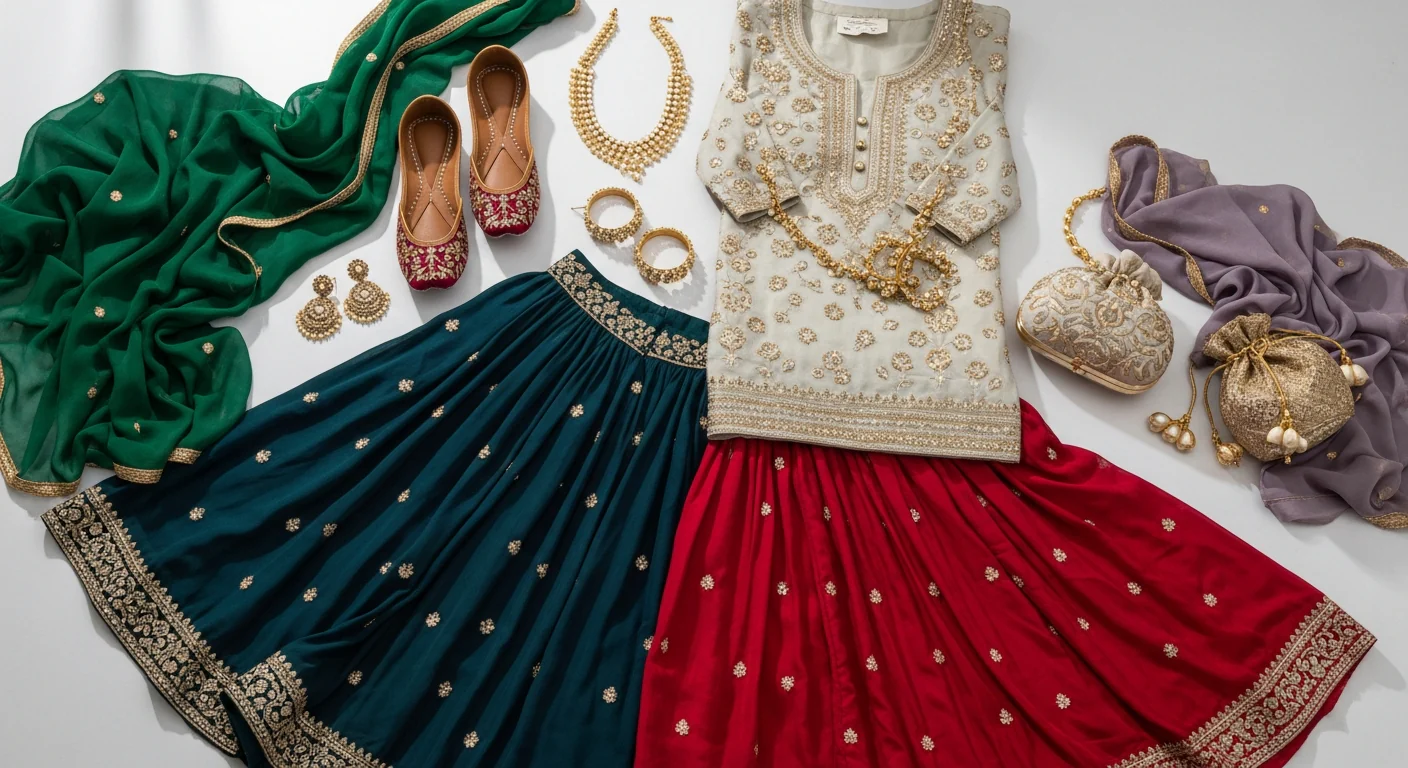
There are certain pieces in ethnic fashion that never really leave. They step back for a season or two, let other silhouettes take the spotlight, and then return not with a quiet reentry, but with a full, confident comeback that makes you wonder why you ever stopped wearing them. The sharara suit is exactly that kind of piece. If you’ve been building a wardrobe of ethnic wear that genuinely works across occasions, investing in a sharara suit for women isn’t just a good idea and it’s one of the smartest additions you can make to your collection.
A Silhouette With Real History Behind It
Before it became a fixture on wedding guest Instagram feeds and festive lookbooks, the sharara had a life in the Mughal courts of North India. It was worn by women of refinement and taste layered, embroidered, and deliberately beautiful. The wide-legged flare that begins at the waist, the flowing dupatta, the fitted kurti on top, this was considered one of the most graceful ways a woman could dress.
Over centuries, the silhouette moved through different eras of Indian fashion. It was beloved in the 1960s and 70s, took a back seat during the straight-cut salwar era, and then returned with real force over the past decade as women began rediscovering the elegance of traditional silhouettes with a contemporary eye.
What’s striking is how little it needed to change to feel current. The bones of the garment are that good.
What Makes the Sharara Suit Different From Everything Else
The sharara is often confused with the gharara, and while they share some visual similarities, they are structurally quite different. In a gharara, the flare begins at the knee creating that dramatic, almost theatrical lower silhouette. In a sharara, the flare begins at the waist. The entire trouser is wide and flowing from top to bottom, which gives it a softer, more relaxed quality than the sharply divided gharara.
This distinction matters because it changes how the garment feels to wear. A sharara moves with you rather than around you. It doesn’t demand the same careful navigation of movement that a heavily flared gharara requires. It’s generous with space, forgiving in fit, and far more comfortable across a long evening than most people expect.
And yet it looks anything but casual. The wide, flowing silhouette carries a natural elegance that heavier, more structured garments sometimes have to work hard to achieve.
Why Every Woman Needs One in Her Wardrobe
It Works Across More Occasions Than You’d Think
This is the sharara’s quiet superpower. Most heavily embellished ethnic garments are essentially single-occasion pieces. You buy a lehenga for a wedding, wear it once, and it lives in a garment bag for the next three years. A sharara set doesn’t work that way.
A silk or georgette sharara with hand embroidery belongs at a wedding reception or a formal festive dinner without question. The same silhouette in a printed cotton or light chiffon works beautifully at an Eid gathering, a mehndi function, or even a festive family lunch. Style it with heavy jewellery and a structured dupatta for a formal look. Pair it with delicate gold earrings and minimal accessories for something more relaxed. The outfit responds to how you style it rather than demanding a specific occasion to justify wearing it.
It Flatters More Body Types Than You’d Expect
The wide-legged silhouette of a sharara is genuinely flattering across a range of body types and this is not the kind of vague, reassuring statement that fashion writing often hides behind. There’s a real reason it works.
The flare from the waist creates a continuous, flowing line from hip to floor. This elongates the body visually, adds a sense of height, and skims over the hips and thighs rather than clinging to them. For women who find fitted trousers or straight-cut salwars unflattering, the sharara often comes as a genuine revelation.
Petite women benefit from the lengthening effect of the floor-length flare. Taller women carry the drama of the silhouette beautifully. Women with fuller figures find that the generous cut drapes rather than restricts. It’s one of the rare silhouettes that doesn’t really have a body-type caveat attached to it.
It Bridges the Gap Between Traditional and Contemporary
One of the most common wardrobe challenges for women who love ethnic fashion is finding pieces that feel rooted in tradition without looking like they belong to a different decade. The sharara solves this problem almost effortlessly.
Contemporary designers have reimagined it with asymmetric kurtis, cold-shoulder tops, fusion silhouettes, and unexpected fabric combinations without losing what makes the sharara recognisable itself. You can wear a heavily embroidered traditional sharara set and look like you stepped out of a Mughal miniature painting in the best possible way. Or you can wear a contemporary fusion version with a cropped kurti and modern jewellery and look entirely current.
It holds both identities without contradiction, which is a genuinely rare quality in ethnic wear.
How to Style a Sharara Suit the Right Way
The kurti you pair with a sharara changes the entire energy of the look. A long, Anarkali-style kurti creates a more traditional, layered silhouette. A shorter, straight kurti with side slits looks modern and sharp. A cropped kurti with embroidery along the hem strikes a balance between the two.
For the dupatta, drape it across one shoulder for an effortless contemporary look, or go with the classic double-shoulder drape for formal occasions. Fabric matters here a heavy embroidered dupatta adds ceremony, while a light printed dupatta keeps things festive without the weight.
Jewellery should follow the occasion. Traditional jhumkas and a maang tikka for weddings and formal events. Delicate gold studs or hoops for casual festive wear. The sharara handles both registers with equal ease.
The Final Word
Fashion has a habit of cycling through trends and calling it progress. But some silhouettes don’t need the validation of a trend cycle; they simply work, and they keep working, year after year, across generations of women who discover them and never quite let them go.
The sharara suit is one of those pieces. It’s comfortable without being casual, traditional without being dated, and versatile without being generic. Add it to your wardrobe once, style it thoughtfully, and you’ll find yourself reaching for it far more often than you expected.
That’s not a trend. That’s a wardrobe essential.
