
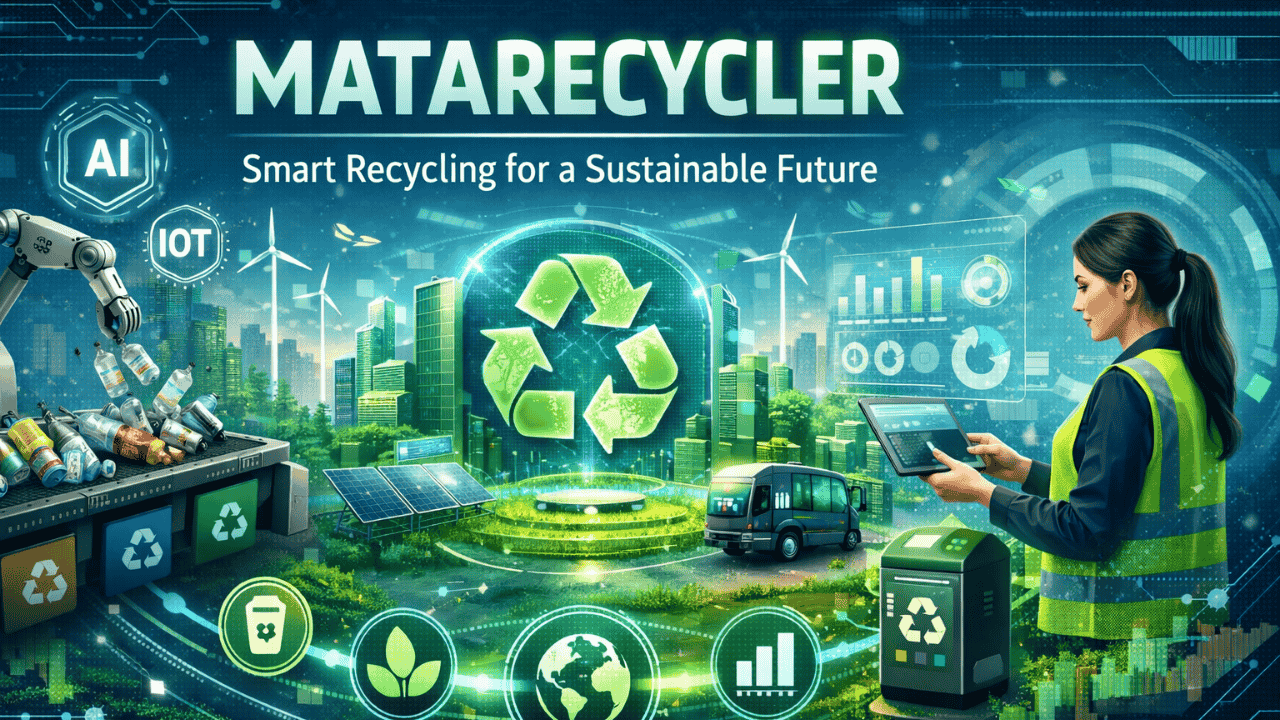
In today’s rapidly evolving world, environmental sustainability has become more than just a trend—it is a necessity. As global waste levels continue to rise and natural resources become increasingly limited, innovative solutions are emerging to address these challenges. One such emerging and intriguing concept is matarecycler. While still relatively new and not yet widely standardised, MataRecycler is gaining traction in discussions around recycling, waste management, and digital innovation. In this comprehensive, SEO-friendly article, we will explore everything you need to know about matarecycler, including its meaning, origins, applications, benefits, technological aspects, and its growing role in shaping a sustainable future.
What Is Matarecycler?
The matarecycler is best described as a modern, flexible keyword that represents advanced recycling systems, sustainable practices, and resource optimisation strategies. Unlike traditional recycling concepts, matarecycler goes beyond simply reusing materials—it emphasises efficiency, intelligence, and innovation.
In simple terms, matarecycler refers to a system, concept, or platform that transforms waste into valuable resources using smart technologies and sustainable processes.
It can represent:
- A smart recycling system
- A sustainability-driven business model
- A conceptual framework for circular economy practices
- A digital or AI-powered waste management solution
Because of its flexible nature, matarecycler can be adapted across multiple industries and applications.
Understanding the Concept Behind Matarecycler
To fully understand MataRecycler, it is important to explore the shift from traditional waste management to modern sustainability models.
From Linear to Circular Economy
Traditional systems follow a linear model:
- Produce → Use → Dispose
However, Matarecycler aligns with the circular economy model:
- Produce → Use → Reuse → Recycle → Regenerate
This approach minimises waste and maximises resource efficiency.
Waste as a Resource
Instead of viewing waste as useless material, MataRecycler promotes the idea that:
- Waste is a valuable asset
- Materials can be recovered and reused
- Recycling can generate economic and environmental value
Key Features of Matarecycler Systems
The concept of matarecycler is often associated with several sophisticated features that set it apart from traditional recycling methods.
Smart Waste Sorting
Modern matarecycler systems may use:
- Artificial intelligence (AI)
- Machine learning algorithms
- Sensor-based sorting
These technologies help identify and separate materials with high accuracy.
Automation and Efficiency
Recycling processes are significantly enhanced by automation:
- Faster sorting and processing
- Reduced human error
- Lower operational costs
Data-Driven Optimisation
Matarecycler systems often rely on data to:
- Track waste patterns
- Improve recycling rates
- Optimize resource usage
Sustainability Integration
Matarecycler is deeply connected to sustainability goals, including:
- Reducing landfill waste
- Lowering carbon emissions
- Promoting eco-friendly practices
Applications of Matarecycler
The versatility of MataRecycler allows it to be applied across multiple sectors.
Urban Waste Management
Cities can implement matarecycler systems to:
- Improve waste collection efficiency
- Introduce smart recycling bins
- Reduce environmental pollution
Industrial Recycling
Industries generate large amounts of waste. Matarecycler can help:
- Recycle scrap materials
- Reduce production waste
- Improve sustainability compliance
Smart Cities
In smart city initiatives, Matarecycler plays a role in:
- IoT-enabled waste management
- Real-time monitoring systems
- Automated recycling facilities
Digital and Data Systems
Interestingly, matarecycler can also refer to:
- Systems that manage and recycle data
- Tools for optimising digital resources
- Platforms that improve data efficiency
Benefits of Matarecycler
The growing interest in MataRecycler is largely driven by its numerous advantages.
Environmental Benefits
- Reduces landfill waste
- Conserves natural resources
- Minimizes pollution
Economic Benefits
- Creates new business opportunities
- Reduces operational costs
- Generates revenue from recycled materials
Technological Advancement
- Encourages innovation in AI and automation
- Improves efficiency in waste processing
- Supports smart infrastructure
Social Impact
- Promotes environmental awareness
- Encourages responsible consumption
- Supports sustainable communities
Matarecycler and Modern Technology
Technology is at the core of the Matarecycler concept. Without innovation, advanced recycling systems would not be possible.
Artificial Intelligence (AI)
AI helps:
- Identify different types of waste
- Improve sorting accuracy
- Reduce contamination in recycling streams
Internet of Things (IoT)
IoT devices enable:
- Smart bins that track fill levels
- Real-time waste monitoring
- Efficient collection routes
Big Data and Analytics
Data analysis allows organisations to:
- Predict waste generation patterns
- Optimize recycling strategies
- Improve decision-making
Automation and Robotics
Robots can:
- Sort materials faster than humans
- Work in hazardous environments
- Increase overall efficiency
Challenges and Limitations of Matarecycler
Despite its potential, MataRecycler also faces several challenges.
Lack of Standard Definition
- The term is still emerging
- Different interpretations exist
- Not yet widely recognised in official industries
High Initial Costs
- Advanced systems require significant investment
- Technology implementation can be expensive
Infrastructure Limitations
- Not all regions have the infrastructure needed
- Developing countries may face adoption challenges
Public Awareness
- Many people are unaware of advanced recycling systems
- Education and awareness are essential
SEO and Branding Potential of Matarecycler
One of the most interesting aspects of matarecycler is its strong potential as a brandable keyword.
Low Competition Keyword
- Not saturated in search engines
- Easier to rank for SEO
Versatile Usage
- Can be used in:
- Tech blogs
- Sustainability websites
- Startup branding
Future-Proof Concept
As sustainability becomes more important, keywords like matarecycler are likely to gain popularity.
Future of Matarecycler
The future of MataRecycler looks promising, especially as global focus shifts toward sustainability and innovation.
Growth in Smart Recycling
- Increased use of AI and automation
- Expansion of smart waste systems
Integration with Green Technologies
- Renewable energy systems
- Eco-friendly manufacturing processes
Global Adoption
- Governments and businesses investing in sustainability
- Increased demand for efficient recycling solutions
Innovation Opportunities
- Startups can build platforms around Matarecycler
- New technologies can redefine recycling systems
How Businesses Can Use Matarecycler
Organisations can leverage MataRecycler in several ways:
- Develop smart recycling solutions
- Integrate sustainability into operations
- Use the term for branding and marketing
- Build eco-friendly product lines
- Promote ESG (Environmental, Social, Governance) goals
Conclusion
The concept of matarecycler represents a powerful shift in how we think about waste, resources, and sustainability. While it may still be an emerging and flexible term, its core ideas align perfectly with the future of environmental innovation.
By combining advanced technologies like AI, IoT, and data analytics with sustainable practices, matarecycler offers a smarter, more efficient way to manage waste and conserve resources. Its applications across industries—from urban waste management to digital systems—highlight its versatility and potential.
As the world continues to prioritise sustainability, the importance of concepts like matarecycler will only grow. Whether used as a technological solution, a business strategy, or a brandable keyword, MataRecycler stands at the forefront of a cleaner, smarter, and more sustainable future.
You May Like: Afruimwagens: Cleanup Vehicles, Uses, Types, and Industry Importance
