
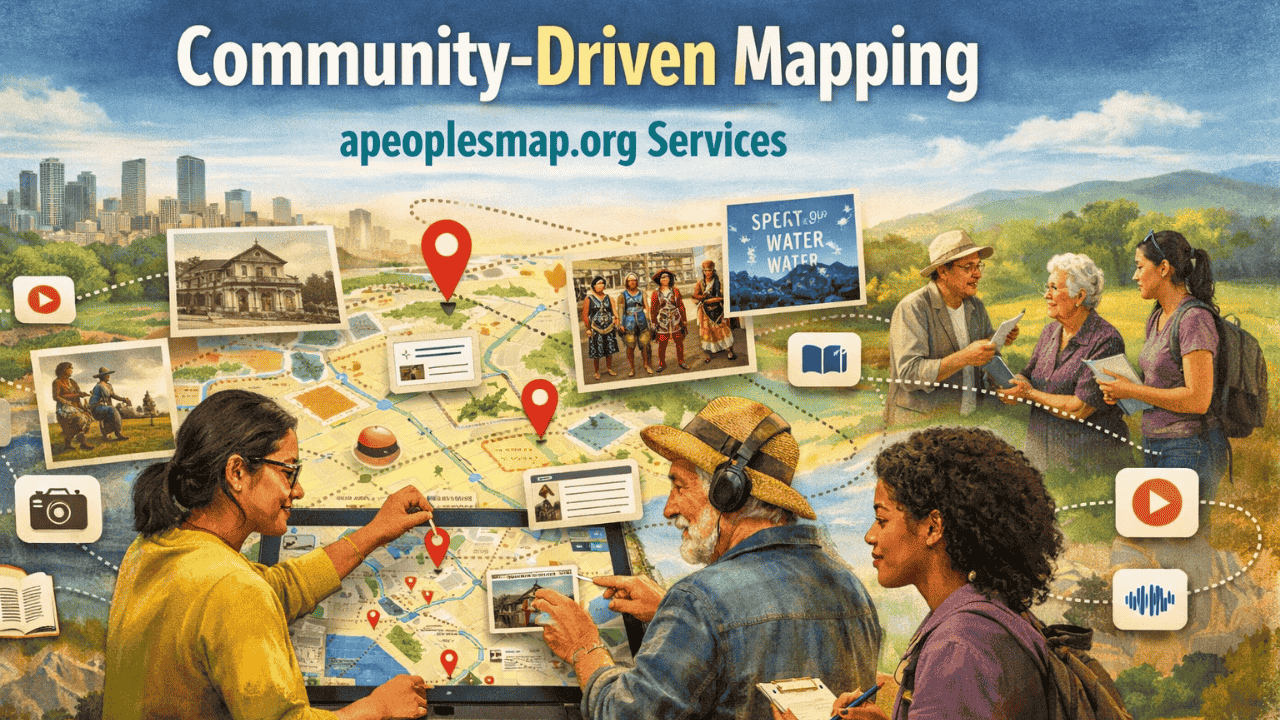
In today’s digital world, maps are no longer just tools for navigation. They have evolved into platforms for storytelling, activism, education, and community empowerment. The growing interest around apeoplesmap.org services reflects this shift toward human-centered mapping experiences. If you’re searching for detailed information about apeoplesmap.org services, this comprehensive guide will walk you through what they are commonly associated with, their potential features, benefits, use cases, and why community-driven mapping matters in the modern era.
What Are Apeoplesmap.org Services?
Apeoplesmap.org services are commonly described as community-oriented digital mapping solutions that focus on representing lived experiences, local stories, and social narratives on interactive maps.
Unlike traditional mapping platforms that prioritize roads, coordinates, and infrastructure, apeoplesmap.org services emphasize:
- People and communities
- Cultural and historical storytelling
- Participatory mapping
- Ethical data representation
- Collaborative knowledge sharing
At its core, the concept revolves around “mapping from the people’s perspective.” Instead of focusing solely on geography, it centers on social meaning, identity, and shared experience.
The Purpose Behind Apeoplesmap.org Services
The philosophy behind apeoplesmap.org services appears to be rooted in inclusivity and representation. Traditional maps often overlook marginalized communities, local histories, and personal narratives. A people-centered map aims to correct that imbalance.
Key Goals Include:
- Empowering Communities – Allowing residents to contribute their own stories and knowledge.
- Preserving Local Histories – Documenting memories, oral traditions, and cultural heritage.
- Encouraging Civic Participation – Providing tools for advocacy and awareness.
- Supporting Education and Research – Enabling spatial storytelling for learning environments.
- Promoting Ethical Data Practices – Ensuring contributors maintain control over shared information.
This people-first approach is what differentiates apeoplesmap.org services from conventional geographic tools.
Core Features Often Associated with Apeoplesmap.org Services
While specific implementations may vary, discussions surrounding apeoplesmap.org services often highlight several recurring features.
Interactive Community Mapping Tools
One of the most important aspects is interactive map creation. These tools typically allow users to:
- Pin locations with personal stories
- Add historical context to neighborhoods
- Upload images or multimedia
- Create thematic maps based on shared topics
- Collaborate with other contributors
Instead of static data, these maps become living documents shaped by the community itself.
Storytelling and Narrative Integration
Storytelling is central to apeoplesmap.org services. Rather than simply marking a location, users may be able to attach:
- Written narratives
- Oral history recordings
- Photographs
- Video clips
- Cultural descriptions
This narrative layer transforms a map into a storytelling platform where geography, memory, and identity meet.
Participatory Mapping
Participatory mapping encourages collective engagement. Communities may collaborate on projects such as:
- Mapping cultural landmarks
- Documenting environmental concerns
- Highlighting social justice issues
- Recording local business histories
- Preserving indigenous territories
This process fosters ownership and inclusivity while ensuring the map reflects diverse voices.
Educational Applications
Apeoplesmap.org services can be especially valuable in educational environments. Teachers and students may use people-centered mapping tools for:
- Local history projects
- Urban studies research
- Cultural geography lessons
- Community storytelling assignments
- Social impact case studies
By combining geography with narrative, learning becomes more engaging and experiential.
Research and Data Visualization
Researchers may find apeoplesmap.org services useful for:
- Mapping qualitative data
- Tracking social change
- Visualizing community-based surveys
- Identifying patterns in local development
- Documenting spatial inequalities
Unlike purely statistical mapping systems, this approach integrates human experiences into the analysis.
Ethical Data and Privacy Awareness
Ethical considerations are often emphasized in people-driven mapping platforms. Potential principles may include:
- Contributor consent
- Transparent data use
- Community moderation
- Sensitive content controls
- Respect for cultural ownership
This ensures the platform remains respectful and responsible while handling community-generated content.
Why Community-Centered Mapping Matters
The growing interest in apeoplesmap.org services reflects a larger movement toward participatory digital tools.
Traditional maps often:
- Omit minority perspectives
- Focus primarily on infrastructure
- Prioritize commercial use cases
- Ignore lived experience
Community mapping platforms challenge these limitations by shifting the focus from roads and coordinates to people and stories.
Benefits of People-Powered Maps
- Greater inclusivity
- Preservation of cultural heritage
- Increased civic awareness
- Stronger community engagement
- Enhanced educational value
When communities map themselves, representation becomes more authentic.
Who Can Benefit from Apeoplesmap.org Services?
A broad range of individuals and organizations may benefit from services aligned with the apeoplesmap.org concept.
Local Communities
Residents can document:
- Important neighborhood locations
- Historical events
- Cultural spaces
- Community memories
This builds collective identity and pride.
Educators and Students
Schools and universities can use people-centered maps to:
- Teach local history
- Analyze urban development
- Encourage experiential learning
- Combine geography with storytelling
Nonprofits and Advocacy Groups
Organizations can leverage mapping tools to:
- Highlight underserved areas
- Document social issues
- Visualize impact projects
- Support awareness campaigns
Urban Planners and Policymakers
Community-generated maps may offer insights into:
- Resident priorities
- Cultural hotspots
- Environmental concerns
- Infrastructure gaps
Listening to community narratives improves decision-making.
Researchers and Academics
Researchers studying sociology, geography, anthropology, or urban planning may use participatory mapping to gather qualitative data and spatial insights.
How Apeoplesmap.org Services Differ from Traditional Mapping Platforms
To better understand the value of apeoplesmap.org services, it helps to compare them to traditional mapping systems.
| Focus on navigation | Focus on stories |
| Infrastructure-based | Community-based |
| Commercial applications | Social and educational applications |
| Static data | Dynamic, evolving contributions |
| Geographic accuracy priority | Narrative and cultural relevance priority |
This distinction highlights why interest in people-powered maps continues to grow.
Potential Use Cases for Apeoplesmap.org Services
Here are practical examples of how these services might be applied:
Cultural Heritage Mapping
Documenting historic neighborhoods, local legends, and indigenous lands.
Social Justice Initiatives
Mapping areas affected by environmental hazards or housing inequality.
Tourism and Local Discovery
Creating story-rich guides to hidden community landmarks.
Community Archives
Preserving oral histories and generational knowledge.
Disaster Recovery Documentation
Mapping community experiences after major events.
Frequently Asked Questions (FAQs)
What is apeoplesmap.org used for?
Apeoplesmap.org services are generally associated with community-centered mapping, storytelling integration, and participatory geographic documentation.
Is apeoplesmap.org a navigation tool?
Unlike traditional navigation apps, apeoplesmap.org services focus more on storytelling, cultural documentation, and community engagement rather than turn-by-turn directions.
Who can use apeoplesmap.org services?
Potential users include educators, researchers, nonprofit organizations, community leaders, students, and residents interested in preserving local stories.
How is data handled in people-centered mapping platforms?
Such platforms typically emphasize ethical data sharing, community moderation, and contributor consent to ensure responsible use of information.
Why are community maps important?
Community maps preserve cultural heritage, promote civic awareness, and ensure diverse voices are represented in digital spaces.
The Future of Community-Driven Mapping
As digital technology evolves, the demand for participatory platforms continues to rise. People no longer want to be passive data points — they want to contribute, shape narratives, and tell their own stories.
The concept behind apeoplesmap.org services aligns with emerging trends such as:
- Decentralized knowledge sharing
- Digital archiving of local history
- Citizen-led data collection
- Story-based data visualization
- Ethical, community-first technology
This signals a future where mapping is not just about space, but about identity and belonging.
Final Thoughts on Apeoplesmap.org Services
Apeoplesmap.org services represent more than just a digital mapping solution—they symbolize a shift in how we understand geography, community, and storytelling in the digital age. Instead of treating maps as neutral tools focused solely on roads and coordinates, people-centered mapping platforms recognize that every place carries history, identity, struggle, culture, and memory.
You May Like: GreatBasinExp57: A Complete Guide to the Meaning, Origins, and Growing Digital Interest
