
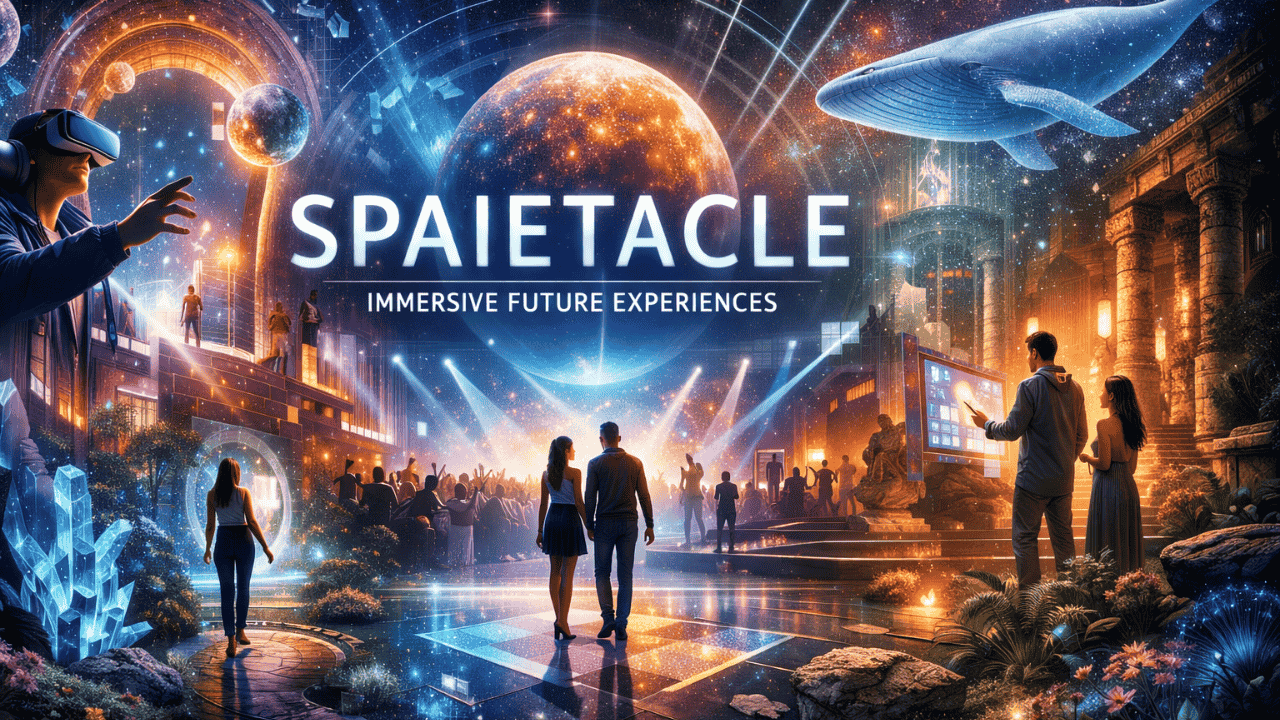
In an era where attention is the most valuable currency, audiences are no longer satisfied with passive consumption. They want to feel, participate, and belong. This shift has given rise to a powerful new concept known as spaietacle—a term that blends space, spectacle, and experience into a single immersive phenomenon. More than a trend, spectacle represents a fundamental transformation in how stories, environments, and technologies interact with human perception. This article explores what spaietacle means, why it matters, how it is shaping multiple industries, and what the future holds for this evolving concept.
What Is Spaietacle?
At its core, spectacle refers to an immersive, multidimensional experience that combines physical space, digital technology, and narrative. Unlike traditional performances, exhibitions, or events, spaietacle is designed to surround the participant completely—mentally, emotionally, and sensorially.
A spaietacle does not ask the audience to sit and observe. Instead, it invites them to enter, explore, and interact. Sound, light, architecture, movement, and digital layers work together to create a living environment that responds to human presence.
Spaietacle is not limited to one medium. It can exist in art installations, live performances, virtual worlds, branded environments, or hybrid physical-digital spaces.
The Origins of the Spaietacle Concept
The emergence of spaietacle can be traced to several converging cultural and technological shifts:
- Advances in immersive technology, such as virtual reality, augmented reality, projection mapping, and spatial audio
- Audience fatigue with traditional formats, including linear entertainment and static exhibitions
- The experience economy, where people value memorable experiences more than products
- The blending of digital and physical realities, accelerated by global digital transformation
Spaietacle evolved as a response to these changes. It reflects a desire to move beyond screens and create experiences that feel expansive, embodied, and meaningful.
Key Elements That Define a Spaietacle
While spaietacle experiences vary widely, most share several defining characteristics.
Immersive Space Design
A spaietacle is built around space itself. Walls, floors, ceilings, and open areas become part of the narrative. The environment is not a backdrop—it is an active participant in the experience.
Multi-Sensory Engagement
Sight alone is not enough. Spaietacle integrates sound, light, texture, movement, and sometimes scent to create a full sensory ecosystem.
Audience Participation
Participants influence the experience through movement, choice, or interaction. Their presence matters, and their actions often shape outcomes.
Narrative or Conceptual Core
Every spaietacle is anchored by a story, theme, or emotional journey. Even abstract spaietacles are designed with intentional meaning.
Technology as an Enabler, Not the Focus
Technology powers spaietacle, but it remains largely invisible. The goal is emotional immersion, not technical demonstration.
How Spaietacle Is Changing Art and Culture
In the art world, spaietacle has opened new possibilities for expression. Artists are no longer confined to canvases or stages. They can create worlds that viewers walk through, manipulate, and co-create.
Museums and galleries increasingly use spectacle-inspired installations to:
- Attract younger audiences
- Extend visitor engagement time
- Transform exhibitions into journeys rather than displays
Cultural storytelling also benefits. History, mythology, and social themes can be experienced spatially, making them more accessible and emotionally resonant.
Spaietacle in Entertainment and Live Events
Entertainment is one of the most visible arenas for spaietacle. Concerts, theater productions, festivals, and themed attractions now aim to deliver experiences that feel cinematic, interactive, and personal.
In a spectacle-driven performance:
- The boundary between performer and audience dissolves
- The venue becomes part of the show
- Each attendee’s experience feels unique
This approach increases emotional impact and encourages repeat attendance, as no two experiences are exactly the same.
The Role of Spaietacle in Branding and Marketing
Brands have embraced spaietacle as a powerful storytelling and engagement tool. Instead of relying solely on advertising, companies create immersive brand environments that consumers can step into.
A branded spaietacle might include:
- Interactive pop-up spaces
- Immersive product launches
- Virtual brand worlds connected to physical locations
These experiences foster deeper emotional connections and generate organic social sharing, making spaietacle a high-impact marketing strategy.
Spaietacle and the Digital Frontier
Digital spaces are fertile ground for spaietacle. Virtual environments allow creators to defy physical limitations and design experiences that are impossible in the real world.
In digital spaietacle environments:
- Physics can be rewritten
- Scale becomes fluid
- Identity can be explored creatively
As virtual and augmented realities become more accessible, spaietacle will increasingly exist across blended realities, where physical and digital layers merge seamlessly.
Psychological Impact of Spaietacle Experiences
One reason spaietacle is so compelling lies in human psychology. Immersive environments stimulate emotional memory more effectively than passive media.
Research into experiential engagement shows that:
- Active participation increases recall
- Multi-sensory input enhances emotional connection
- Spatial experiences feel more “real” to the brain
This makes spaietacle especially effective for education, therapy, storytelling, and personal transformation.
Challenges and Limitations of Spaietacle
Despite its potential, spaietacle also faces challenges:
- High production costs can limit accessibility
- Overuse of technology may overwhelm rather than immerse
- Lack of narrative depth can turn spectacle into a gimmick
Successful spaietacle design requires balance. The experience must remain human-centered, purposeful, and emotionally grounded.
The Future of Spaietacle
Looking ahead, spaietacle is poised to become a defining language of experience design. As tools become more affordable and audiences more sophisticated, we can expect:
- Greater personalization of immersive environments
- Integration with artificial intelligence for adaptive experiences
- Expansion into education, wellness, and remote collaboration
Spaietacle will not replace traditional media, but it will coexist alongside it, offering a deeper, more embodied way to connect with stories and ideas.
Conclusion: Why Spaietacle Matters
Spaietacle represents more than innovation—it reflects a shift in how humans want to engage with the world. In a time of constant digital noise, spaietacle offers presence, depth, and meaning. It transforms spectators into participants and spaces into stories.
You May Like: Eporer: Emerging Digital Platform Shaping Online Collaboration
