
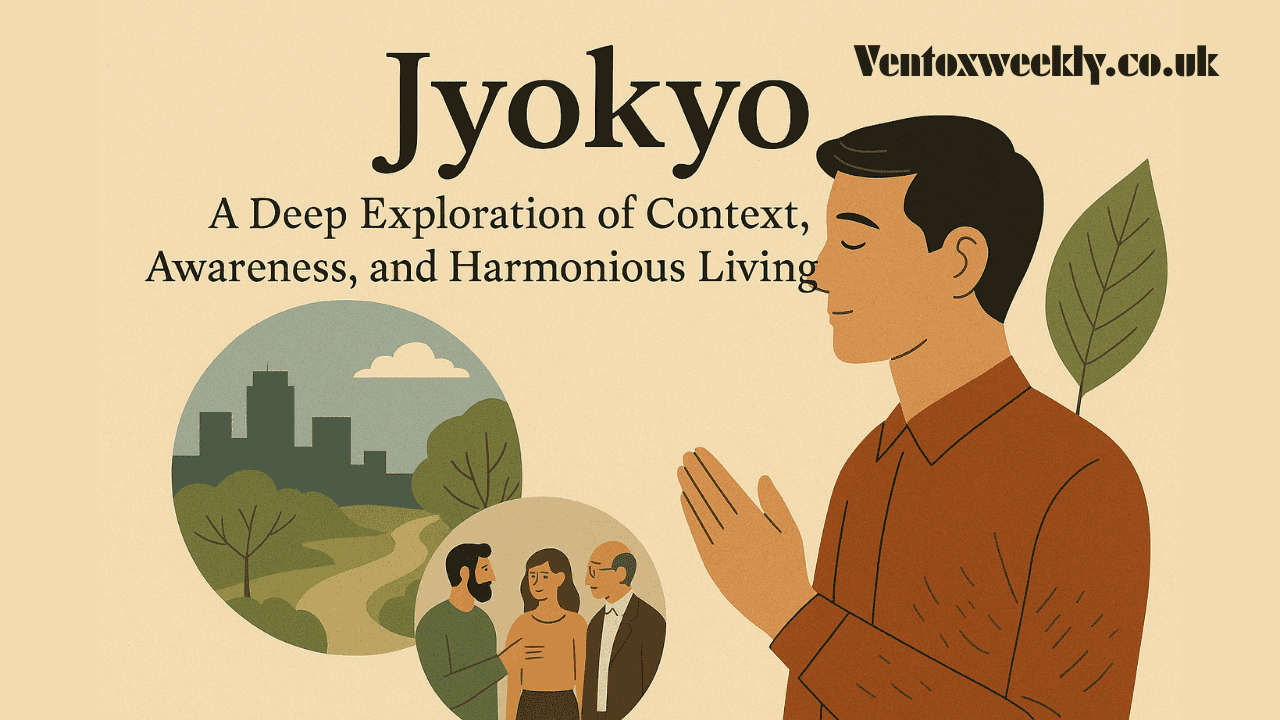
In recent years, the Japanese word jyokyo has gained attention far beyond Japan, appearing in discussions about mindfulness, leadership, emotional intelligence, and personal growth. While its literal Japanese origin translates simply to “situation” or “state of affairs”, the term has evolved into a broader concept in English-language conversations—one that emphasizes deep situational awareness and the ability to act in harmony with one’s surroundings. This article examines the deeper significance of jyokyo, why it has become such a compelling topic, and how individuals can apply its principles to modern life.
What Is Jyokyo? The Core Meaning Behind the Concept
At its core, jyokyo comes from the Japanese word 状況 (じょうきょう), which means current circumstances or situation. In its traditional linguistic use, it is a neutral, everyday term for what is happening around someone at a particular moment.
However, the rise of cultural philosophy blogs, workplace communication theories, and mindfulness practices has given jyokyo an expanded meaning:
- Understanding the present moment deeply
- Reading social and emotional cues effectively
- Adjusting one’s behavior to maintain harmony
- Recognizing that environments shape decisions and outcomes
Because of this, jyokyo has become a bridge between simple situational awareness and a more nuanced, culturally-informed approach to life.
Why Jyokyo Matters in Today’s Fast-Paced World
Modern life is filled with constant change—technology evolves daily, workplaces adapt rapidly, and social expectations shift by the minute. In such a landscape, many people feel disconnected from the present moment or overwhelmed by their surroundings.
This is where jyokyo becomes more than a definition. It becomes a tool for navigating complexity.
Jyokyo Helps Build Emotional and Social Intelligence
One of the most powerful aspects of jyokyo is its emphasis on “reading the room.” This involves understanding:
- The unspoken emotions within a group
- The dynamics and relationships influencing decisions
- The best timing for action, discussion, or restraint
In societies where indirect communication is valued, such as Japan, this skill is essential. Yet even in Western cultures, it’s increasingly recognized as a defining trait of effective leaders and collaborators.
Jyokyo Encourages Mindfulness Without Being Mystical
Unlike some mindfulness concepts rooted in meditation or spirituality, jyokyo is inherently practical. It instructs people to look outward as much as inward.
Rather than focusing solely on internal calm, jyokyo encourages:
- Awareness of one’s physical environment
- Recognition of shifting external conditions
- A balanced interpretation of both inner and outer states
This makes jyokyo appealing to individuals who want mindfulness that feels real, grounded, and accessible.
Jyokyo Supports More Sustainable Decision-Making
When people ignore their surroundings—financial, emotional, professional, or environmental—they often make decisions in isolation. Jyokyo offers a counterbalance by reminding us that choices must align with the context.
In practice, this might look like:
- Adjusting work strategies based on team morale
- Reassessing goals during major life changes
- Recognizing when to slow down instead of pushing forward
- Adapting expectations during uncertain economic times
The message is simple:
Context shapes consequences. Awareness shapes success.
The Cultural Roots of Jyokyo and Its Modern Reinterpretation
While jyokyo in Japanese is a straightforward word, the way the English-speaking world has embraced it reflects a broader trend: the search for vocabulary to describe subtle yet universal human experiences.
Traditional Japanese Usage of Jyokyo
In Japan, jyokyo is used in countless everyday phrases. For example:
- “What’s the jyokyo?” → “What’s the situation?”
- “Given this jyokyo…” → “Given this circumstance…”
There is no mystical undertone, no philosophical framework—just a descriptive term.
The Western Expansion of the Concept
English-language writers and thinkers have added a more reflective dimension to jyokyo, highlighting:
- Situational adaptability
- Harmony within social contexts
- The art of observing before acting
- The ability to sense the “mood” of a moment
This transformation mirrors the way other Japanese terms—such as ikigai, kaizen, and wabi-sabi—have been reinterpreted into broader lifestyle philosophies.
In this sense, jyokyo becomes not just a translation but a cultural insight.
How to Apply Jyokyo in Everyday Life
Understanding the jyokyo conceptually is only the beginning. The true value lies in applying it.
Here are practical ways to make jyokyo part of your daily routine.
Practice Environmental Awareness
Start by observing your surroundings with intention:
- What is happening around you?
- What has changed recently?
- What patterns can you identify?
This awareness reduces impulsive behavior and supports thoughtful decision-making.
Strengthen Your Ability to “Read the Room”
Before speaking or acting, take a moment to assess:
- The energy of the people around you
- Body language signals
- Emotional undercurrents
This alone can transform communication and prevent misunderstandings.
Reflect on How Context Shapes Your Emotions
Often, people interpret their feelings as purely internal. Jyokyo encourages looking at the external contributors:
- Stress at work
- Environmental noise
- Social pressure
- Physical space
Recognizing these influences can reduce self-blame and help you respond more effectively.
Adapt Your Behavior to Improve Harmony
Harmony does not mean suppressing your needs—it means aligning with the situation in a balanced way.
Consider:
- Adjusting your tone based on others’ stress levels
- Changing your approach during moments of tension
- Knowing when to step forward and when to step back
This adaptability improves relationships and fosters mutual understanding.
Use Jyokyo as a Decision-Making Framework
Before committing to a choice, ask:
- “What is the current jyokyo?”
- “What factors should influence this decision?”
- “Is this action aligned with the situation?”
Stopping to analyze context can prevent rushed or misaligned decisions.
Jyokyo in Leadership, Creativity, and Personal Growth
As the concept gains traction, jyokyo is increasingly discussed in business, psychology, coaching, and even artistic fields.
In Leadership
Leaders who embody jyokyo are:
- Attuned to team dynamics
- Skilled at timing their feedback
- Sensitive to morale and motivation
- Agile when situations shift unexpectedly
This makes the workplace more humane and more efficient.
In Creativity
Artists, writers, and designers often rely on jyokyo instinctively. They draw inspiration from:
- Emotional atmosphere
- Cultural shifts
- Environmental changes
- Social movements
Understanding the “situation of the world” informs more relevant, resonant creative work.
In Personal Development
Jyokyo teaches individuals to see their lives not as isolated events but as interconnected systems. This promotes:
- Self-compassion
- Realistic goal-setting
- Better boundaries
- Authentic living
It is both grounding and empowering—a rare combination.
Conclusion: Why Jyokyo Is More Than a Word
Jyokyo may originate as a simple Japanese term meaning “situation,” but its expanded interpretation offers something deeply valuable to modern life. It encourages people to slow down, observe, understand, and respond with intention. In a world filled with distraction and haste, jyokyo reminds us that awareness is power—and that harmony begins with understanding the context around us.
