
In today’s fast-paced, data-driven world, organizations rely heavily on numbers to measure performance. Metrics such as KPIs, productivity rates, and revenue targets dominate decision-making. However, a new concept is emerging that challenges this traditional mindset—team disquantified. The idea of team disquantified focuses on shifting attention away from purely numerical evaluation toward a more human-centered approach. It emphasizes collaboration, creativity, emotional intelligence, and overall team well-being. As businesses evolve, this concept is gaining traction as a more sustainable and effective way to manage teams. In this article, we will investigate what team disquantified means, its importance, benefits, challenges, and how organizations can implement it successfully.
What is Team Disquantified?
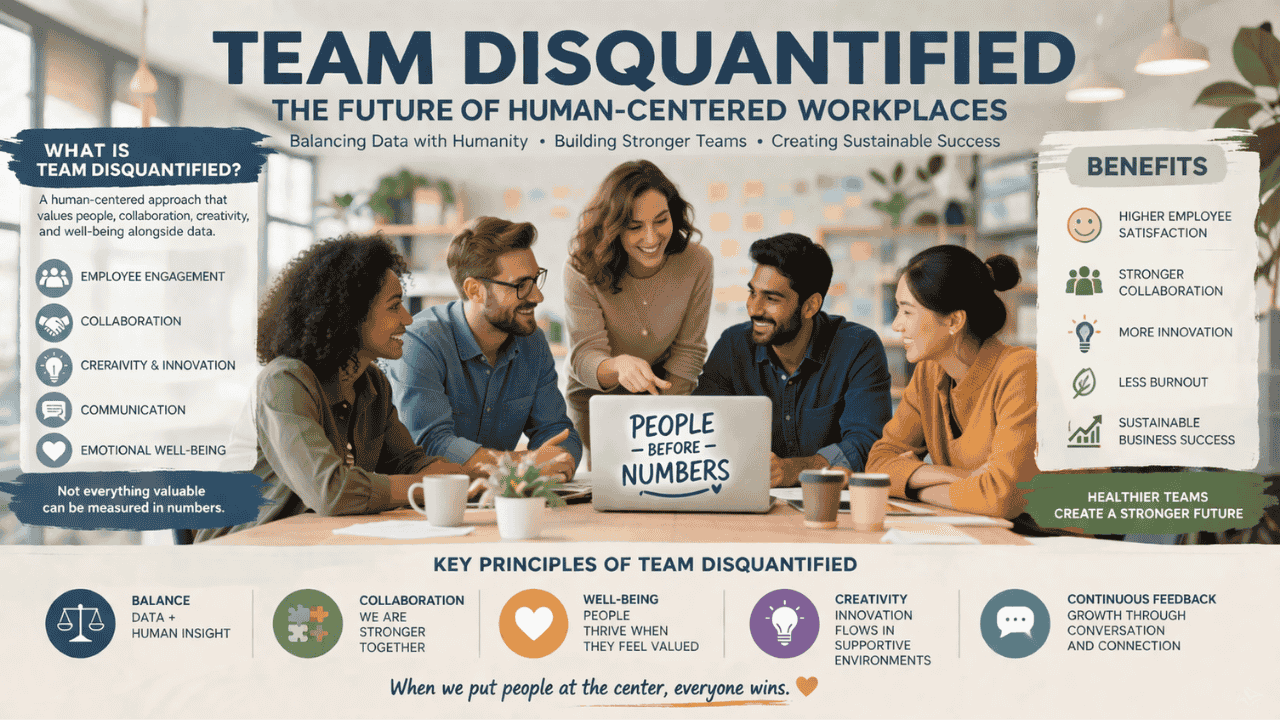
Team disquantified refers to a management approach where team performance is not judged solely by quantitative metrics. Instead, it incorporates qualitative aspects such as:
- Employee engagement
- Team collaboration
- Creativity and innovation
- Communication quality
- Emotional well-being
Rather than eliminating data altogether, the disquantified approach balances numbers with human insight. It recognizes that not everything valuable can be measured in spreadsheets.
Why the Concept of Team Disquantified Matters
Modern workplaces are increasingly realizing that over-reliance on data can be limiting. While metrics provide clarity, they often fail to capture the full picture of team performance.
Limitations of Traditional Metrics
Traditional performance systems focus on:
- Output quantity
- Speed of delivery
- Revenue generation
- Task completion rates
However, these systems often ignore:
- Team morale
- Employee satisfaction
- Creativity
- Problem-solving ability
This gap is where the concept of team disquantified becomes important.
The Shift Toward Human-Centered Work
Organizations are now recognizing that:
- Happy employees are more productive
- Collaboration drives innovation
- Trust improves long-term performance
The team disquantified approach addresses these factors by prioritizing human experiences alongside data.
Key Principles of Team Disquantified
Understanding the core principles helps organizations adopt this concept effectively.
Balance Between Data and Human Insight
Team disquantified does not reject data. Instead, it ensures that numbers are complemented with qualitative feedback.
For example:
- Instead of only tracking deadlines, managers also assess how teams worked together to meet them.
Emphasis on Collaboration
Collaboration is a crucial driver of success in disquantified teams. Employees are encouraged to:
- Share ideas openly
- Support each other
- Work as a cohesive unit
This leads to stronger relationships and improved outcomes.
Focus on Employee Well-Being
Employee well-being is central to this approach. Organizations pay attention to:
- Stress levels
- Work-life balance
- Mental health
A healthy team is more engaged and productive.
Encouragement of Creativity
Rigid metrics often discourage experimentation. In a disquantified team:
- Innovation is valued
- Risk-taking is supported
- Learning from failure is encouraged
This creates a culture of continuous improvement.
Continuous Feedback
Instead of annual performance reviews, disquantified teams rely on:
- Regular check-ins
- Peer feedback
- Open communication
This ensures ongoing growth and alignment.
Benefits of Team Disquantified
Adopting a disquantified approach offers several advantages for organizations and employees alike.
Increased Employee Satisfaction
When employees feel valued beyond numbers, they are more motivated and engaged. This leads to:
- Higher job satisfaction
- Reduced turnover
- Stronger loyalty
Better Team Collaboration
By focusing on relationships and communication, teams become more cohesive. This results in:
- Improved teamwork
- Faster problem-solving
- Reduced conflicts
Enhanced Innovation
A supportive environment encourages creativity. Employees are more likely to:
- Share new ideas
- Experiment with solutions
- Think outside the box
Reduced Burnout
Traditional systems often create pressure to meet targets at all costs. In contrast, disquantified teams:
- Prioritize balance
- Recognize effort
- Reduce unnecessary stress
Long-Term Business Success
While metrics may drive short-term gains, human-centered approaches ensure sustainable growth. Organizations benefit from:
- Stronger culture
- Better retention
- Consistent performance
Challenges of Implementing Team Disquantified
Despite its advantages, adopting this approach comes with challenges.
Difficulty in Measuring Success
Without clear metrics, it can be harder to evaluate performance. Organizations must develop new ways to assess outcomes.
Resistance to Change
Managers and leaders accustomed to traditional systems may resist this shift. Changing mindset and culture takes time.
Risk of Subjectivity
Qualitative evaluations can sometimes be biased. It is important to ensure fairness and transparency.
Balancing Data and Insight
Completely ignoring data is not practical. Organizations must find the right balance between numbers and human judgment.
How to Implement Team Disquantified in Your Organization
Transitioning to a disquantified approach requires careful planning. Here are practical steps to get started.
Redefine Success Metrics
Move beyond traditional KPIs and include:
- Team satisfaction scores
- Collaboration levels
- Employee feedback
Encourage Open Communication
Create an environment where employees feel safe to express ideas and concerns. This can be achieved through:
- Regular meetings
- Anonymous feedback tools
- Transparent leadership
Train Leaders and Managers
Leaders play a crucial role in implementing this approach. Provide training on:
- Emotional intelligence
- Active listening
- Coaching techniques
Introduce Continuous Feedback Systems
Replace annual reviews with ongoing conversations. Use:
- Weekly check-ins
- Peer reviews
- Retrospective sessions
Promote Work-Life Balance
Encourage employees to maintain a healthy balance by:
- Offering flexible work options
- Avoiding excessive workloads
- Supporting mental health initiatives
Combine Data with Context
Use data as a guide, not the sole decision-maker. Always consider:
- Team dynamics
- Individual circumstances
- External factors
Team Disquantified vs Traditional Team Management
Understanding the difference highlights why this concept is gaining popularity.
| Focus | Numbers and KPIs | People and context |
| Evaluation | Strict metrics | Balanced feedback |
| Leadership Style | Directive | Supportive |
| Innovation | Limited | Encouraged |
| Employee Experience | Pressure-driven | Balanced and engaging |
Real-World Relevance of Team Disquantified
Many modern organizations are already adopting elements of this approach, even if they don’t use the exact term “team disquantified.”
For example:
- Tech companies encourage innovation through flexible work environments
- Startups prioritize culture and collaboration
- Creative industries focus on idea generation rather than strict output
This shows that the principles of team disquantified are already shaping the future of work.
The Future of Team Disquantified
As workplaces continue to evolve, the relevance of human-centered management will grow. Key trends include:
- Increased focus on employee experience
- Integration of emotional intelligence in leadership
- Greater emphasis on mental health
- Hybrid models combining data and human insight
The concept of team disquantified is likely to become a standard approach in modern organizations.
Conclusion
The traditional reliance on numbers is no longer sufficient to measure team success. The concept of team disquantified offers a more balanced and sustainable approach by combining data with human insight.
By focusing on collaboration, well-being, and creativity, organizations can build stronger teams and attain long-term success. While challenges exist, the benefits far outweigh the difficulties.
As businesses adapt to changing work environments, embracing the team disquantified approach may be the key to unlocking true potential—both for individuals and organizations.
You May Like: Management Tips Ftasiastock: Smarter Leadership and Sustainable Growth
