
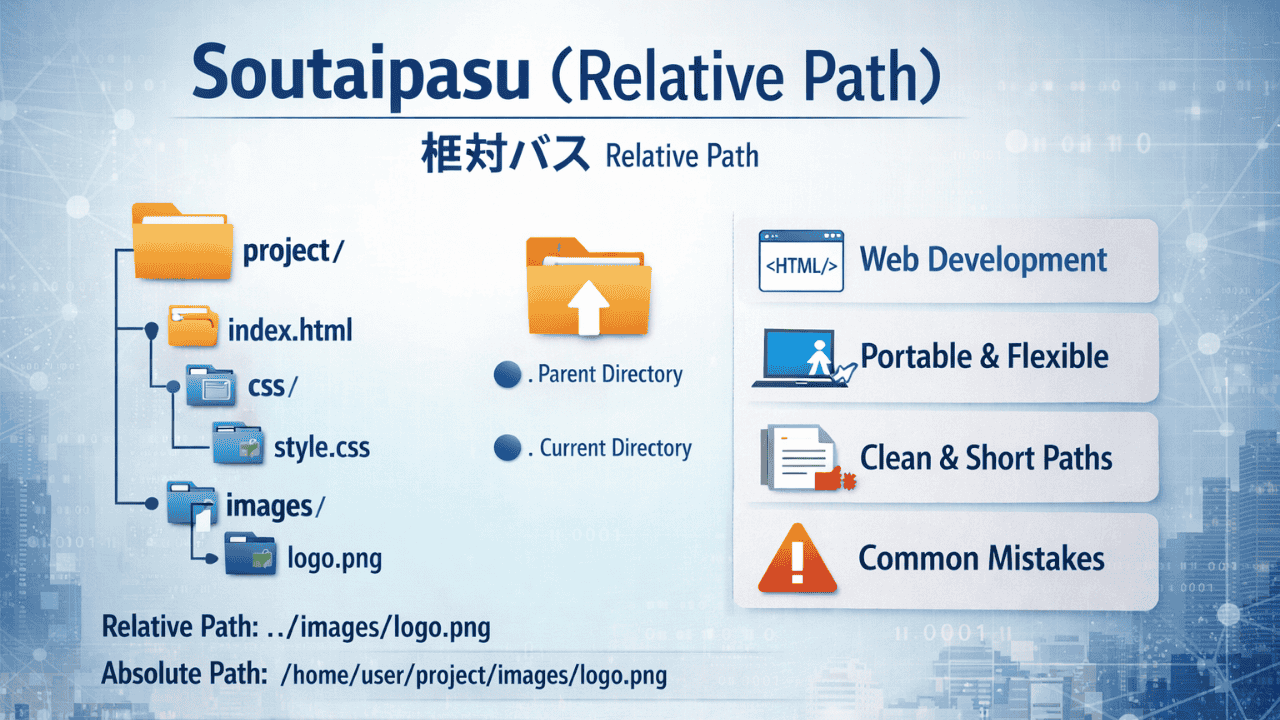
In today’s digital world, understanding how files and directories are structured is essential for developers, designers, and even casual computer users. One term that has been gaining attention online is soutaipasu. While it may sound unfamiliar at first, especially to non-Japanese speakers, soutaipasu plays a fundamental role in programming and file management. This comprehensive, SEO-friendly article explores everything you need to know about soutaipasu, including its meaning, origin, practical applications, advantages, common mistakes, and why it has become a trending keyword in recent times.
What Is Soutaipasu?
The soutaipasu comes from the Japanese phrase 相対パス (sōtai pasu), which translates directly to “relative path” in English.
In computing, a relative path refers to a file or folder’s location relative to the current working directory, rather than its absolute location.
Simple Definition:
- Soutaipasu = Relative Path
- It tells the system where to find a file based on your current position
For example:
- Absolute path: C:/Users/John/Documents/file.txt
- Soutaipasu (relative path): ../Documents/file.txt
Instead of specifying the full path, Souitaipasu uses references like:
- . (current directory)
- .. (parent directory)
The Origin and Linguistic Meaning of Soutaipasu
To better understand the term, let’s break it down:
- Sōtai (相対) = Relative
- Pasu (パス) = Path (borrowed from English)
Together, they form “relative path.”
The word is widely used in Japanese programming communities, documentation, and educational materials. As global interest in coding grows, terms like soutaipasu are increasingly appearing in search queries worldwide.
How Soutaipasu Works in File Systems
To understand soutaipasu, you need to know how file systems are structured.
Every computer organizes files in a hierarchical system:
- Root directory
- Subdirectories (folders)
- Files
A relative path (soutaipasu) works by referencing the current directory and navigating from there.
Example Structure:
project/│├── index.html├── css/│ └── style.css└── images/ └── logo.png
Using Soutaipasu:
If you are inside index.html and want to link to the image:
images/logo.png
If you are inside css/style.css and want to access the image:
../images/logo.png
👉 The .. tells the system to move up one directory.
Soutaipasu vs Absolute Path
Understanding the difference between a relative path (soutaipasu) and an absolute path is crucial.
Absolute Path:
- Full file location from the root
- Example: /home/user/project/images/logo.png
- Always points to the same location
Soutaipasu (Relative Path):
- Based on the current directory
- Example: images/logo.png
- Changes depending on where you are
Key Differences:
| Reference point | Current directory | Root directory |
| Flexibility | High | Low |
| Portability | Easy to move projects | Hard-coded |
| Length | Shorter | Longer |
Why Soutaipasu Is Important in Web Development
Soutaipasu is widely used in web development, especially in:
- HTML
- CSS
- JavaScript
- Frameworks and CMS platforms
Example in HTML:
<img src="images/logo.png" alt="Logo">
Example in CSS:
background-image: url('../images/bg.jpg');
Using soutaipasu ensures that:
- Websites work across different environments
- Files remain connected even after moving folders
- Code stays clean and maintainable
Advantages of Using Soutaipasu
There are several benefits to using soutaipasu in projects:
Portability
You can move your entire project folder without breaking file links.
Cleaner Code
Relative paths are shorter and easier to read.
Better Collaboration
Team members can work on projects without worrying about system-specific paths.
Flexibility
Works well in development and production environments.
Reduced Errors
Minimizes dependency on fixed directory structures.
Common Mistakes When Using Soutaipasu
While soutaipasu is powerful, beginners often make mistakes:
Incorrect Directory Navigation
Using too many or too few ../ can break paths.
Confusing Root vs Current Directory
Misunderstanding where the file is located.
Case Sensitivity Issues
Some systems (like Linux) are case-sensitive.
Mixing Absolute and Relative Paths
Can lead to inconsistent results.
Forgetting File Extensions
Missing .png, .css, etc., can cause errors.
Real-World Applications of Soutaipasu
Soutaipasu is used in many real-world scenarios:
Web Development
- Linking images, stylesheets, and scripts
Software Development
- Importing modules and libraries
Version Control Systems
- Managing project structures in Git
Content Management Systems
- WordPress, Joomla, etc.
Game Development
- Referencing assets like textures and sounds
Why Soutaipasu Is Trending as a Keyword
The keyword soutaipasu has gained popularity for several reasons:
Growing Interest in Coding
More people are learning programming globally.
Cross-Language Exposure
Japanese tech terms are becoming more visible online.
Curiosity-Driven Searches
Users encounter the term and want to understand it.
AI and Content Expansion
AI-generated content has increased keyword visibility.
Is Soutaipasu Used Outside Programming?
While soutaipasu is primarily a technical term, it has also appeared in:
- Brand names
- Online usernames
- Creative or abstract concepts
However, these uses are unofficial and not widely recognized.
The core and accurate meaning remains:
👉 Relative path in computing
Tips for Mastering Soutaipasu
If you want to become confident using soutaipasu, follow these tips:
Practice Folder Navigation
Create sample projects and test paths.
Visualize Directory Structure
Draw diagrams to understand relationships.
Use Code Editors
Tools like VS Code help detect path errors.
Start Simple
Begin with small projects before scaling.
Test Frequently
Always check if your paths work correctly.
Future Relevance of Soutaipasu
As technology continues to evolve, soutaipasu will remain essential because:
- File systems will always exist
- Web development continues to grow
- Modular coding relies on relative referencing
Even advanced frameworks still depend on the basic concept of relative paths.
Conclusion
In summary, soutaipasu is a fundamental concept in computing that refers to a relative path, allowing files and directories to be accessed based on their location relative to the current directory. While the term originated in Japanese, its application is universal and essential across programming, web development, and software engineering.
You May Like: Kibard: Meaning, Uses, Types, and Why It Matters in the Digital World
