
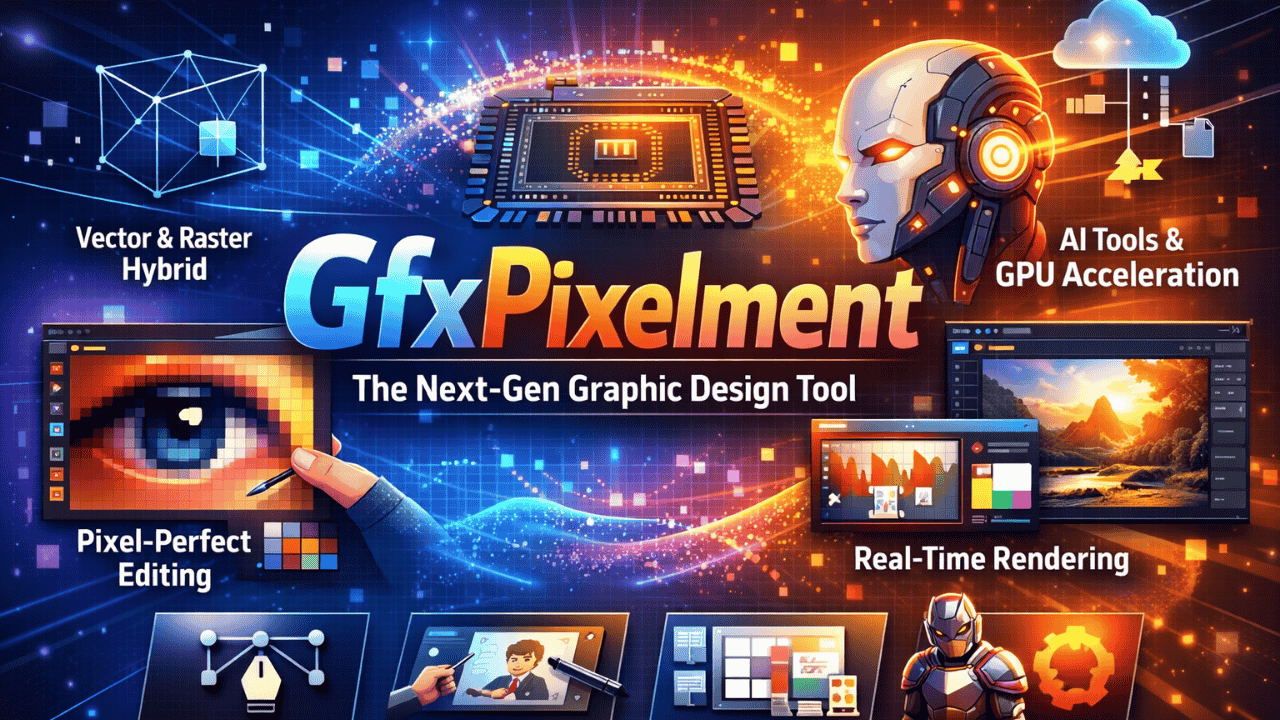
In today’s rapidly evolving digital landscape, graphic design tools are becoming more advanced, faster, and smarter. Among emerging concepts and tools, software gfxpixelment has started gaining attention as a modern approach to digital design. Whether you are a professional designer, developer, or creative enthusiast, understanding how this technology works can give you a competitive edge. This article explores everything you need to know about software gfxpixelment, including its features, benefits, use cases, and how it compares to traditional design tools.
What Is Software GfxPixelment?
Software gfxpixelment refers to a new-generation graphic design system or tool focused on high-performance rendering and pixel-level precision. It combines the strengths of both raster and vector design environments, allowing users to create visually stunning graphics with greater control.
Unlike traditional tools that separate pixel editing (e.g., Photoshop) from vector design (e.g., Illustrator), gfxpixelment aims to unify these workflows into a single experience.
Key Concept:
- Pixel + Graphic + Enhancement = GfxPixelment
This approach enables designers to:
- Work on ultra-detailed visuals
- Maintain scalability
- Improve rendering performance
Core Features of Software GfxPixelment
One of the main reasons software gfxpixelment is gaining attention is its powerful feature set.
Pixel-Level Precision
Designers can edit every pixel with extreme accuracy, making it ideal for:
- Digital illustrations
- UI design
- Game assets
Hybrid Vector and Raster Support
Unlike traditional tools, this software allows:
- Seamless switching between vector and raster modes
- Non-destructive editing workflows
Real-Time Rendering
With GPU acceleration, users experience:
- Faster previews
- Smooth editing without lag
AI-Assisted Tools
Modern implementations of software gfxpixelment often include:
- Auto-enhancement features
- Smart object detection
- Background removal
Advanced Layer Management
- Smart layers
- Grouping and masking
- Real-time adjustments
Benefits of Using Software GfxPixelment
Increased Productivity
With all tools in one platform, designers save time switching between software.
Better Performance
Optimized rendering ensures smooth workflows even with high-resolution files.
Creative Flexibility
The hybrid system allows:
- Pixel-perfect editing
- Scalable vector design
Future-Ready Technology
As AI and GPU computing evolve, software gfxpixelment is built to adapt.
How Software GfxPixelment Works
At its core, software gfxpixelment relies on a hybrid rendering engine that combines:
- Raster Engine: Handles pixel-based images
- Vector Engine: Manages scalable graphics
- GPU Acceleration: Improves performance
This combination allows designers to:
- Edit images without losing quality
- Apply effects in real time
- Work efficiently on complex projects
Use Cases of Software GfxPixelment
Graphic Design
Perfect for creating:
- Posters
- Social media graphics
- Branding materials
UI/UX Design
Designers can build:
- App interfaces
- Website layouts
- Prototypes
Game Development
Used for:
- Character sprites
- Textures
- Game assets
Digital Art
Artists benefit from:
- High-detail brush control
- Layer flexibility
Software GfxPixelment vs Traditional Design Tools
| Workflow | Hybrid (vector + raster) | Separate tools |
| Performance | High (GPU-based) | Moderate |
| Flexibility | Very high | Limited |
| Learning Curve | Moderate | Tool-dependent |
👉 Conclusion:
Software gfxpixelment offers a more unified and efficient design experience.
Why Software GfxPixelment Is Gaining Popularity
There are several reasons behind the growing interest:
Demand for Faster Tools
Designers want software that can handle:
- Large files
- Complex visuals
Rise of AI in Design
Automation features are becoming essential.
All-in-One Platforms
Users favor instruments that eliminate the necessity for multiple applications.
Cloud Integration
Collaboration and remote work have increased the need for cloud-based design tools
Challenges and Limitations
While software gfxpixelment is promising, there are some challenges:
Lack of Standardization
It is still an emerging concept with no universally recognized platform.
Learning Curve
Beginners may find hybrid tools complex.
Limited Awareness
Not widely adopted compared to Adobe or Figma.
Future of Software GfxPixelment
The future looks promising for software gfxpixelment as technology continues to evolve.
Expected Trends:
- Deeper AI integration
- Cloud-based collaboration
- Real-time multi-user editing
- Better performance optimization
As the industry moves toward smarter tools, software gfxpixelment could become a standard in digital design.
Conclusion
Software gfxpixelment represents a new direction in graphic design technology by combining pixel-level precision with scalable vector capabilities. It offers a powerful, flexible, and efficient workflow that addresses many limitations of traditional design tools.
You May Like: Gramhir.pro AI Image Generator: A Complete Guide for Beginners and Curious Creators
