
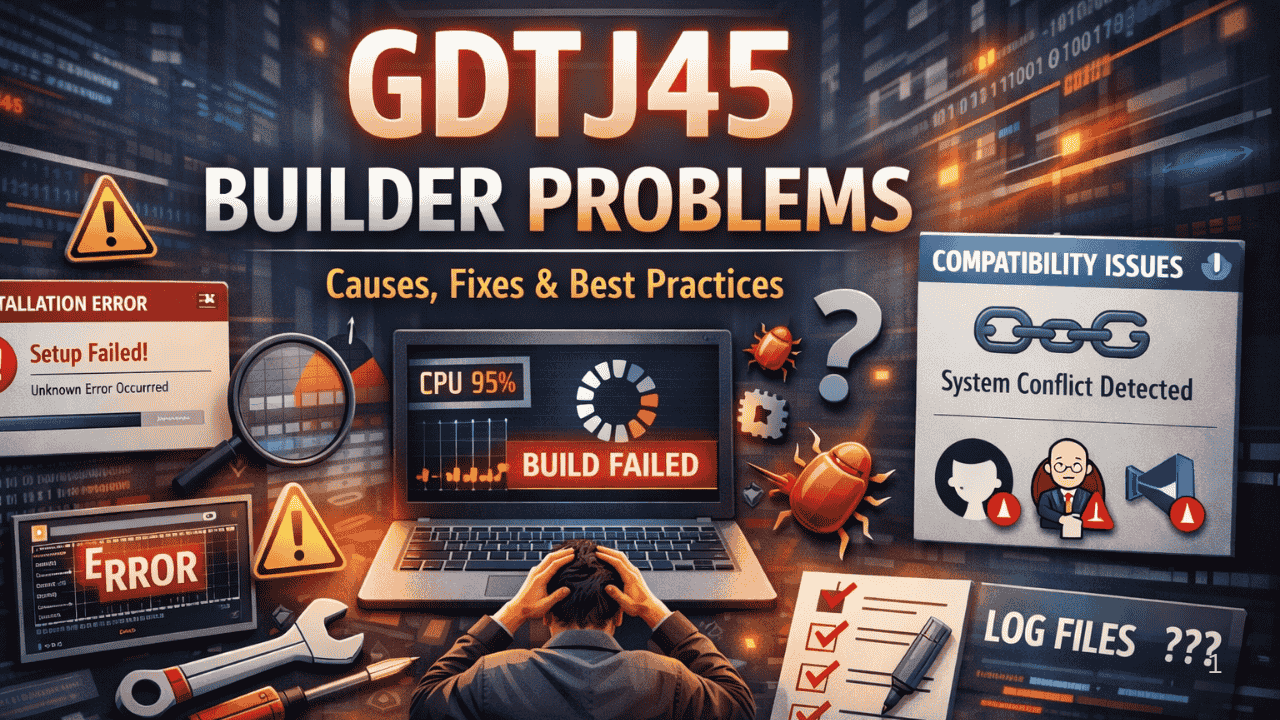
Software development tools are designed to make work easier, faster, and more reliable. However, when a tool starts creating obstacles instead of solving them, productivity suffers. One topic that has recently gained attention online is software GDTJ45 builder problems. Many users report installation errors, compatibility issues, poor performance, and confusing error messages when using this builder software. In this comprehensive guide, we will investigate what software GDTJ45 Builder is, the most common problems users face, their possible causes, practical solutions, and best practices to avoid future issues.
What Is Software GDTJ45 Builder?
Software GDTJ45 Builder is commonly described as a development or build automation tool that compiles, packages, or generates software projects. It is referenced in online technical blogs as a builder utility designed to streamline coding workflows and reduce manual configuration.
However, many users have noted that documentation is limited, official support channels are unclear, and verified vendor information is difficult to find. This lack of transparency is one of the reasons why software GDTJ45 builder problems have become a popular search term.
Regardless of its origin, people who install and use this software consistently report similar technical challenges.
Why Are Software GDTJ45 Builder Problems So Common?
There are several reasons why users encounter issues:
- Unclear system requirements
- Poor documentation
- Limited or no official support
- Dependency conflicts
- Unstable builds
- Inconsistent updates
When a development tool lacks proper ecosystem support, troubleshooting becomes difficult, even for professionals.
Common Software GDTJ45 Builder Problems
Let’s break down the most frequently reported issues.
Installation Failures
One of the most widespread software GDTJ45 builder problems is the inability to install the program successfully.
Symptoms:
- Installer crashes midway
- “Setup failed” or “unknown error” messages
- Installation stuck at a certain percentage
- Missing executable after installation
Possible causes:
- Corrupted installer file
- Insufficient permissions
- Antivirus blocking files
- Incompatible operating system
- Missing system libraries
Compatibility Issues
Many users report that GDTJ45 Builder behaves differently across operating systems.
Common scenarios:
- Works on Windows 10 but not Windows 11
- Fails on Linux distributions
- Conflicts with existing development frameworks
- Problems with older hardware or outdated drivers
Compatibility issues are particularly harmful because they often lead to unpredictable behavior.
Performance and Resource Problems
Another major complaint involves performance.
Reported issues:
- High CPU usage
- Excessive RAM consumption
- Long build times
- System freezing during compilation
- Random application crashes
These performance problems make the software unreliable in production environments.
Configuration Errors
Incorrect configuration settings can prevent the builder from functioning correctly.
Typical examples:
- Wrong project paths
- Invalid environment variables
- Incorrect compiler selection
- Broken configuration files
Even small mistakes can result in build failures.
Build Failures
Many users search for software GDTJ45 builder problems after experiencing repeated build errors.
Common build issues:
- Compilation stops unexpectedly
- Output files not generated
- Dependency resolution errors
- Incomplete builds
- “Build successful” message, but missing artifacts.
Poor Error Messages and Logging
One of the most frustrating aspects is vague feedback.
Examples:
- “Process failed”
- “Unexpected error occurred”
- No log files generated
- Logs lacking useful details
Without proper error messages, diagnosing issues becomes extremely difficult.
Integration Problems
Developers often integrate builders with CI/CD pipelines or IDEs.
GDTJ45 Builder may have trouble integrating with:
- GitHub Actions
- Jenkins
- GitLab CI
- Visual Studio Code
- IntelliJ
- Docker environments
This limits its usability in modern workflows.
Causes of Software GDTJ45 Builder Problems
Understanding the root causes is essential for long-term stability.
Poor Software Design
Lack of modular architecture and dependency management often leads to cascading failures.
Inadequate Testing
Software that is not thoroughly tested across platforms will inevitably break.
Weak Update Process
Updates may introduce new bugs or break backward compatibility.
Missing Documentation
Without clear guidance, users configure the software incorrectly.
Unverified Distribution Sources
Some users download installers from unofficial websites, increasing the risk of corrupted or modified files.
How to Fix Software GDTJ45 Builder Problems
Here are proven troubleshooting steps.
Verify System Requirements
Before reinstalling:
- Check OS version
- Confirm CPU architecture (32-bit vs 64-bit)
- Ensure enough RAM (8GB+ recommended)
- Free disk space (at least 2GB)
Download From a Trusted Source
Avoid third-party mirrors. Always verify file size and checksum if available.
Run as Administrator
On Windows:
- Right-click installer
- Select “Run as administrator.”
This solves many permission-related issues.
Temporarily Disable Antivirus
Security software may block required files.
Disable temporarily during installation and re-enable afterward.
Reinstall Cleanly
- Uninstall the existing version
- Delete remaining folders
- Clear temp files
- Restart computer
- Reinstall a fresh copy
Check Dependencies
Install or update:
- .NET Framework
- Java Runtime (if required)
- Visual C++ Redistributables
- Python (if scripting is involved)
Enable Debug Logs
If supported:
- Activate verbose logging
- Save logs to file
- Search for exact error codes
Test on Another Machine
This helps identify whether the problem is system-specific.
Use Compatibility Mode
On Windows:
- Right-click executable
- Properties → Compatibility
- Try older Windows versions
Reduce System Load
Close background programs during builds.
Best Practices to Avoid Future Problems
Preventive measures are just as important.
Keep Backups
Always back up projects before using new versions.
Use Version Control
Git or similar tools protect your code from builder failures.
Test Updates in a Sandbox
Never deploy updates directly to production.
Document Your Configuration
Keep records of:
- Environment variables
- Paths
- Dependencies
- Tool versions
Monitor Performance
Track CPU and memory usage regularly.
Avoid Over-Customization
Complex configurations increase failure risks.
Stay Updated With Community Discussions
If the software has forums or communities, monitor them for known issues.
Is Software GDTJ45 Builder Reliable?
Based on the frequency of reported software GDTJ45 builder problems, reliability remains questionable.
Key concerns:
- No clear official website
- Repetitive generic documentation
- Limited support
- Unverified vendor identity
For mission-critical projects, many developers prefer well-established alternatives such as:
- Maven
- Gradle
- CMake
- Make
- Bazel
Should You Continue Using GDTJ45 Builder?
It depends on your situation.
Use it if:
- You already have stable projects
- Your environment works reliably
- You understand its limitations
Avoid it if:
- You experience frequent crashes
- Builds are unstable
- Documentation is insufficient
- You handle critical production systems
Final Thoughts
Software GDTJ45 builder problems highlight the importance of reliable tooling in modern development environments. While the software may work for some users, its recurring issues with installation, performance, compatibility, and debugging make it risky for professional workflows.
You May Like: How to Start Nixcoders.org Blog: A Step-by-Step Guide for Beginners
