
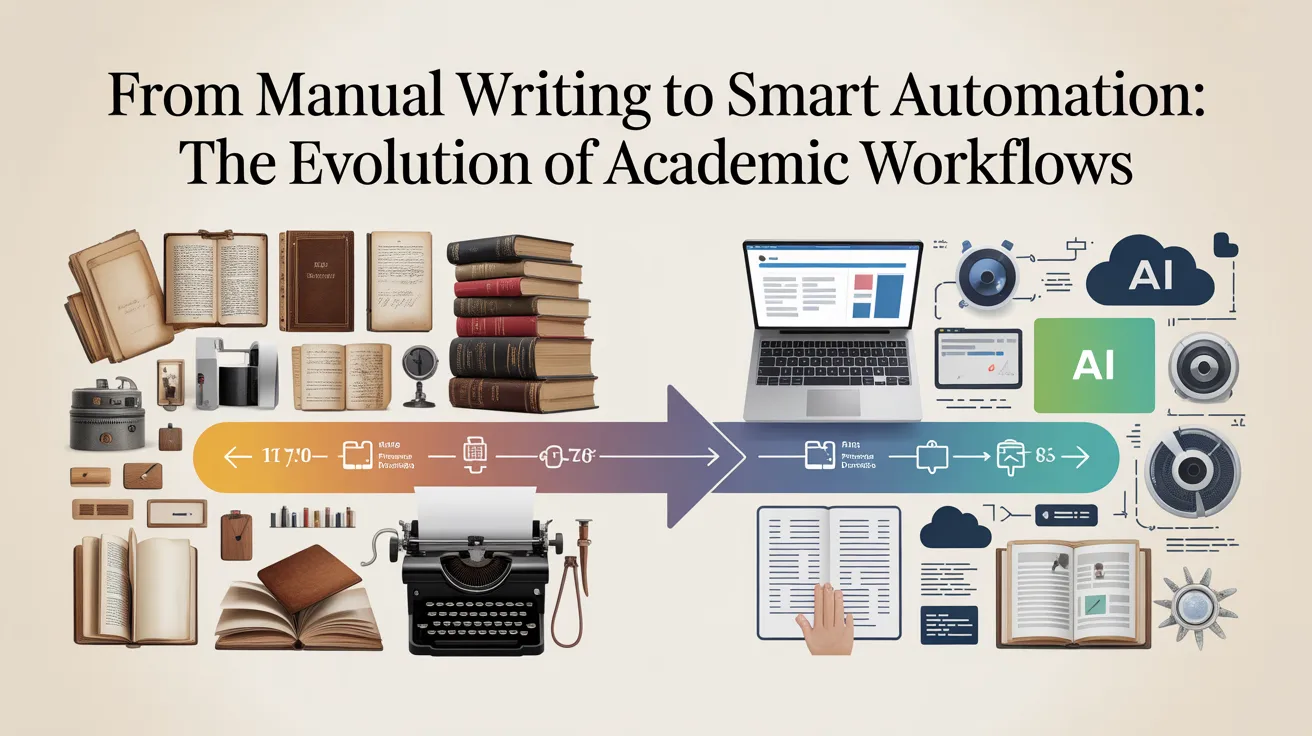
There was a time when academic writing felt slow in every possible way. You’d gather notes by hand, draft everything line by line, then spend hours fixing structure, grammar, and citations. It wasn’t just the thinking that took effort. The process itself dragged.
Now things move differently. Not rushed, just smoother. Students don’t get stuck on the same small problems anymore. Drafting starts faster, editing feels lighter, and the overall workflow flows instead of stalling every few minutes.
Smart automation didn’t flip everything overnight. It crept in. First small tools, then full writing assistants. And now, it’s part of how most students approach their work, whether they notice it or not.
Early Workflow Shifts with Smart Tools like EduWriter AI
At the beginning of this shift, tools were simple. Grammar checkers, basic spell correction, nothing too advanced. But even that saved time. Students didn’t have to reread every sentence just to catch small errors.
Then platforms like AI writing assistant started offering more than corrections. Draft suggestions, structure improvements, citation help. The workflow changed from “write everything manually” to “write, then refine with support.”
That shift reduced friction.
Students could focus more on ideas instead of getting stuck on fixing details. A rough draft didn’t feel like a problem anymore. It became a starting point.
Still, not everyone adapted the same way. Some used these tools to learn. Others just used them to finish faster.
From Linear Writing to Layered Processes
Manual writing followed a straight path. Start at the top, write everything, and fix mistakes at the end. It was predictable but exhausting.
Now writing feels layered.
Students draft quickly, then move into editing, then refinement. Each stage has its own tools, its own pace. You don’t need to get everything right the first time.
That alone changes how students think.
You’re not chasing perfection in the first draft anymore. You’re building something step by step. Adjusting as you go.
We think this reduces pressure more than anything else. When the process feels flexible, students are more willing to start.
And starting used to be the hardest part.
Research Becomes Faster, But Requires Judgment
Manual workflows made research slow. You had to dig through books, scan articles, and piece together information bit by bit.
Smart tools cut through that early stage. Quick summaries, instant answers, faster access to information. It removes the initial barrier that used to slow everything down.
But speed brings a new challenge.
Students need to decide what to trust. Not every answer is accurate. Not every summary is complete.
So the workflow shifts again. Less time searching, more time verifying.
Those who take that extra step build a stronger understanding. Those who don’t risk shallow work that looks polished but lacks depth.
Editing Evolves Into a Skill, Not a Task
Editing used to feel like a final chore. Something you had to do before submission.
Now it’s part of the process itself.
AI tools highlight issues instantly. Awkward phrasing, repetition, and tone inconsistencies. Students see these corrections over and over, and something clicks.
They start noticing problems before the tool points them out.
According to our analysts, this repeated exposure builds editing awareness faster than traditional methods. It turns editing into an active skill instead of a passive task.
That’s a quiet but important shift.
Time Feels Different Now
Smart automation doesn’t just change tasks. It changes how time feels.
Students don’t spend as long stuck on single problems. They move between stages faster. Draft, edit, adjust, done.
That creates small pockets of free time. Not huge, but noticeable.
Some use that time to improve their work further. Others move on quickly. Both happen.
But the key difference is control. Students feel like they manage their time better, even if deadlines haven’t changed.
Where Automation Starts to Blur the Line
There’s a point where automation becomes too much.
Students who rely heavily on tools can lose connection with their own writing process. Ideas come from prompts, structure from suggestions, and final drafts are shaped mostly by AI.
It works in the short term.
Long-term, it creates gaps. Writing without tools feels harder. Slower. Less confident.
That’s where balance becomes necessary.
Use automation, but stay involved. Think through changes, question suggestions, and rewrite parts yourself.
Otherwise, the workflow becomes efficient but empty.
Expanding Beyond Assignments with writing books
As academic workflows become faster, something unexpected shows up. Extra space.
Students start exploring ideas outside their coursework. Small projects at first. Personal writing. Even attempts at writing books just to see where their ideas can go.
It’s not about grades or deadlines.
AI tools help keep the process moving. Suggest structure, offer direction, fill gaps when ideas stall.
But the creativity still depends on the student.
That shift changes how writing feels. Less like a requirement, more like an option.
And once writing becomes something you choose, not just something you have to do, the approach changes completely.
So… What Has Really Changed?
The move from manual writing to smart automation isn’t just about speed.
It’s about how the entire workflow feels.
Less rigid, more flexible. Less time spent fixing small issues, more time shaping ideas. Students don’t get stuck as often, and when they do, they have tools to move forward.
But the outcome still depends on the person using those tools.
Some grow with it. Others just move faster without improving much.
Automation reshapes the process.
What students build within that process is still up to them.
