
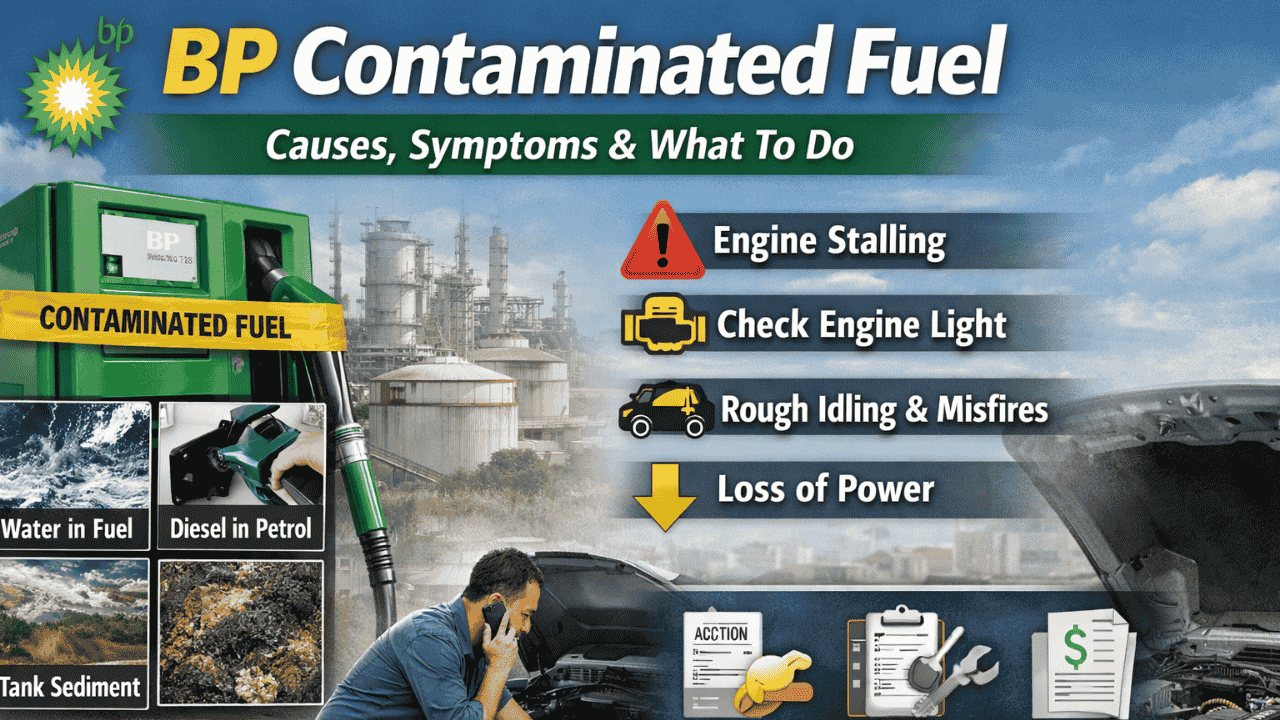
Reports of BP contaminated fuel have occasionally surfaced in different regions around the world, raising concerns among motorists. When drivers fill up their vehicles, they expect clean, high-quality fuel that meets industry standards. However, in rare cases, contamination can occur at some point in the supply chain — from refinery and transportation to underground storage tanks at retail stations. Fuel contamination can lead to vehicle breakdowns, engine damage, costly repairs, and significant inconvenience. If you suspect your vehicle has been affected by contaminated fuel purchased at a BP station, understanding the causes, symptoms, and next steps is critical. This guide explains what contaminated fuel is, how it happens, common warning signs, what to do if your vehicle is affected, and how compensation claims typically work.
What Is BP Contaminated Fuel?
BP contaminated fuel refers to fuel sold at a BP-branded service station that has been unintentionally mixed with unwanted substances or that does not meet required quality standards.
Contamination may involve:
- Water in petrol or diesel
- Diesel mixed into petrol (or vice versa)
- Chemical residue or off-spec additives
- Debris, rust, or sediment from storage tanks
It’s important to note that fuel contamination incidents are typically isolated and uncommon. Major fuel retailers, including BP, operate under strict quality control and regulatory oversight. However, even with safeguards in place, contamination can sometimes occur due to operational errors, equipment failure, or external factors.
Common Causes of Fuel Contamination at Petrol Stations
Understanding how contamination happens can help drivers recognize risks and respond quickly.
Water Contamination
Water contamination is one of the most common fuel-related issues. It may occur due to:
- Heavy rainfall is entering the underground tanks
- Damaged or poorly sealed tank systems
- Condensation buildup inside storage tanks
- Delivery errors during fuel transfers
Water in fuel can cause engines to misfire, stall, or fail to start. In severe cases, it can damage fuel injectors and fuel pumps.
Cross-Contamination (Diesel in Petrol or Petrol in Diesel)
Cross-contamination happens when the wrong type of fuel is delivered into a storage tank. For example:
- Diesel is delivered into a petrol tank
- Petrol delivered into a diesel tank
This often occurs during fuel deliveries if proper verification procedures are not followed. Even small amounts of the wrong fuel type can severely impact modern engines.
Off-Specification Fuel
Fuel must meet certain chemical and performance standards. In rare cases, a refinery or distribution issue may result in off-spec fuel reaching retail stations.
Examples include:
- Incorrect additive concentrations
- Excessive ethanol content
- Chemical residue that affects combustion
When off-spec fuel is distributed, companies typically issue recalls or quickly isolate affected pumps.
Storage Tank Issues
Underground fuel tanks can develop problems over time, including:
- Corrosion
- Cracks or leaks
- Sediment buildup
- Pump filtration failures
If tanks are not properly maintained, debris or water can contaminate fuel before it reaches customers’ vehicles.
Symptoms of BP Contaminated Fuel
If you recently filled up at a BP station and your car begins experiencing issues shortly afterward, contamination could be the cause. Common symptoms include:
Engine Stalling
The engine may stall while idling or driving. Water or an improper fuel mixture disrupts combustion.
Rough Idling
The vehicle may shake or vibrate while stopped.
Difficulty Starting
Contaminated fuel can prevent proper ignition.
Misfiring Engine
You may feel jerking or hesitation when accelerating.
Loss of Power
The car may struggle to maintain speed or climb hills.
Warning Lights
The check engine light may illuminate owing to irregularities in the fuel system.
Unusual Noises
Knocking or rattling sounds can occur if the fuel-air mixture is compromised.
If multiple drivers report similar problems after fueling at the same station, this may indicate a broader contamination issue.
What to Do If You Suspect BP Contaminated Fuel
If you believe your vehicle has been affected, follow these steps immediately:
Stop Driving (If Possible)
Continuing to drive may worsen engine damage. If symptoms are severe, pull over safely and turn off the engine.
Keep Your Fuel Receipt
Proof of purchase is critical when filing a claim. The receipt confirms location, date, and time of fueling.
Document Everything
Record:
- Date and time of fuel purchase
- Station location
- Fuel type purchased
- Vehicle symptoms
- Photos or videos, if applicable
Contact the BP Station
Notify the station manager as soon as possible. They may already be aware of other complaints.
Contact BP Customer Support
BP typically has regional customer service lines or claim processes for suspected fuel quality issues.
Obtain a Mechanic’s Inspection
Have a certified mechanic inspect the vehicle. Ask for a written report detailing:
- Diagnosis
- Cause of damage
- Repair estimate
- Confirmation of contaminated fuel (if applicable)
How Fuel Contamination Claims Work
When filing a claim related to BP contaminated fuel, the process generally includes:
- Submission of proof of purchase
- Mechanic’s diagnostic report
- Repair invoices
- Vehicle details
- Statement describing the incident
BP (or the station operator) may conduct its own investigation, including testing fuel samples from the storage tank.
If contamination is confirmed and linked to the station, compensation may include:
- Repair costs
- Towing fees
- Car rental expenses
- Reimbursement for fuel
Each case is assessed individually.
Can Contaminated Fuel Damage Your Engine?
Yes, contaminated fuel can cause both short-term and long-term damage.
Potential Damage Includes:
- Clogged fuel injectors
- Fuel pump failure
- Engine knocking
- Corrosion in fuel system components
- Catalytic converter damage
Modern engines are particularly sensitive due to advanced fuel injection systems and strict emissions controls.
The severity of damage depends on:
- Type of contamination
- Amount of contaminated fuel
- How long the vehicle was driven
- Vehicle make and model
How Often Does BP Contaminated Fuel Occur?
Fuel contamination at major retailers like BP is considered rare. Large fuel brands maintain:
- Regular tank inspections
- Automated leak detection systems
- Strict delivery protocols
- Quality control testing
However, isolated incidents can still happen due to:
- Human error
- Equipment malfunction
- Extreme weather events
- Supply chain disruptions
When problems are identified, affected pumps are usually shut down quickly.
How to Protect Yourself From Contaminated Fuel
While drivers cannot fully control station operations, they can reduce risk by:
Filling Up at Reputable Stations
Choose well-maintained stations with high customer traffic.
Avoiding Fueling During Deliveries
When a fuel tanker is actively refilling underground tanks, sediment can be stirred up.
Keeping Your Tank Above ¼ Full
Running on very low fuel increases the risk of pulling sediment into your vehicle’s fuel system.
Paying Attention to Early Warning Signs
If your car feels different immediately after fueling, address the issue promptly.
Frequently Asked Questions (FAQ)
What happens if I put contaminated fuel in my car?
Your engine may stall, misfire, lose power, or fail to start. Continued driving can worsen damage.
Can water in petrol ruin an engine?
Yes, water prevents proper combustion and can damage injectors and fuel pumps if left unchecked.
Will BP pay for repairs if fuel is contaminated?
If an investigation confirms the contamination originated from a BP station and caused damage, compensation may be offered based on the evidence provided
How long does a contaminated fuel claim take?
It depends on the complexity of the case and the investigation process. Some claims are resolved within weeks, while others may take longer
Is fuel contamination common?
No, it is relatively uncommon, especially at major branded stations. Most incidents are isolated.
Conclusion
The BP contaminated fuel refers to rare instances in which fuel sold at a BP station may have been affected by water, cross-contamination, or off-specification issues. While large fuel retailers implement strong quality controls, occasional incidents can still occur.
You May Like: Autocartrends.com: Modern Automotive News, Reviews, and Industry Insights
