
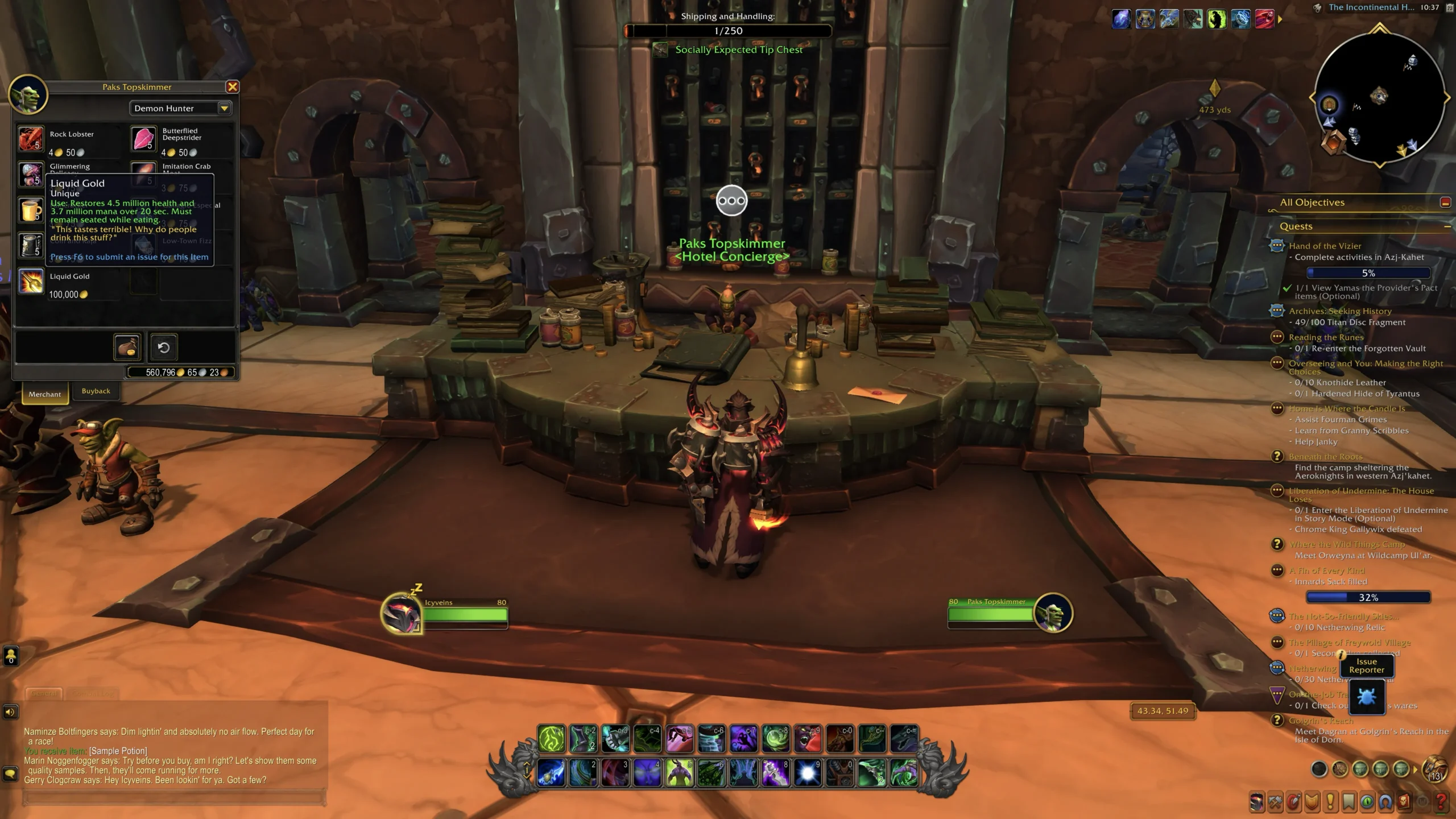
Every competitive element inside World of Warcraft is inherently tied to a single underlying force: the flow of in-game currency. While combat execution, talent configurations, and gear score optimization take center stage during major patch transitions, none of these systems function in a vacuum. Raid consumables, flasks, and the crafting costs for high-end gear all add up fast — and how much gold you have on hand directly affects how quickly your character can keep pace with endgame demands.
The baseline value of World of Warcraft gold shifts continuously across expansion lifecycles, reacting heavily to developer updates, regional market merges, and newly introduced material requirements. Understanding how to navigate these financial waters transforms currency management from a tedious chore into a powerful tool for structural character progression.
The Dynamic Pillars of Wealth Generation
Building sustainable wealth across Azeroth requires moving past obsolete, brute-force farming methods. Relying solely on repetitive open-world herb gathering or old raid clears yields lower returns per hour compared to leveraging structured economic mechanics.
Professional Crafting and Material Specialization
The modern profession engine rewards deep specialized knowledge rather than generic material collection. Under contemporary crafting infrastructures, recipe acquisition, stat specialization (such as Resourcefulness and Ingenuity), and automated crafting orders control the highest profit margins.
Crafters who build reputations for producing top-tier equipment or essential raid enchants early in a seasonal patch can generate massive passive returns. Keeping an eye on localized trade demands on database resources like Wowhead ensures your profession points are allocated toward items that remain highly profitable over the long term. For those who prioritize mastering these professions over repetitive resource gathering, evaluating whether to buy WoW gold to fund early-stage recipe experimentation can be a decisive factor in securing a competitive market advantage before the rest of the server catches up.
- Raw Resource Gathering: Collecting raw ores, herbs, and skins across current end-game zones.
- Refining & Quality Sorting: Utilizing profession specializations to break down materials into high-quality reagents.
- Regional Market Penetration: Capitalizing on the unified auction house by listing commodities in bulk to ensure optimal exposure to the entire player base.
- End-User Raid Consumables: Direct delivery of flasks, potions, and food buffs to active progression players.
Regional Market Flipping and Auction House Pacing
The shift toward a unified regional commodities market fundamentally altered the velocity of trade.With consistent pricing for ore, herbs, potions, and foundational reagents established across the entire region, the era of server-specific monopolies has effectively come to an end. Success in the modern Auction House relies entirely on volume and chronological timing.
Smart traders track weekly consumption curves: purchasing underpriced raw materials during low-activity weekend windows, and listing processed goods during peak raid reset nights when demand spikes sharply. Maintaining this level of market awareness is crucial; even for those simply monitoring the WoW gold for sale landscape to understand current purchasing power, observing these shifts in commodity demand provides the most accurate picture of regional economic health.
The Real-World Friction of Economic Upkeep
For many dedicated players, the ultimate hurdle isn’t identifying profitable markets—it is the stark logistical deficit of available free time. Balancing high-level Mythic+ dungeon pushes or competitive raid schedules alongside daily real-world responsibilities leaves very little room for dedicated resource farming.
Chronological Distribution of Passive Capital vs. Direct Action
| Economic Activity Type | Time Investment Required | Long-Term Market Stability | Baseline Profit Velocity |
| Open-World Gathering | Extremely High (Manual) | Volatile / Subject to Botting | Linear & Low Ceiling |
| Profession Order Management | Medium (Requires Alt Setup) | High (Gated by Specifications) | Exponential (Seasonal Peaks) |
| Auction House Flipping | Low (Requires Market Knowledge) | Very High (Evergreen Systems) | Unstable but Potentially Massive |
At some point, grinding for raid reagents starts eating into the time you’d rather spend actually raiding — and at that point, the usual farming approach just stops making sense. High-level players often find themselves trapped in a cycle of managing auction house logs instead of clearing bosses. Rather than spending valuable evening hours running repetitive gathering routes, utilizing trusted external player networks allows individuals to stay competitive without turning their hobby into a secondary corporate shift. Choosing a reliable, established avenue to WoW gold bridges this resource deficit directly, ensuring your character is fully stocked with Flasks, Runes, and Tier-3 crafted gear precisely when a new progression gate opens.
Seasonal material costs in World of Warcraft tend to spike sharply in the first two to three weeks of a new tier, when demand for crafting reagents and consumables outpaces supply. Keeping a stable gold reserve before those windows open is one of the more practical forms of endgame prep — it means you’re not scrambling to fund a gear upgrade or a flask stack when prices are at their peak. For players comparing current exchange values, finding the best place to buy WoW gold comes down to transparent pricing and reliable delivery. Treating gold management as part of your overall character optimization — rather than an afterthought — is what separates players who hit the ground running at tier launch from those still catching up two weeks in. That said, buying WoW gold is one option among several; others simply front-load their farming in the weeks before a patch drops.
Navigating Currency Inflation and Expansion Sinks
Blizzard naturally regulates the in-game economy by creating intentional “gold sinks”—prestigious, high-value purchases designed to drain excess liquidity from the player base. Vendor mounts that cost millions of gold, rare transmog pieces that surface on the Black Market, and achievements tied to a strict deadline all fall into this category.
- Excess Circulation Phase: Gold accumulates rapidly within the player base through high-tier activities, driving inflation.
- Vendor Sinks & Cosmetics: To get rid of excess raw capital, merchants are offering saddles priced at several million gold pieces and unique cosmetic items.
- Currency Swap: Trading WoW gold for Battle.net balance via the Token system.
- Controlled Regional Deflation: The overall volume of gold drops, stabilizing the WoW gold price across the region.
Anyone browsing World of Warcraft gold for sale options quickly realizes how much these sinks drive the seasonal demand — they’re not cosmetic extras, they’re the whole point. If a new patch introduces an incredibly popular cosmetic reward tied directly to a gold vendor, regional token values fluctuate wildly. Proactive treasury management involves keeping a portion of your capital in liquid currency while converting excess assets into evergreen materials that historically retain their intrinsic value across patch cycles. Observing these broader systemic trends on the World of Warcraft Official Website helps traders anticipate when the developer intends to drain gold from the system, allowing them to adjust their personal inventories accordingly.
Structural Shifts: Preparing for the Midnight Economy
As the narrative focus shifts toward the elven territories of Quel’Thalas in the upcoming Midnight expansion, the structural blueprint of the game’s economy is poised for significant adjustments. The introduction of long-awaited Player Housing systems will completely redefine what it means to hold wealth in Azeroth. This massive feature turns cosmetic collections, structural materials, and custom furniture crafting into primary financial drivers.
- Elven Void Crafting: Getting your hands on high-tier gear by farming rare Void reagents that only drop in the upcoming Quel’Thalas zones.
- Player Housing Furniture Blueprinting: High-value crafting recipes dedicated entirely to interior and exterior estate decoration.
- Commodity Surges: Unprecedented market demand for legacy wood, stone, ores, and cloth commodities to construct estate components.
During major expansion launches, the demand for WoW Midnight gold will inevitably surge as players scramble to finance their personal estates, purchase specialized decor blueprints, and master newly introduced elven crafting disciplines. Historically, early expansion phases see raw material prices skyrocket to triple their standard values due to the massive volume of active players competing for limited nodes.
Market Valuation Across the Expansion Lifecycle
| Expansion Phase | Material Pricing Trend | Demand Level | Primary Gold Sink Driver |
| Expansion Launch | Massive Spike (Triple Value) | Extreme | Profession Leveling & Base Housing Layouts |
| Month 1 – Mid-Season | Gradual Stabilization | High / Steady | High-End Raid Consumables & Crafted Item Upgrades |
| Month 3 & Beyond | Return to Baseline | Moderate | Rare Transmog Collecting & Secondary Character Alts |
Players who build up their reserves before a major patch lands are generally better positioned to absorb the cost spikes that hit in the first week or two of a new tier. Crafting materials, raid consumables, and enchants all follow predictable demand curves — prices peak at launch and gradually stabilize as supply catches up. Tracking those patterns across previous patch cycles gives you a reasonable window for when to spend and when to hold.
For players returning after a break or stepping into new content without much saved up, those early-launch costs can feel like a wall. Platforms that handle WoW gold sell transactions offer a way to convert surplus funds from legacy characters or secondary servers into usable currency on your main — a practical bridge when time is short and the patch window is already open.
Final Portfolio Optimization
Ultimately, mastering the financial systems of World of Warcraft is an evergreen skill that pays dividends across every single expansion cycle. Treating your inventory like a fluid economic portfolio—balancing active gathering, automated crafting orders, and strategic auction house listings—guarantees your character remains relevant regardless of class balance overhauls or tier adjustments. Monitor regional trends closely, budget your weekly material consumption wisely, and build a solid financial foundation to confidently conquer whatever challenges emerge next from the shifting landscape of Azeroth.
